
My Father and My Son (2005)
Story overview
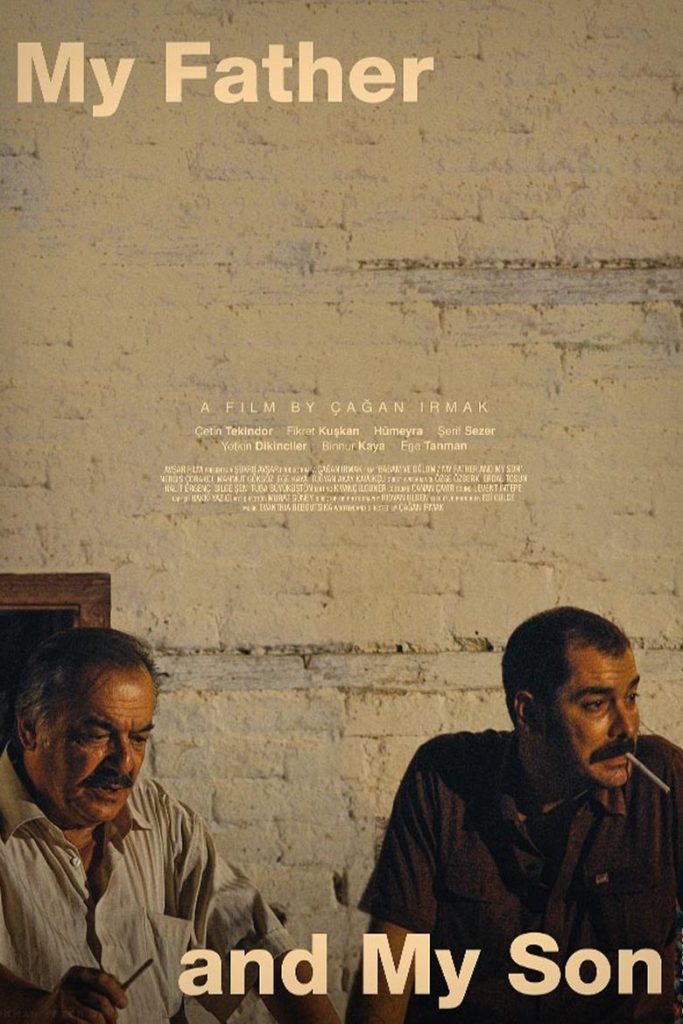
This Turkish drama follows a journalist who returns to his family's farm after experiencing political persecution and personal loss. He must reconcile with his estranged father while ensuring his young son has a stable home as his own health declines. The film explores themes of family reconciliation, political trauma, and intergenerational relationships in a heartfelt narrative.
Parent Guide
A thoughtful family drama dealing with mature themes of political trauma and reconciliation that requires parental guidance for younger viewers.
Content breakdown
References to political violence and torture, though not graphically depicted. Some tense family confrontations.
Themes of terminal illness, family estrangement, and political persecution. Emotional scenes of loss and reconciliation.
General dialogue without strong profanity. Some emotionally charged conversations.
No sexual content or nudity present.
Possible social drinking in family settings, not a focus.
Strong emotional themes of family conflict, loss, and reconciliation throughout.
Parent tips
This film deals with mature themes including political violence, family estrangement, and terminal illness that may be difficult for younger viewers. While there are no graphic depictions, the emotional weight of the story and references to torture and death require parental guidance. The movie's focus on family reconciliation and love provides positive messages, but the serious subject matter makes it most suitable for older children and teenagers with parental discussion.
Parent chat guide
Parent follow-up questions
- How do you think the boy feels about his family?
- What makes a family special to you?
- How do people show they care about each other?
- What do you do when you feel sad?
- Why do you think the father and grandfather had trouble understanding each other?
- How does the movie show that families can work through problems?
- What does it mean to forgive someone?
- How do the characters show love even when they disagree?
- What are some ways the movie shows the effects of political conflict on families?
- How do the characters demonstrate resilience in difficult situations?
- What does the film suggest about the importance of family connections?
- How might different generations view family responsibilities differently?
- How does the film explore the tension between personal beliefs and family expectations?
- What commentary does the movie make about political trauma and its lasting effects?
- How do the characters' experiences shape their understanding of family and forgiveness?
- What does the film suggest about intergenerational understanding and healing?
🎭 Story Kernel
The film's core is the transmission of trauma across generations, specifically how the 1980 Turkish military coup fractures a family. It's not just about Sadık's return; it's about his father Hüseyin's inability to process his son's political rebellion and subsequent suffering. The driving force is the silent, masculine struggle to express love amidst ideological ruin. Sadık seeks to mend the rupture before his death, not through political debate, but by forcing his son Deniz into the conservative family fold he once rejected—a heartbreaking act of protection that completes his rebellion by ensuring his child's safety in tradition.
🎬 Visual Aesthetics
Director Çağan Irmak employs a warm, sun-drenched color palette for the rural family home, contrasting with the stark, cold blues and chaotic handheld shots of Sadık's activist past in flashbacks. This visual dichotomy physically maps the ideological and emotional distance between father and son. The camera often lingers in tight close-ups on eyes and hands, emphasizing unspoken communication and the physical toll of Sadık's illness. The final, lingering shot of the grandfather and grandson walking into the field is a masterclass in showing, not telling—the vast landscape absorbing their shared, wordless grief and new bond.
🔍 Details & Easter Eggs
💡 Behind the Scenes
The film's emotional authenticity stems from its roots: director Çağan Irmak based the story on his own family's experiences post-1980 coup. Fikret Kuşkan, who plays Sadık, reportedly lost significant weight to portray the character's cancer realistically. The rural house, central to the film's warmth, was a real family home in the Aegean region, not a set, adding to the palpable sense of place. Released in 2005, it became a cultural phenomenon in Turkey, breaking box office records for a local film, largely due to its raw portrayal of a national trauma rarely discussed so openly in mainstream cinema.
Where to watch
Choose region:
- Kanopy
Trailer
Trailer playback is unavailable in your region.