
My Life as a Dog (1985)
Story overview
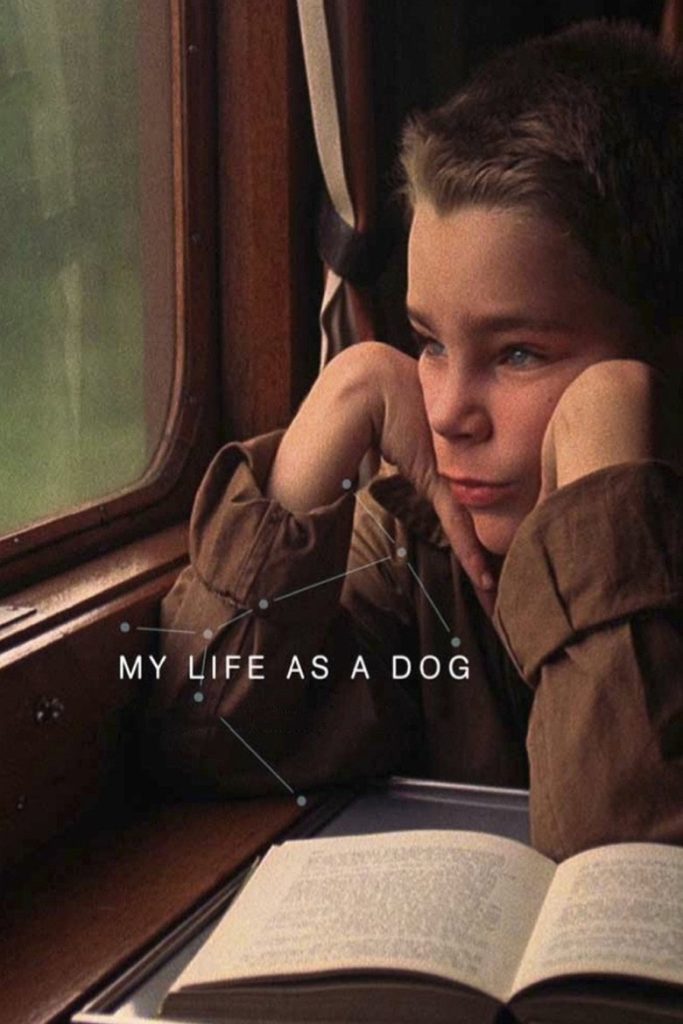
My Life as a Dog is a 1985 Swedish coming-of-age drama-comedy that follows Ingemar, a sensitive 12-year-old boy who copes with his mother's terminal illness and his own feelings of displacement by comparing his troubles to those he perceives as worse off, like the Russian space dog Laika. When sent to live with his eccentric aunt and uncle in a rural village during the summer of 1959, Ingemar encounters a cast of quirky characters and experiences that help him navigate grief, friendship, and the complexities of growing up. The film blends poignant moments with gentle humor, capturing the bittersweet transition from childhood innocence to adolescent awareness.
Parent Guide
A thoughtful, bittersweet coming-of-age story that handles mature themes with sensitivity and gentle humor. Best for mature children 10+ who can process emotional complexity.
Content breakdown
Some roughhousing among boys, playful wrestling, and minor accidents (like falling from a tree). No serious violence or peril.
Themes of terminal illness and grief may be emotionally challenging. A mother's coughing fits and frailty are shown. Some tense family arguments. Mild bullying among children.
Very mild language by today's standards. Some childish insults and mild swearing in Swedish (subtitled). Nothing strong or explicit.
Subtle puberty references and childhood curiosity about bodies. Brief non-sexual nudity (boys swimming without shirts, distant breast exposure in an artistic context). Mild romantic tension between adolescents.
Adults smoke cigarettes occasionally in social settings (historically accurate for 1959). No underage drinking or drug use.
Strong emotional themes of loss, family separation, and coming to terms with mortality. The protagonist's coping mechanisms and emotional journey are central. Moments of joy and humor balance the heavier themes.
Parent tips
This film deals with mature themes like terminal illness, grief, and family separation through the perspective of a child, which may require explanation for younger viewers. While there's no graphic content, the emotional weight and subtle references to puberty and sexuality make it more suitable for older children and teens. The Swedish cultural context and slower pacing might challenge younger attention spans. Parents should be prepared to discuss how Ingemar uses humor and imagination to cope with difficult emotions.
Parent chat guide
Parent follow-up questions
- What was your favorite funny part in the movie?
- Did you like the dog in the story? Why or why not?
- How do you think Ingemar felt when he played with his new friends?
- Why do you think Ingemar kept talking about the space dog Laika?
- How were Ingemar's aunt and uncle different from his parents?
- What did you learn about how boys and girls were treated differently in 1959 Sweden?
- How did Ingemar's perspective on his problems change during the summer?
- What did the film show about how children process grief differently than adults?
- Why do you think some scenes were funny even when sad things were happening?
- How does the film portray the transition from childhood to adolescence?
- What commentary does the film make about social expectations and gender roles in 1950s Sweden?
- How effective was the film's approach to serious themes through a comedic lens?
🎭 Story Kernel
The film expresses the brutal education of a child learning that suffering is universal and relative. Ingemar, the protagonist, isn't driven by a quest for happiness but by a desperate need to contextualize his pain. His mother's terminal illness and his own displacement aren't problems to be solved but facts to be endured. The narrative engine is his coping mechanism: comparing his woes to those he deems worse off, most famously Laika the space dog. This isn't a story of overcoming adversity, but of developing the emotional calculus required to live alongside it without being crushed. The core theme is the construction of psychological armor through morbid comparison.
🎬 Visual Aesthetics
The visual language is one of stark, unvarnished realism, shot through with a child's fragmented perspective. Director Lasse Hallström employs a muted, almost desaturated color palette of grays, browns, and winter blues, mirroring Ingemar's internal bleakness. The camera often adopts a low-angle, observational stance, placing us at the boy's eye level. Action is not stylized; it's awkward, messy, and grounded. Key symbolism lies in the recurring motif of the rocket and Laika—not as symbols of escape, but as cold, mechanical counterpoints to human frailty, representing a fate so objectively terrible it makes Ingemar's own seem manageable by comparison.
🔍 Details & Easter Eggs
💡 Behind the Scenes
The film is an adaptation of Reidar Jönsson's semi-autobiographical novel. Actor Anton Glanzelius, who played Ingemar, was largely unknown and selected for his natural, unpolished demeanor. Many scenes were shot in Småland, Sweden, using real locations to enhance the film's gritty authenticity. The role of Ingemar's uncle required actor Tomas von Brömssen to learn the specific dialect of the region. The film's international success was a surprise, becoming one of the highest-grossing foreign films in the U.S. at the time and earning Oscar nominations for Best Director and Adapted Screenplay.
Where to watch
Choose region:
- HBO Max
- HBO Max Amazon Channel
- Criterion Channel
- Amazon Video
- Apple TV Store
- Fandango At Home
Trailer
Trailer playback is unavailable in your region.