
My Next Guest with David Letterman and John Mulaney (2024)
Story overview
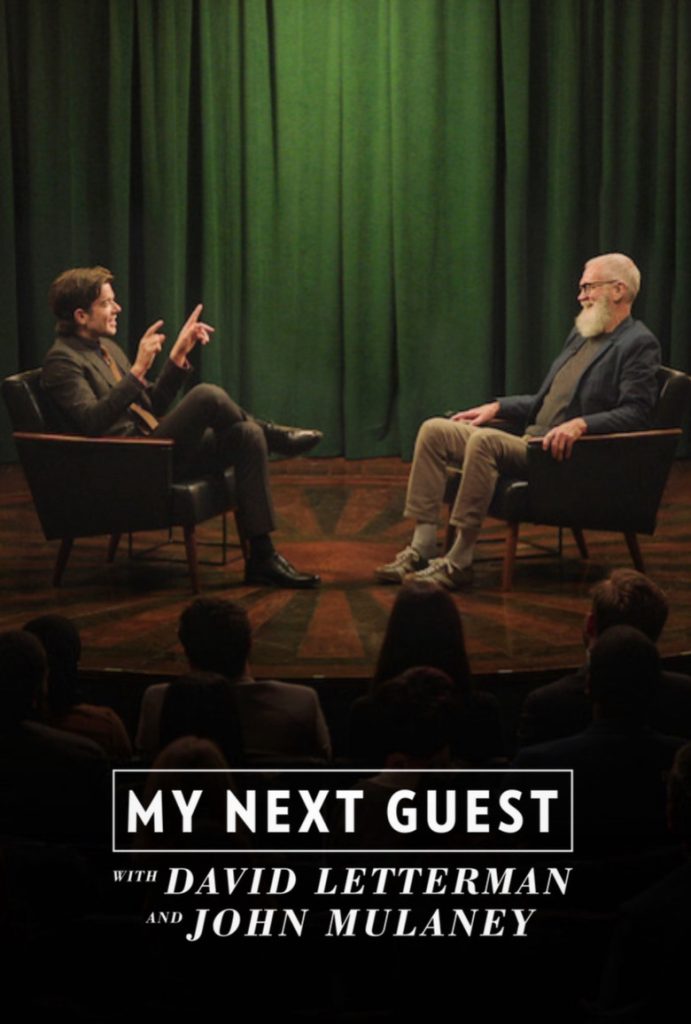
In this documentary episode, comedian John Mulaney revisits his Chicago high school with veteran talk show host David Letterman. The conversation covers Mulaney's personal journey through addiction recovery, his experiences with fatherhood, and reflections on the current state of stand-up comedy. The tone is candid and conversational, focusing on personal growth and professional insights rather than sensationalism.
Parent Guide
A thoughtful documentary conversation about personal growth, recovery, and comedy that requires parental guidance for younger viewers due to mature themes discussed candidly.
Content breakdown
No violence, action sequences, or physical peril. The conversation is entirely seated and conversational.
Some discussion of addiction and its consequences could be unsettling for sensitive viewers, but presented in a reflective, non-graphic manner.
Occasional mild profanity typical of conversational speech between adults. No strong or frequent swearing.
No sexual content, references, or nudity. The conversation remains focused on addiction, fatherhood, and comedy.
Central theme involves discussion of addiction and recovery from substance abuse. Descriptions of past substance use are discussed frankly but not glorified. Focus is on recovery and consequences.
Emotionally weighty discussions about addiction, personal struggles, and life changes. Moments of humor provide balance, but the overall tone is reflective and sometimes serious.
Parent tips
This documentary features mature discussions about addiction recovery that may require parental guidance for younger viewers. The content is presented thoughtfully but includes frank conversations about substance abuse. Parents may want to watch with children ages 12+ to discuss the themes of personal responsibility and recovery. The runtime is under an hour, making it manageable for family viewing with appropriate preparation.
Parent chat guide
Parent follow-up questions
—
—
- What did you learn about how people can overcome difficult challenges?
- Why do you think John wanted to go back to his old school?
- What does 'addiction' mean and why is it important to talk about?
- How does Mulaney's approach to discussing addiction differ from how it's often portrayed in media?
- What insights did you gain about how life experiences shape a comedian's material?
- How does the setting of the high school contribute to the reflective tone of the conversation?
- What did you think about the balance between humor and serious topics in their discussion?
🎭 Story Kernel
The episode transcends the standard talk show format by exploring the cyclical nature of addiction, recovery, and the terrifying vulnerability of new fatherhood. It is less about Mulaney’s 'comeback' and more about the shared language between two generations of comedy giants who have both navigated public scrutiny and private demons. The core theme is the search for normalcy after a life lived in the spotlight, framed through Mulaney’s return to his Chicago roots. Letterman acts as a seasoned guide, not just an interviewer, helping Mulaney dissect his past at St. Ignatius and his current reality as a father. It expresses the idea that growth isn't about erasing one's history, but about walking through the old hallways with a new perspective and a quieter mind, emphasizing that recovery is a continuous process rather than a destination.
🎬 Visual Aesthetics
Michael Steed employs a 'walk-and-talk' documentary style that favors intimacy over artifice. The cinematography utilizes natural lighting and handheld cameras to capture the raw, unscripted energy of their tour through Chicago. By stepping outside the studio, the visuals mirror the thematic stripping away of Mulaney’s stage persona. The contrast between the grand, gothic architecture of St. Ignatius College Prep and the mundane interiors of Mulaney’s childhood home creates a visual metaphor for the public versus private self. The framing often places the two men in profile, emphasizing their conversation as a peer-to-peer exchange rather than a performance for the lens. The color palette is grounded and realistic, avoiding the high-contrast gloss of traditional late-night television to signal a more authentic, vulnerable narrative that aligns with the episode's focus on personal truth.
🔍 Details & Easter Eggs
💡 Behind the Scenes
This special marks a departure from the usual My Next Guest format, which typically features a studio audience. Director Michael Steed, who has directed multiple episodes of the series, leans into the 'on-location' format to create a more cinematic experience. John Mulaney’s appearance follows a tumultuous period in his life, including a highly publicized intervention and stint in rehab, which he also addressed in his stand-up special Baby J. David Letterman has often cited Mulaney as one of the most talented writers of his generation, making this pairing a significant meeting of comedic minds. The production took place in various iconic Chicago locations, grounding the global star in his local origins.
Where to watch
Choose region:
- Netflix
- Netflix Standard with Ads