
Nam June Paik: Moon Is the Oldest TV (2023)
Story overview
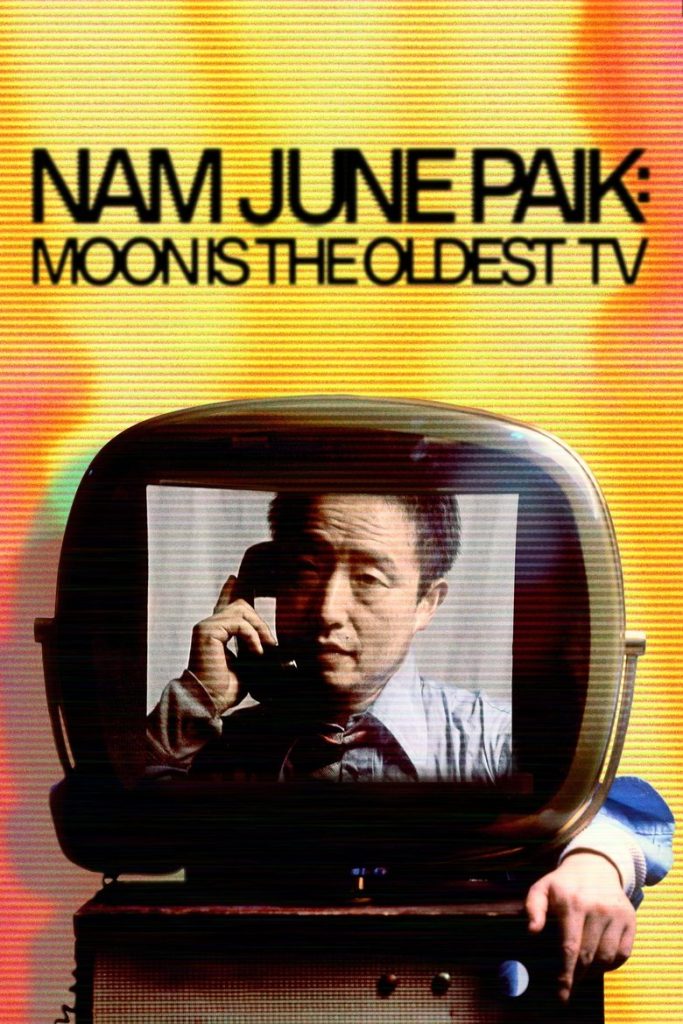
This documentary explores the life and work of Nam June Paik, a pioneering Korean-American artist who transformed technology into art. Through archival footage and interviews, it traces his journey from post-war Korea to global recognition, highlighting his innovative video art and predictions about digital culture. The film examines how Paik's work foresaw both the creative possibilities and societal challenges of today's interconnected world.
Parent Guide
Educational documentary about an influential artist, appropriate for most ages with parental guidance for comprehension.
Content breakdown
No violence or peril depicted.
No scary or disturbing content. Some abstract video art might be unusual but not frightening.
No offensive language.
No sexual content or nudity.
No depiction of substance use.
Mild emotional content related to artistic passion and cultural identity. Some discussions of historical context may require explanation.
Parent tips
This documentary is suitable for children interested in art, technology, or history. It contains no inappropriate content but may be intellectually challenging for younger viewers. Consider watching together to discuss Paik's ideas about media and society. The film's abstract art segments might confuse some children, but they provide opportunities to talk about creative expression.
Parent chat guide
Parent follow-up questions
- What colors did you see in the art?
- Did you see any funny shapes in the videos?
- What was your favorite part?
- What kind of technology did the artist use?
- How do you think he made those video artworks?
- What does 'video art' mean to you?
- Why do you think Paik wanted to use TVs for art?
- How did his background influence his work?
- What connections do you see between his art and today's internet?
- How did Paik's work challenge traditional art forms?
- What do you think he meant by predicting 'fascist tendencies' in technology?
- How does this documentary reflect on cultural exchange and globalization?
🎭 Story Kernel
The film transcends the standard biographical documentary format to explore Nam June Paik’s radical vision of technology as a bridge between Eastern philosophy and Western avant-garde. It centers on Paik’s transition from a classically trained musician to a pioneer of video art, emphasizing his belief that the television screen could be a canvas for human connection rather than a tool for passive consumption. The narrative traces his journey through the Fluxus movement, his collaborations with Joseph Beuys and Charlotte Moorman, and his prophetic concept of the "Electronic Superhighway." Ultimately, the movie expresses Paik’s enduring optimism: that in an age of digital saturation, art remains the essential humanizing force. It captures the struggle of an immigrant artist who redefined the boundaries of time and space, proving that the medium is not just the message, but a spiritual mirror reflecting our collective consciousness.
🎬 Visual Aesthetics
Amanda Kim employs a visual language that mirrors Paik’s own glitch aesthetic, blending grainy archival footage with vibrant, high-definition captures of his installations. The cinematography treats the cathode-ray tube as a sacred object, utilizing close-ups of flickering phosphors to evoke the Moon metaphor—the original light source in the darkness. Symbolism is heavy with the TV Buddha, representing the intersection of ancient meditation and modern surveillance. The editing is rhythmic and non-linear, echoing Paik’s belief in the fluidity of time. By juxtaposing the chaotic energy of 1960s performance art with the sleek, cold reality of contemporary digital life, the film visually validates Paik’s foresight. The use of color manipulation and layered imagery serves as a tribute to Paik’s synthesizer experiments, making the documentary itself feel like a living extension of his video art legacy.
🔍 Details & Easter Eggs
💡 Behind the Scenes
Nam June Paik: Moon Is the Oldest TV marks the feature directorial debut of Amanda Kim, who spent five years researching and compiling rare archival materials. A significant production highlight is the narration by Academy Award nominee Steven Yeun, who reads Paik’s personal letters and essays with a contemplative tone that mirrors Paik’s own voice. The film features interviews with contemporary art icons like Marina Abramović and Ryuichi Sakamoto, the latter providing a bridge to Paik’s musical roots. It premiered at the 2023 Sundance Film Festival, where it was praised for its meticulous restoration of early video tapes.
Where to watch
Choose region:
- Netflix
- MUBI
- MUBI Amazon Channel
- Netflix Standard with Ads
- Amazon Video
- Apple TV Store
- Google Play Movies
- YouTube
- Fandango At Home
- Plex
Trailer
Trailer playback is unavailable in your region.