
Naruto the Movie: Guardians of the Crescent Moon Kingdom (2006)
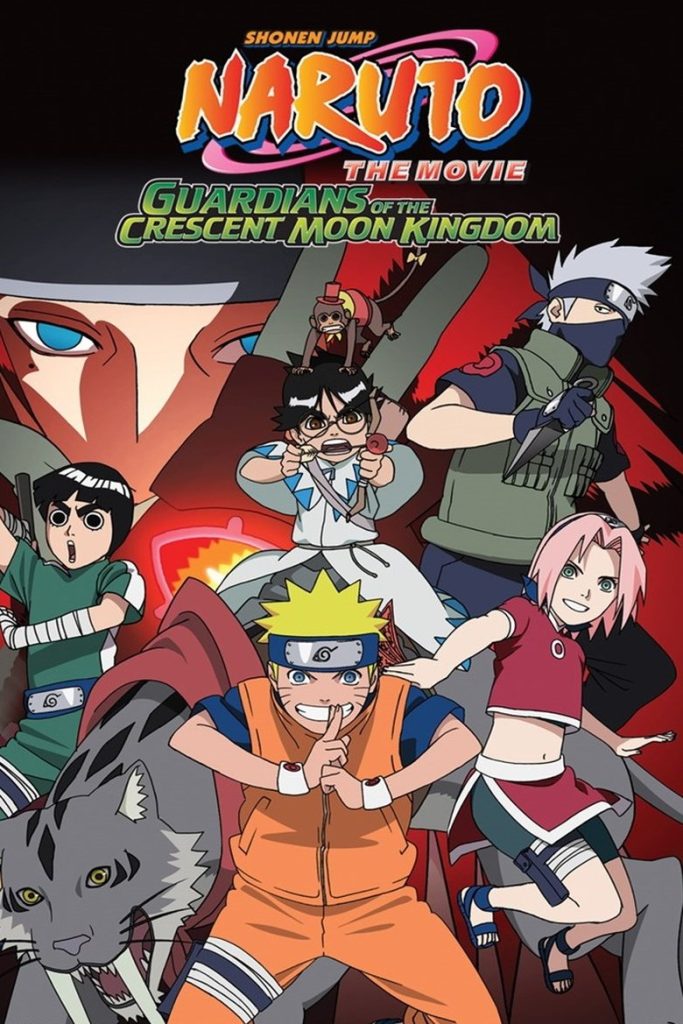
Story overview
In this animated adventure, Naruto and his ninja companions are tasked with protecting a wealthy prince during his world travels. The prince has a materialistic attitude and tends to buy whatever he wants, which creates challenges for his protectors. The story follows their mission as they navigate the prince's behavior while ensuring his safety throughout their journey.
Parent Guide
Animated adventure with fantasy action and themes of responsibility, suitable for older children with parental guidance.
Content breakdown
Fantasy martial arts combat with ninja techniques, characters thrown or hit, some perilous situations but injuries are not graphic.
Some intense action sequences and confrontations that might be startling but not truly frightening.
No concerning language noted in typical anime style.
No sexual content or nudity present.
No substance use depicted.
Some tense moments during action sequences and character conflicts, but generally lighthearted adventure tone.
Parent tips
This movie features typical anime-style action with martial arts combat, magical ninja techniques, and some perilous situations. There's cartoonish violence where characters get thrown around or hit, but injuries are generally not graphic. The prince's materialistic worldview and spoiled behavior might provide opportunities to discuss values like humility and responsibility with children.
Parents should note the TV-14 rating suggests content may be unsuitable for children under 14 without parental guidance. The action sequences are stylized and fantasy-based rather than realistic, but some scenes might be intense for younger viewers. The film explores themes of duty, friendship, and personal growth through the interactions between the ninja team and the prince they're protecting.
Parent chat guide
You could also talk about how the characters resolved conflicts and whether they made good choices when facing challenges. This could lead to conversations about problem-solving, teamwork, and how people can change their attitudes over time. The movie provides opportunities to discuss why people might behave selfishly and how friendship and duty can help someone grow.
Parent follow-up questions
- What was your favorite part of the movie?
- How did the ninjas help the prince?
- What does it mean to be a good friend?
- What colors did you see in the movie?
- Did you see anyone being kind to others?
- Why do you think the prince acted the way he did?
- How did the ninja team work together?
- What would you do if you had to protect someone?
- What did you learn about responsibility from this movie?
- How did the characters solve problems in the story?
- What message do you think the movie was trying to share about materialism?
- How did the characters show growth or change during the story?
- What qualities make someone a good protector or leader?
- How did the animation style affect how you experienced the action scenes?
- What would you have done differently if you were one of the characters?
- How does this movie explore themes of duty versus personal feelings?
- What commentary might the film be making about wealth and privilege?
- How does the animation medium affect how violence is portrayed compared to live-action?
- What cultural elements from Japanese storytelling did you notice?
- How do the characters' different approaches to their mission reflect real-world teamwork challenges?
🎭 Story Kernel
At its core, 'Guardians of the Crescent Moon Kingdom' explores the corrupting nature of inherited privilege versus earned character. The film presents a fascinating inversion: the spoiled prince Hikaru Tsuki is the true antagonist of his own story, while the mercenary gang leader Michiru serves as a dark mirror to Naruto's own orphan background. The driving force isn't the protection mission but Naruto's gradual realization that leadership requires more than strength—it demands empathy and responsibility. The movie cleverly uses the royal family's dysfunction to comment on how power without wisdom creates its own destruction, making this less about ninja action and more about what makes a true guardian.
🎬 Visual Aesthetics
The film employs a vibrant, almost tropical color palette that contrasts sharply with Konoha's earthy tones, visually emphasizing the cultural clash. Action sequences favor wide shots that showcase the unique fighting styles of the Moon Kingdom's guardians versus Konoha ninja. Particularly striking is how the camera lingers on character expressions during quiet moments—Naruto's frustration with the prince, Sakura's analytical observations—creating emotional depth beyond the spectacle. The crescent moon symbolism appears subtly in architecture and costume details, reinforcing the kingdom's identity while the animation fluidity in Michiru's wind-based techniques creates a distinct visual signature.
🔍 Details & Easter Eggs
💡 Behind the Scenes
This was the third Naruto movie and marked a production shift toward more elaborate overseas settings. Director Toshiyuki Tsuru specifically wanted a 'road trip' feel, hence the varied locations from beaches to ancient ruins. Voice actor Junko Takeuchi noted recording sessions were particularly challenging due to Naruto's increased emotional range in this film. The Moon Kingdom's design drew inspiration from Southeast Asian temple architecture, a departure from previous films' Japanese influences. Interestingly, this was one of the last Naruto films before the time skip to Shippuden, making it a transitional piece in the franchise.
Where to watch
Choose region:
- Netflix
- Netflix Standard with Ads
- Amazon Video
- Apple TV
- Google Play Movies
- YouTube
- Fandango At Home
Trailer
Trailer playback is unavailable in your region.