
Natchathiram Nagargiradhu (2022)
Story overview
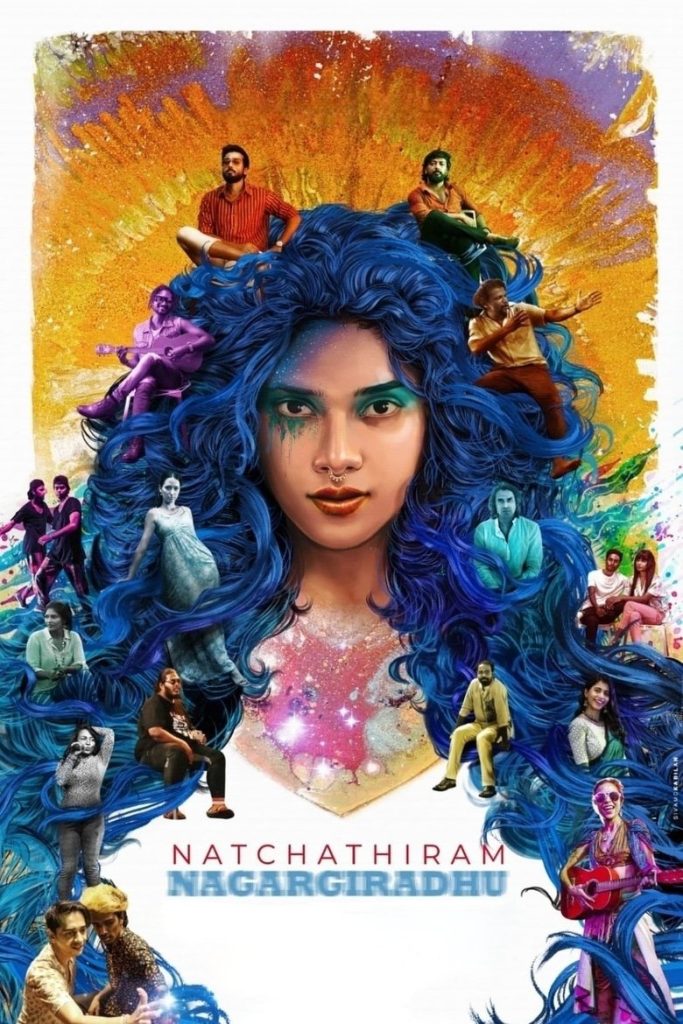
Natchathiram Nagargiradhu is a 2022 Indian Tamil-language romantic drama-comedy directed by Pa. Ranjith. The film follows modern-day theatre artists who fall in love while creating a play about love itself. As they navigate their relationship, they confront how social structures shape their values and beliefs, realizing that for their love to thrive, they must challenge societal norms. Set against a backdrop of politics and artistic expression, the story explores themes of identity, tradition versus modernity, and the personal costs of defying social expectations.
Parent Guide
A thoughtful romantic drama that uses theatre as a metaphor to explore how social structures impact personal relationships. While not visually intense, its thematic depth makes it best for mature teens.
Content breakdown
No physical violence shown. Some tense discussions and emotional confrontations about social injustice. Peril is psychological/social rather than physical.
Some emotionally intense scenes dealing with social oppression and relationship conflicts. Theatrical scenes might include dramatic performances about difficult topics.
Occasional mild language in emotional moments. Some political/social critique dialogue that could be considered strong in context but not profane.
Romantic relationships and discussions about love. Some kissing and affectionate moments. No nudity or explicit sexual content.
No depiction of substance use.
Emotionally charged discussions about social justice, caste discrimination, and personal sacrifice. Characters experience significant internal conflict about defying social expectations.
Parent tips
This film deals with mature themes of social critique, political commentary, and romantic relationships within a conservative society. While there's no graphic content, the discussions about caste, gender roles, and systemic oppression may require context for younger viewers. The theatrical setting provides some comedic relief, but the overall tone is thoughtful and dramatic. Best for teens who can engage with complex social issues.
Parent chat guide
Parent follow-up questions
—
—
- What did you think about the characters putting on a play?
- How do you think the friends helped each other in the story?
- How does the film connect love with political and social issues?
- What social structures is the film criticizing, and why?
- Do you think the characters' approach to challenging norms was effective? Why or why not?
- How does the theatrical setting enhance the film's messages about performance and identity?
🎭 Story Kernel
The film is not merely a romance but a forensic examination of love as a political act. It explores how caste, class, and societal expectations are the uninvited third parties in every relationship. The central conflict between Iniyan and Rene is driven by their differing ideologies on love's purity versus its practicality. Iniyan represents a traditional, possessive ideal, while Rene champions a liberated, individualistic view. Their clashes in the theater troupe become microcosms of larger societal debates, questioning whether love can ever exist outside the frameworks of power and identity that shape us. The ending doesn't resolve their romance but validates the process of questioning as more important than the answer.
🎬 Visual Aesthetics
Director Pa. Ranjith and cinematographer Kishore Kumar P employ a vibrant, theatrical palette. The camera often adopts a documentary-like intimacy during rehearsals and arguments, placing us within the troupe's raw energy. In contrast, the romantic scenes between Iniyan and Rene are framed with deliberate distance and cooler tones, visually underscoring their emotional disconnect. The use of the proscenium stage as a recurring motif is brilliant—characters perform their ideologies as much as their lines, blurring the line between life and art. The color red is used sparingly but powerfully, often appearing in Rene's costumes or set pieces to signal defiance, passion, and the blood of caste violence that stains their world.
🔍 Details & Easter Eggs
💡 Behind the Scenes
The film features a largely fresh cast, with Dushara Vijayan (Rene) and Kalidas Jayaram (Iniyan) delivering breakthrough performances. Director Pa. Ranjith, known for his politically charged cinema like 'Kaala' and 'Sarpatta Parambarai', shot extensively in real theatre spaces in Chennai to capture authentic rehearsal energy. The songs by Tenma are integral to the narrative, with 'Naan Yaar' becoming an anthem of individual identity. Notably, the script was developed through workshops with the actors, allowing their interpretations to shape the characters' debates on love and politics, lending the dialogues a rare, unscripted authenticity.
Where to watch
Choose region:
- Netflix
- Netflix Standard with Ads
Trailer
Trailer playback is unavailable in your region.