
Navalny (2022)
Story overview
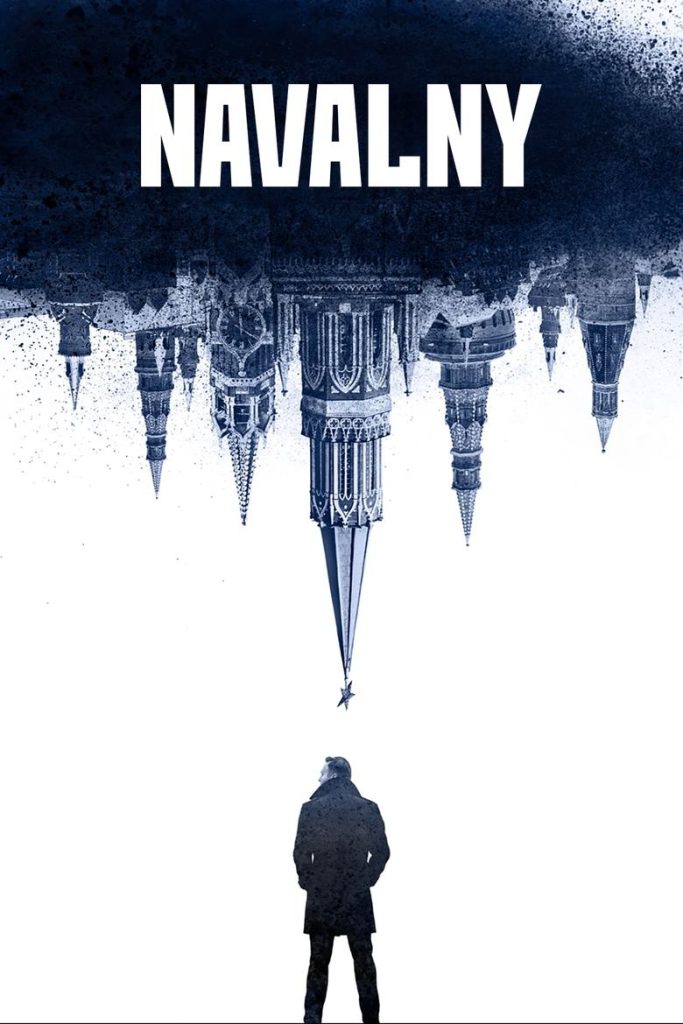
This 2022 documentary follows Russian opposition leader Alexei Navalny as he recovers from a near-fatal nerve agent poisoning in August 2020. During his rehabilitation, he and his team investigate the assassination attempt, uncovering evidence pointing to state involvement. Despite the clear danger, Navalny makes the courageous decision to return to Russia, where he faces immediate arrest and imprisonment. The film provides an intimate look at his personal life with his family while documenting a high-stakes political thriller about corruption, courage, and the fight for democracy.
Parent Guide
A politically charged documentary about real-life assassination attempts and political oppression. While not graphically violent, the subject matter involves life-threatening situations, government corruption, and imprisonment. Best for mature teens who can process complex geopolitical contexts.
Content breakdown
Discusses and investigates an assassination attempt via nerve agent poisoning (no graphic visuals shown). Shows security footage of the poisoning incident. Includes tense scenes of political persecution and imprisonment. The constant threat of violence and state oppression creates sustained peril.
Disturbing themes of government-sponsored assassination attempts, political persecution, and imprisonment. The reality that a government would poison its own citizen is psychologically unsettling. Scenes of Navalny's medical recovery and the constant threat to his life create tension.
Occasional mild profanity in subtitles or translations. Some political rhetoric and strong verbal exchanges. No frequent strong language.
No sexual content or nudity. Focus is entirely on political investigation and personal recovery.
No substance use depicted. The poisoning involves a nerve agent, but this is presented as a criminal act, not recreational use.
High emotional intensity due to life-and-death stakes, family separation, political persecution, and the courage required to face imprisonment. The documentary creates tension through real-life jeopardy and moral dilemmas about standing up to authoritarian power.
Parent tips
This documentary deals with mature political themes including assassination attempts, government corruption, and imprisonment. While there's no graphic violence shown, the subject matter involves life-threatening situations and political oppression. Best suited for mature teens who can understand complex geopolitical contexts. Consider watching together to discuss themes of courage, justice, and political activism.
Parent chat guide
Parent follow-up questions
—
- What does it mean to be brave?
- Why do you think someone would want to hurt this man?
- How did his family help him get better?
- What is political opposition and why is it important in some countries?
- How do investigators find evidence when governments don't want them to?
- What would you do if you discovered something dangerous but important?
- What are the ethical dilemmas in returning to danger for a political cause?
- How does this documentary illustrate the power and limitations of individual activism?
- What parallels do you see between this story and other political movements?
- How do authoritarian governments maintain control, and what challenges do dissidents face?
🎭 Story Kernel
At its core, 'Navalny' is less about one man's political ambitions and more about the anatomy of courage in the face of absolute power. The film explores what happens when an ordinary person—a father, husband, activist—is systematically transformed into a symbol through relentless state persecution. Director Daniel Roher captures Navalny not as a flawless hero but as a complex figure driven by dark humor, strategic calculation, and an unshakable belief in exposing truth. The documentary's tension comes from watching Navalny weaponize his own near-death experience, turning the Novichok poisoning into evidence against Putin's regime. It's ultimately about the psychological warfare between an individual and an autocratic state, where every phone call, interview, and recovery milestone becomes political theater.
🎬 Visual Aesthetics
Roher employs a vérité style that feels both intimate and urgent, using handheld cameras to create a sense of being embedded in Navalny's inner circle. The color palette shifts dramatically—from the sterile whites of the German hospital where Navalny recovers to the grim, bureaucratic grays of Russian government buildings. One powerful visual motif is the juxtaposition of mundane domestic moments (Navalny exercising in sweatpants, his family cooking) with high-stakes political maneuvering. The film's most chilling sequence uses split-screen to show Navalny's phone call with his alleged poisoner while displaying the forensic evidence on screen, turning a conversation into cinematic evidence. The camera often lingers on Navalny's scarred body, making his physical vulnerability a central visual theme.
🔍 Details & Easter Eggs
💡 Behind the Scenes
The film's most explosive scene—Navalny's phone call with a Russian agent who allegedly poisoned him—was orchestrated by investigative journalist Christo Grozev from Bellingcat. Director Daniel Roher initially planned a different film about Russian opposition but shifted focus after Navalny's poisoning. Much of the footage was shot covertly in Russia by brave local filmmakers who risked arrest. The hospital scenes in Germany were filmed with special permission during Navalny's actual rehabilitation. Notably, the documentary crew was present when Navalny received the news about his suspended sentence violation, capturing his real-time reaction.
Where to watch
Choose region:
- HBO Max
- HBO Max Amazon Channel
- HBO Max Amazon Channel
Trailer
Trailer playback is unavailable in your region.