
Network (1976)
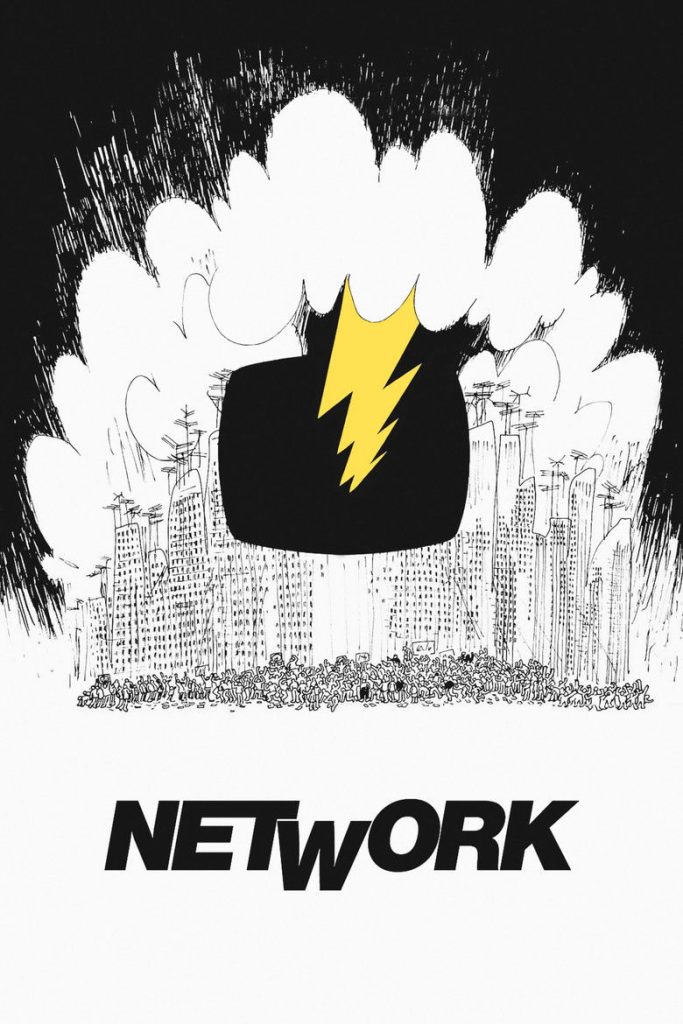
Story overview
Network is a 1976 drama about a veteran news anchor who threatens suicide on live television after being forced into retirement. The network executives, seeing his emotional outbursts drive up ratings, decide to exploit his breakdown for profit. The film explores themes of media manipulation, corporate greed, and the erosion of journalistic integrity in pursuit of higher viewership.
Parent Guide
Network is an adult-oriented drama with mature themes about media ethics, containing strong language and emotional intensity.
Content breakdown
No physical violence shown, but includes threats of suicide and tense confrontations.
Contains emotional breakdowns, manipulation themes, and cynical portrayal of media that may disturb sensitive viewers.
Frequent strong profanity throughout the film.
Brief sexual references and innuendo in dialogue.
Characters drink alcohol in social and stressful situations, with some scenes showing intoxication.
High emotional scenes including anger, despair, and moral conflict among characters.
Parent tips
Network is rated R for strong language and mature themes. The film contains frequent profanity, discussions of suicide, and intense emotional scenes that may be disturbing for younger viewers. Parents should be aware that the movie critiques media sensationalism and corporate ethics through dark satire, which requires mature perspective to understand.
The film's central premise involves a television anchor threatening suicide on air, which is presented as a plot device to critique media exploitation. While no graphic violence is shown, the emotional intensity and cynical tone make this inappropriate for children and young teens. The R rating reflects its adult-oriented content and complex themes about morality in broadcasting.
Parent chat guide
After watching, focus conversations on media literacy rather than the specific plot events. Ask what your child thinks about how television networks balance ratings with ethical responsibilities. Emphasize that while the film presents extreme scenarios, it raises valid questions about media influence that are worth discussing as a family.
Parent follow-up questions
- What do you think television is for?
- How do you feel when you watch TV?
- What makes a good TV show?
- Why do you think people watch TV news?
- What does it mean to be honest on television?
- How can we tell if something on TV is true or just for entertainment?
- How do television networks decide what to show?
- What responsibilities do news reporters have to their audience?
- Why might someone's feelings be important when making TV shows?
- How does media sensationalism affect public perception of important issues?
- What ethical boundaries should exist in television programming?
- How can viewers maintain critical thinking while consuming media content?
🎭 Story Kernel
At its core, 'Network' is a savage indictment of capitalism's colonization of human emotion and truth. The film argues that television—and by extension, all media—has evolved from a tool for information into a profit-driven machine that commodifies outrage, madness, and despair. Howard Beale's breakdown isn't a tragedy for the network; it's a marketable product. The characters are driven not by journalistic integrity or human compassion, but by ratings, corporate mandates, and personal ambition. The chilling climax isn't Beale's assassination, but the boardroom meeting immediately after, where executives coldly calculate how to schedule the murder coverage between commercials. The real horror is the system's flawless, amoral efficiency.
🎬 Visual Aesthetics
Sidney Lumet's direction is deceptively straightforward, using a gritty, naturalistic visual style that mirrors the film's 'real news' aesthetic. The camera often feels like a passive, unblinking witness—lingering in tight close-ups during Howard Beale's rants, making the viewer complicit in his exploitation. The color palette is dominated by drab browns, grays, and the sterile fluorescent whites of corporate offices and control rooms, visually reinforcing the soul-crushing bureaucracy. Key scenes use stark compositional contrasts, like Beale's small, rain-drenched figure against the vast, dark void of the studio, symbolizing the individual swallowed by the media abyss. The assassination scene is filmed with shocking mundanity, making the violence feel like just another televised segment.
🔍 Details & Easter Eggs
💡 Behind the Scenes
The iconic 'mad as hell' speech was almost cut. Producer Howard Gottfried thought it was 'over the top' and feared audiences wouldn't buy it. Paddy Chayefsky fought fiercely to keep it. Peter Finch (Howard Beale) died of a heart attack two months before the Oscars, becoming the first posthumous winner of the Best Actor Academy Award. Faye Dunaway based her performance as Diana Christensen on several real-life TV executives she met, noting their terrifying, emotionless focus on ratings. The film was shot almost entirely in Toronto, standing in for New York, due to lower production costs. Many of the background TV screens used live feeds and pre-recorded tapes to create authentic, chaotic control room atmosphere.
Where to watch
Choose region:
- Amazon Video
- Apple TV Store
- Google Play Movies
- YouTube
- Fandango At Home
- Spectrum On Demand
Trailer
Trailer playback is unavailable in your region.