
Never-Ending Man: Hayao Miyazaki (2017)
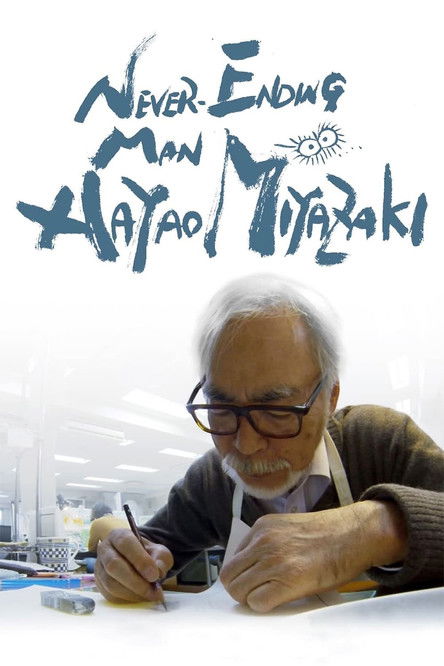
Story overview
This 2017 Japanese documentary provides an intimate look at legendary animator Hayao Miyazaki following his 2013 retirement announcement. The film follows Miyazaki as he grapples with retirement, explores new animation technologies, and ultimately returns to create his final short film. Viewers get unprecedented access to Studio Ghibli's creative process and witness the artistic struggles and triumphs of one of animation's greatest masters.
Parent Guide
A gentle, inspiring documentary suitable for most school-aged children interested in animation or art. The pace is contemplative and focuses on creative process rather than dramatic storytelling.
Content breakdown
No violence or peril depicted. The documentary focuses entirely on creative work and personal reflection.
Nothing scary or disturbing. Some brief discussions of aging and mortality might be mildly thoughtful for sensitive children.
No offensive language. Subtitled Japanese dialogue contains professional artistic discussions.
No sexual content or nudity.
No depiction of substance use. Brief scenes show adults drinking tea during meetings.
Mild emotional moments as Miyazaki reflects on his career and creative struggles. Some children might find his frustration with technology relatable.
Parent tips
This documentary offers a wonderful opportunity to introduce children to the creative process behind beloved animated films. While suitable for most school-aged children, younger viewers may find the pacing slow or struggle to understand the artistic concepts discussed. The film provides excellent discussion material about creativity, perseverance, and artistic passion. Consider watching some Miyazaki films with your child before viewing this documentary to enhance their appreciation.
Parent chat guide
Parent follow-up questions
- Did you see any drawings or characters you recognized?
- What was your favorite part of the movie?
- What do you think it means to make a movie?
- What surprised you about how animated movies are made?
- How did Miyazaki show he was a creative person?
- Why do you think Miyazaki kept working even after retiring?
- What challenges did Miyazaki face in creating animation?
- How did technology change the way Miyazaki worked?
- What does this documentary teach us about artistic passion?
- How does this documentary change your understanding of Miyazaki's creative process?
- What insights does the film provide about the relationship between traditional and digital animation?
- How does Miyazaki's struggle with retirement reflect broader themes about purpose and creativity?
🎭 Story Kernel
This film is not a celebratory retrospective but a raw, intimate portrait of an artist confronting his own obsolescence. The core theme is the painful paradox of creation: Miyazaki's entire identity is built on bringing imaginary worlds to life, yet he's haunted by the knowledge that his physical time and the relevance of his hand-drawn craft are finite. What drives him isn't a quest for another masterpiece, but a desperate, almost angry need to prove he still matters in a digital age he openly despises. We see him retire, only to be pulled back by an idea—a CGI short about a crawling caterpillar—that becomes his white whale. His struggle is less about finishing the project and more about reconciling his legendary past with an uncertain, technologically-dominated future.
🎬 Visual Aesthetics
The visual language is starkly observational, a deliberate contrast to Studio Ghibli's lushness. Handheld cameras follow Miyazaki through cluttered, workaday studio spaces, emphasizing the unglamorous reality of creation. The color palette is muted—lots of grays, browns, and the sterile white of computer screens—which makes the glimpses of his vibrant hand-drawn storyboards feel like eruptions of his inner world. Key symbolism lies in the persistent shots of his hands: sketching, gesturing in frustration, or lying still. These close-ups frame the central conflict: the physical, human tool versus the cold efficiency of the digital render. The documentary's aesthetic itself becomes a metaphor for its subject, valuing the imperfect, human gaze over polished artifice.
🔍 Details & Easter Eggs
💡 Behind the Scenes
The documentary was filmed by Kaku Arakawa over four years, capturing Miyazaki's unguarded moments after his 2013 retirement announcement. The pivotal CGI short, 'Boro the Caterpillar,' was developed by a young team at Studio Ghibli, led by director Kiyofumi Nakajima, who often bore the brunt of Miyazaki's criticism. Notably, the project was ultimately shelved, a fact the film reveals. The documentary's candid access is rare, as Miyazaki is famously private; it was made for NHK and its success led to international distribution, offering an unprecedented look at the master's vulnerable final act.
Where to watch
Choose region:
- HBO Max
- HBO Max Amazon Channel
Trailer
Trailer playback is unavailable in your region.