
Night Is Not Eternal (2024)
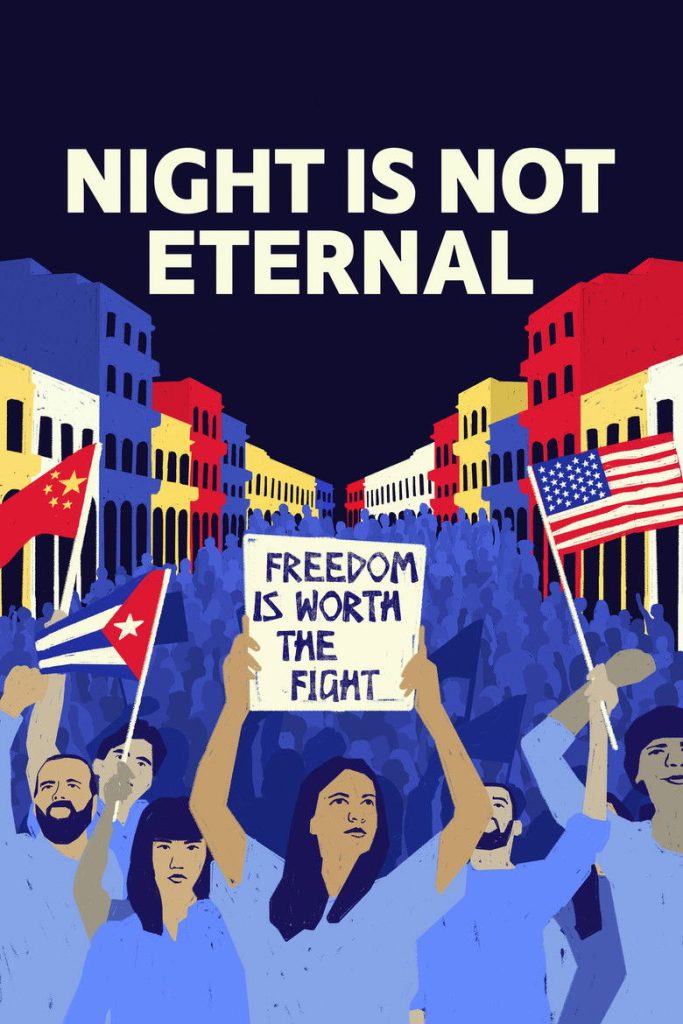
Story overview
Night Is Not Eternal is a 2024 documentary that follows Cuban activist Rosa María Payá's seven-year struggle for democratic reform in Cuba, interwoven with director Nanfu Wang's reflections on her Chinese upbringing and observations of democratic erosion in the U.S. The film explores themes of political activism, authoritarianism, and cross-cultural parallels in governance.
Parent Guide
A thoughtful documentary exploring political activism and authoritarian systems through personal narratives. Contains mature themes about government oppression and democratic erosion.
Content breakdown
Discussions of political violence and oppression, but no graphic violence shown. References to government crackdowns on activists.
Themes of political repression, government surveillance, and personal loss may be disturbing. Discussions of authoritarian control systems.
Possible mild political language, but no strong profanity expected in this documentary context.
No sexual content or nudity in this political documentary.
No substance use depicted.
Emotionally intense discussions of political oppression, personal sacrifice, and democratic struggles. May evoke strong feelings about human rights and freedom.
Parent tips
This documentary deals with mature political themes including authoritarianism, activism, and democratic erosion. It may be challenging for younger viewers due to its complex subject matter and emotional intensity surrounding political oppression. Best suited for teens and adults who can process discussions about government systems and human rights.
Parent chat guide
Parent follow-up questions
—
—
- What does 'democracy' mean?
- Why do people protest against their government?
- What is an activist?
- How do the political situations in Cuba, China, and the U.S. compare according to the film?
- What methods do activists use to create change?
- How does personal background influence political views?
- What are the challenges of fighting for democracy in authoritarian systems?
🎭 Story Kernel
Nanfu Wang pivots her investigative lens from her native China to Cuba, weaving a complex narrative that transcends geographical borders to examine the universal mechanics of state control. The film is less a traditional political documentary and more a philosophical inquiry into the psychology of hope and the exhaustion of dissent. By following activist Rosa María Payá, Wang identifies striking parallels between the propaganda and social structures of her own upbringing and the current Cuban reality. It expresses the painful realization that while the night of totalitarianism is not eternal, the dawn is often deferred by systemic inertia and the heavy personal toll exacted on those who dare to demand change. Ultimately, it is a meditation on the shared DNA of global struggles for freedom.
🎬 Visual Aesthetics
Wang employs a deeply personal, observational style that prioritizes intimacy over grandiosity. The cinematography captures the crumbling beauty of Havana not as a tourist relic, but as a living testament to stagnation. There is a recurring visual motif of looking back—both through archival footage of Wang’s childhood and the literal gaze of activists watching their own history unfold. The lighting often feels naturalistic and unvarnished, reflecting the raw, unfiltered nature of the conversations. Symbolism is found in the domestic spaces; the contrast between the vibrant, public-facing Cuban streets and the hushed, tense interiors where real political discourse occurs highlights the bifurcated existence of citizens living under constant surveillance, where the home becomes the final, fragile sanctuary for truth.
🔍 Details & Easter Eggs
💡 Behind the Scenes
Night Is Not Eternal premiered at the 62nd New York Film Festival in 2024 before its release on HBO and Max. Nanfu Wang, known for her fearless exploration of human rights issues in films like One Child Nation, spent several years filming in Cuba, often operating under the radar to avoid state interference. The documentary serves as a spiritual successor to her previous works, continuing her exploration of how individual lives are shaped and often crushed by state ideologies. It was produced in collaboration with HBO Documentary Films, marking another significant entry in Wang's acclaimed filmography of political resistance.
Where to watch
Choose region:
- HBO Max
- HBO Max Amazon Channel
Trailer
Trailer playback is unavailable in your region.