
Night on Earth (1991)
Story overview
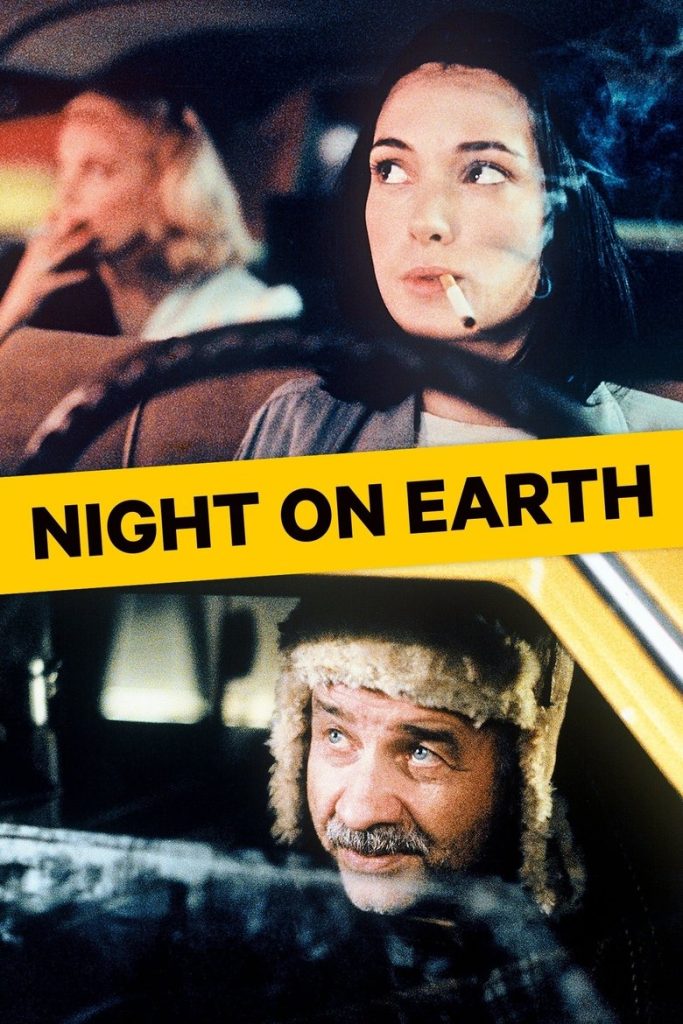
Night on Earth is a 1991 comedy-drama film that follows five separate taxi cab stories occurring simultaneously in different cities around the world. The film explores brief encounters between drivers and passengers during nighttime hours, revealing moments of human connection, humor, and insight. Through these vignettes, the movie examines cultural differences and shared human experiences across global settings.
Parent Guide
This R-rated film contains mature themes and content that requires parental guidance for viewers under 17.
Content breakdown
May contain some tense situations or arguments between characters.
Some scenes might be emotionally intense or contain mature themes.
Likely contains some strong language typical of R-rated films.
May contain sexual references or situations.
Characters may drink alcohol or smoke in social situations.
Contains mature emotional themes and character interactions.
Parent tips
This R-rated film contains mature content that may not be suitable for younger viewers. Parents should preview the movie before deciding if it's appropriate for their family. The film's structure as separate vignettes might require more attention from viewers to follow the different storylines.
Parent chat guide
Parent follow-up questions
- What was your favorite taxi in the movie?
- Did you see any funny parts in the stories?
- What colors did you notice in the nighttime scenes?
- How were the different cities in the movie similar or different?
- What did you learn about how people talk to strangers?
- Which taxi driver story did you like best and why?
- How does the film show that people from different places can have similar experiences?
- What do you think the director wanted us to learn from these nighttime stories?
- How did the separate stories work together to make one complete movie?
- What commentary does the film make about human connection in modern society?
- How do the cultural differences between cities affect the interactions shown?
- What techniques did the filmmaker use to make separate stories feel connected?
🎭 Story Kernel
At its core, 'Night on Earth' explores the temporary, fragile connections forged in liminal spaces. Each vignette is driven by the characters' fundamental human need to be seen and understood, however briefly, before their paths diverge at dawn. The taxi becomes a confessional booth on wheels, where drivers and passengers shed their social roles—celebrity, immigrant, blind woman, clown—revealing raw vulnerabilities. Jarmusch suggests that these ephemeral encounters, not grand narratives, constitute the real substance of urban life. The film posits that genuine communication often occurs not in our destinations, but in the in-between, under the anonymous cover of darkness.
🎬 Visual Aesthetics
Jarmusch employs a stark, vérité visual language, with each city defined by its own distinct, muted color palette: the sickly yellow-green of LA, the deep blues and blacks of New York, the grainy grey of Paris, the warm, earthy tones of Rome, and the ethereal, almost monochromatic blue-white of Helsinki. The camera is largely static, framing conversations intimately within the taxi's confined space, making the cab feel like a moving stage. This claustrophobic focus amplifies the characters' isolation from the sleeping city outside, while the recurring motif of rearview mirrors visually reinforces the theme of fleeting, reflected connections.
🔍 Details & Easter Eggs
💡 Behind the Scenes
The film was shot chronologically through the night in each location, with the entire production wrapped in a remarkably tight eight weeks. Winona Ryder, playing the LA taxi driver, was a last-minute replacement after the original actor dropped out. Roberto Benigni improvised large portions of his manic, confessional monologue in the Rome segment. The minimalist score by Tom Waits was composed and recorded before filming began, and Jarmusch often played it on set to establish mood.
Where to watch
Choose region:
- HBO Max
- HBO Max Amazon Channel
- Criterion Channel
- Cinemax Amazon Channel
- Cinemax Apple TV Channel
- Amazon Video
- Apple TV
- Fandango At Home
Trailer
Trailer playback is unavailable in your region.