
NiNoKuni (2019)
Story overview
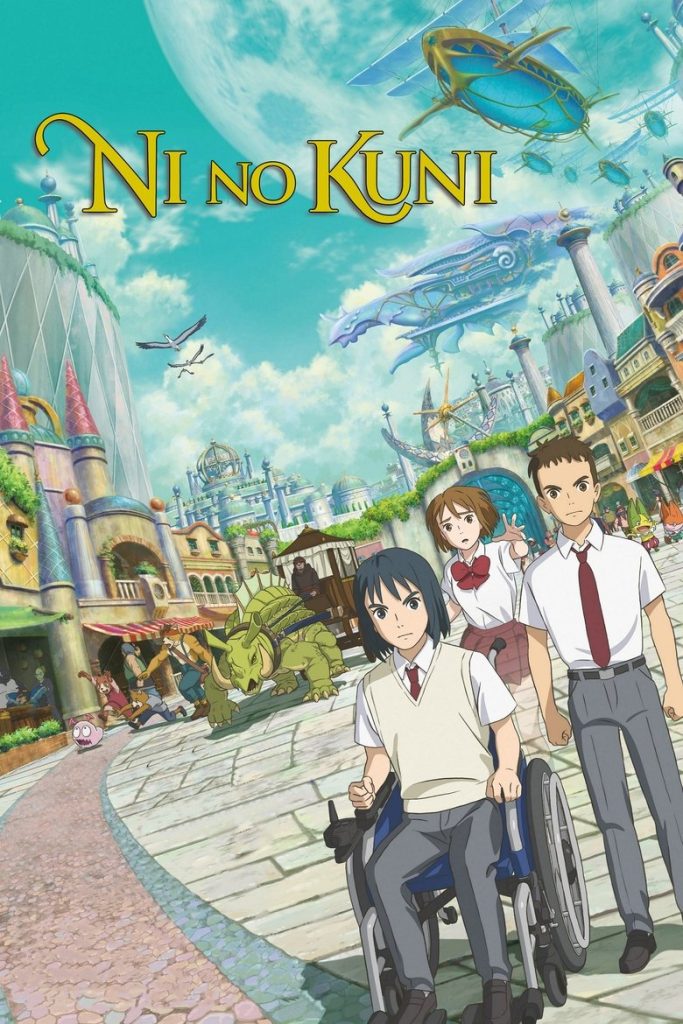
NiNoKuni is a 2019 Japanese animated fantasy film adapted from the popular video game series. The story follows high school friends Yuu and Haru who discover they can travel between two parallel worlds - their ordinary reality and a magical fantasy realm. When their childhood friend Kotona's life is endangered by a mysterious connection between these worlds, the three teenagers embark on a quest to save her. Their journey involves magical creatures, parallel world travel, and complicated emotional choices as they navigate friendship, love, and sacrifice in both realities.
Parent Guide
Animated fantasy adventure with parallel worlds, magical quests, and themes of friendship and sacrifice. Contains mild fantasy violence, emotional intensity, and romantic subplots appropriate for older children and teens.
Content breakdown
Fantasy violence involving magical creatures and energy attacks. Characters face perilous situations and life-threatening dangers. Some scenes show characters being injured or in distress, but without graphic detail. Battles are stylized and appropriate for the fantasy genre.
Some tense moments when characters are in danger. Magical creatures and fantasy settings might be intense for very young viewers. Themes of life-threatening situations and parallel world concepts could be confusing or unsettling for sensitive children.
No offensive language. Dialogue is appropriate for family viewing with mild emotional exchanges between characters.
No sexual content or nudity. Contains mild romantic themes and emotional connections between characters appropriate for the age rating.
No depiction of substance use, alcohol, or smoking.
Characters face life-and-death situations, make difficult choices, and experience emotional conflicts. Themes of sacrifice, friendship under pressure, and romantic complications create emotional weight. Some scenes may be emotionally intense for younger viewers.
Parent tips
This animated fantasy adventure contains mild fantasy violence, emotional intensity around life-and-death situations, and romantic themes appropriate for older children and teens. The parallel world concept and magical quest may be confusing for younger viewers. The TV-14 rating reflects moderate peril and emotional themes rather than graphic content. Best suited for children 8+ who can handle fantasy adventure stories with some emotional weight.
Parent chat guide
Parent follow-up questions
—
- Which magical creature was your favorite?
- What was the bravest thing a character did?
- How were the two worlds different from each other?
- Why do you think the characters had to travel between worlds?
- What would you have done in their situation with Kotona?
- How did the friendship between the three main characters change during their adventure?
- What themes about sacrifice and choice did the film explore?
- How did the parallel worlds metaphor work for the characters' emotional journeys?
- What did you think about the romantic elements in relation to the friendship themes?
🎭 Story Kernel
At its core, 'NiNoKuni' explores trauma's gravitational pull and the seductive danger of escapism. The protagonist's journey to a magical parallel world isn't about adventure but about confronting the grief they're fleeing. The film suggests that fantasy realms, while offering temporary sanctuary, ultimately force us to face what we've left behind. Characters aren't driven by traditional heroism but by the desperate need to rewrite painful memories, making every magical choice a psychological one. The real conflict isn't between good and evil but between accepting reality versus constructing elaborate alternatives.
🎬 Visual Aesthetics
The film employs a striking visual dichotomy: the real world is rendered in desaturated blues and grays with handheld, shaky camerawork, while the fantasy realm bursts with oversaturated colors and sweeping, stable shots. This isn't just aesthetic contrast—it's visual psychology. Action sequences in the fantasy world feel choreographed like dance, emphasizing its constructed nature, while real-world moments have a raw, documentary quality. The camera often lingers on thresholds—doorways, portals, mirrors—visually reinforcing the theme of crossing between realities. Color symbolism is deliberate: warm golds represent memory, cold blues signify loss.
🔍 Details & Easter Eggs
💡 Behind the Scenes
The film's title references the Japanese phrase 'ni no kuni' meaning 'second country,' reflecting its parallel worlds theme. Director Yoshiyuki Momose previously worked as an animator on Studio Ghibli films, bringing that studio's environmental storytelling sensibility to the digital animation. Voice casting intentionally paired actors who'd previously voiced opposite character types, creating subtle vocal dissonance. The fantasy world's architecture blends Cambodian temple designs with Scandinavian folk art, visually representing cultural collision as metaphor for psychological fragmentation.
Where to watch
Choose region:
- Netflix
- Netflix Standard with Ads
Trailer
Trailer playback is unavailable in your region.