
No Country for Old Men (2007)
Story overview
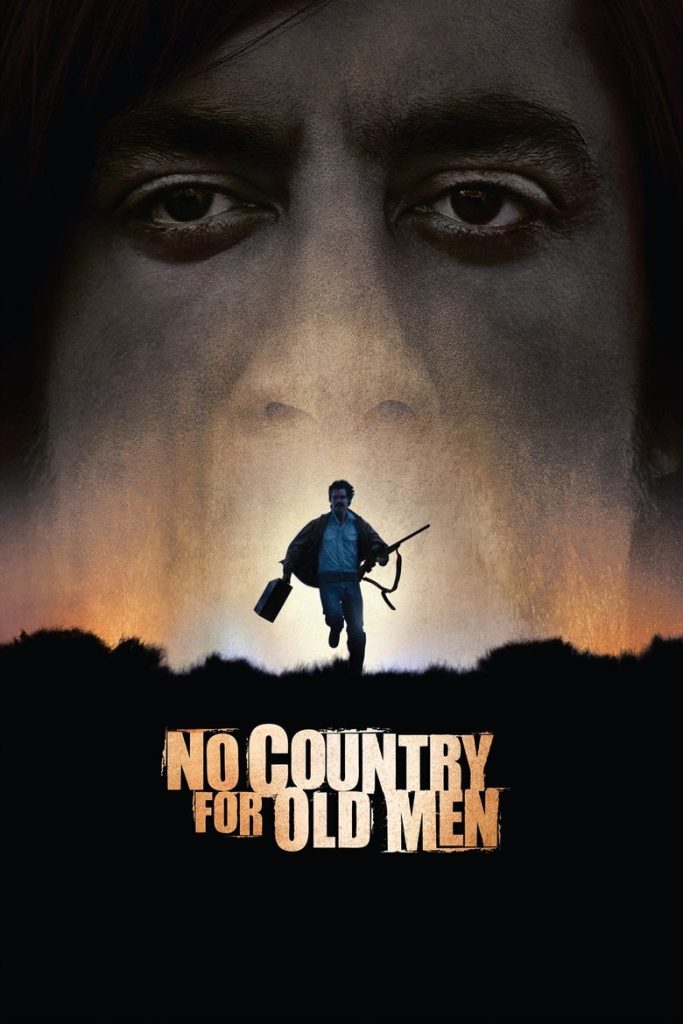
This intense crime thriller follows a man who discovers a large sum of money and drugs in the desert, setting off a violent chain of events. A relentless killer pursues the money while a local sheriff tries to maintain order. The film explores themes of fate, morality, and the changing nature of violence in society through its tense cat-and-mouse narrative.
Parent Guide
A violent, intense crime thriller with mature themes and graphic content suitable only for older teens and adults.
Content breakdown
Frequent graphic violence including shootings, strangulation, and other brutal acts; intense peril and chase sequences
Extremely tense atmosphere, menacing characters, psychological terror, and disturbing themes of fate and violence
Some strong language including profanity, though not excessive for the R rating
Brief sexual references and situations, no explicit nudity shown
Depictions of drug use and trafficking, some alcohol consumption by characters
High tension throughout, bleak themes, morally complex situations, and psychological intensity
Parent tips
This film contains intense violence, disturbing themes, and strong language that make it unsuitable for younger viewers. The R rating reflects graphic depictions of violence, including shootings and other brutal acts, along with pervasive tension and menace throughout. Parents should be aware that the film presents a bleak worldview with morally ambiguous characters and doesn't offer traditional heroic resolutions.
Parent chat guide
Parent follow-up questions
- Did any parts of the movie make you feel scared?
- What did you think about how the characters talked to each other?
- How do you think people should solve problems without fighting?
- What makes someone a good person in a story?
- Did you notice any beautiful places in the movie?
- How did the movie make you feel during the tense moments?
- What do you think about characters who make dangerous choices?
- Why do you think some stories don't have happy endings?
- How do the characters show what they're feeling without words?
- What would you do if you found something that didn't belong to you?
- What themes about fate or chance did you notice in the story?
- How does the film create tension without constant action?
- What different approaches to justice do the characters represent?
- How does the setting contribute to the mood of the film?
- What makes a character memorable even if they're not traditionally heroic?
- How does the film explore the nature of evil and morality?
- What commentary does the film make about violence in society?
- How do the cinematography and sound design contribute to the tense atmosphere?
- What philosophical questions about fate and choice does the film raise?
- How does the film subvert traditional crime thriller expectations?
🎭 Story Kernel
The film is a stark meditation on the erosion of moral order and the terrifying randomness of a world governed by chance rather than justice. At its core, it's about the confrontation with a new kind of evil—one that is not driven by passion or ideology, but by an amoral, deterministic force, represented by Anton Chigurh. Sheriff Bell's narrative frames this as a generational shift he can no longer comprehend or combat. The characters are driven not by traditional arcs, but by their relationship to this indifferent universe: Llewelyn by the futile belief he can outrun consequence, Carla Jean by her adherence to a moral code that no longer applies, and Chigurh by his role as the unfeeling agent of cosmic chance.
🎬 Visual Aesthetics
The Coens employ a stark, minimalist visual language that mirrors the narrative's bleak philosophy. The camera is often static and observational, creating a sense of detached, almost documentary-like fatalism. The vast, sun-bleached Texas landscapes are framed with wide shots that emphasize human insignificance. Action is brutally efficient and devoid of glamour—gunshots are sudden, visceral, and lack musical scoring, making violence feel real and consequential. The color palette is dominated by dusty browns, pale yellows, and washed-out blues, reinforcing the theme of entropy and a world drained of vitality. Symbolism is spare but potent, like the recurring motif of open doors, representing unresolved fate and vulnerability.
🔍 Details & Easter Eggs
💡 Behind the Scenes
Javier Bardem based Chigurh's unsettling haircut on a description from the 1980 Spanish gay subculture scene in Madrid. The iconic cattle bolt stunner was a real prop modified from a standard captive bolt pistol; the Coens insisted on its authentic, horrifying sound. Much of the film was shot on location in Marfa, Texas, using natural light to achieve its desolate aesthetic. Tommy Lee Jones, a Texas native, was instrumental in securing authentic locations and advising on regional authenticity. The Coens famously shot the film almost exactly as scripted, with minimal improvisation, mirroring the deterministic nature of the story itself.
Where to watch
Choose region:
- Paramount+ Amazon Channel
- MGM Plus
- Paramount Plus Essential
- Paramount Plus Premium
- Amazon Video
- Apple TV
- Google Play Movies
- YouTube
- Fandango At Home
- JustWatchTV
Trailer
Trailer playback is unavailable in your region.