
No End in Sight (2007)
Story overview
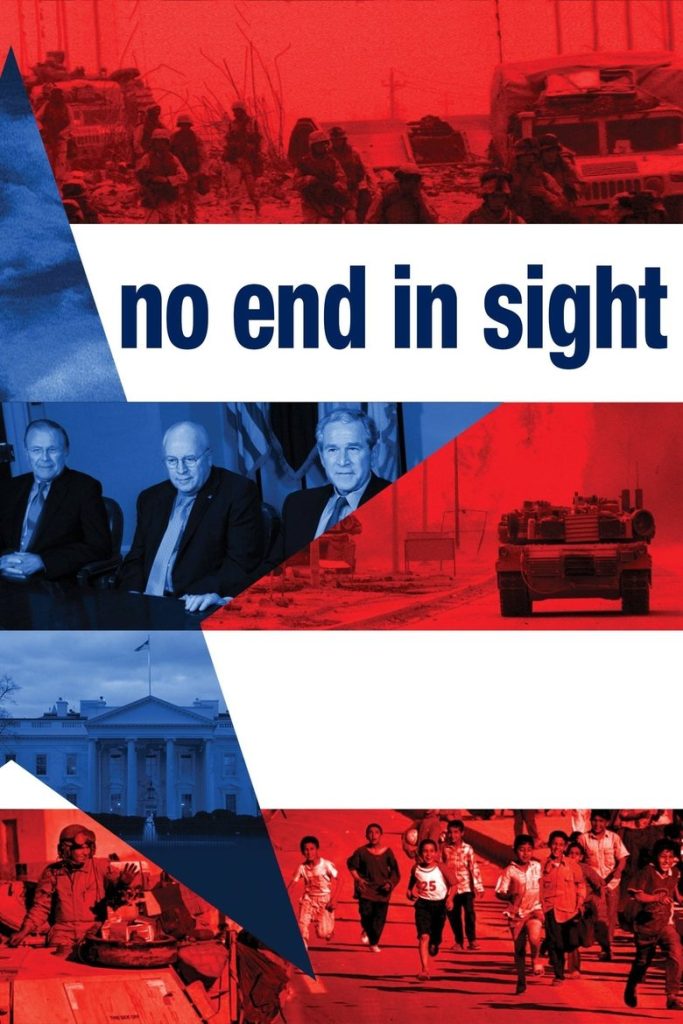
This documentary provides a detailed examination of the early stages of the Iraq War following the 2003 overthrow of Saddam Hussein. It focuses on specific decisions made by U.S. policymakers that contributed to the subsequent instability, including the lack of a comprehensive occupation plan, insufficient troop levels, and controversial edicts issued by the Coalition Provisional Authority. The film presents its analysis through interviews with officials, experts, and journalists, offering a critical perspective on the planning and execution of the post-invasion period.
Parent Guide
A serious documentary examining policy decisions during the Iraq War. Contains no graphic violence, profanity, or sexual content, but deals with mature themes of war, political conflict, and human suffering. Recommended for mature middle schoolers and teenagers who can handle complex political analysis.
Content breakdown
No graphic violence shown. Contains discussions of war, insurgency, and casualties, but no explicit violent imagery. Some archival footage shows military operations and explosions from a distance.
The subject matter involves discussions of war, political instability, and human suffering. The film's tone is serious and analytical rather than sensational, but the content may be disturbing for sensitive viewers due to its examination of policy failures that contributed to violence and instability.
No profanity or offensive language. The language is formal and analytical throughout.
No sexual content or nudity.
No depiction of substance use.
The film maintains a serious, analytical tone but deals with emotionally weighty topics including war, political failure, and human suffering. Interviews with participants convey frustration and regret about decisions made. The cumulative effect is sobering rather than emotionally overwhelming.
Parent tips
This documentary deals with complex political and military topics that may be difficult for younger children to understand. It contains no graphic violence, profanity, or sexual content, but the subject matter involves war, political conflict, and discussions of policy failures that resulted in significant human suffering. Best suited for mature middle schoolers and teenagers who can process historical and political analysis. Consider watching together to provide context and answer questions about the Iraq War and its consequences.
Parent chat guide
Parent follow-up questions
—
- What is a documentary?
- What does 'war' mean?
- Why do countries sometimes disagree with each other?
- What was the Iraq War about?
- Why is planning important when countries make big decisions?
- What does it mean when a documentary says something was a 'mistake'?
- What evidence does the film present to support its conclusions about policy failures?
- How might different political perspectives view the same events differently?
- What are the ethical responsibilities of governments when occupying another country?
- How does this documentary's analysis compare to what you've learned about the Iraq War in school?
🎭 Story Kernel
The film meticulously dissects the catastrophic failures of the U.S. occupation of Iraq, focusing not on abstract political debates but on the concrete, avoidable decisions that led to chaos. It argues that the disaster wasn't inevitable but was engineered by a small group of ideologues in Washington who willfully ignored expert advice, disbanded the Iraqi army, and pursued de-Ba'athification with reckless zeal. The narrative is driven by the profound frustration and moral clarity of the mid-level officials—soldiers, diplomats, and administrators—who witnessed the plan's collapse firsthand and were powerless to stop it. Their testimonies paint a portrait of a tragedy born not of malice, but of a staggering, almost clinical, disregard for reality.
🎬 Visual Aesthetics
The visual language is starkly functional, prioritizing clarity over artistry, which becomes its own powerful aesthetic. It relies heavily on talking-head interviews, shot in sober, neutral settings that emphasize the credibility and gravity of the witnesses. Archival footage—chaotic street scenes, burning vehicles, the looting of Baghdad—is intercut without sensationalism, serving as brutal evidence for the testimony. The color palette is muted, often dominated by the beige of desert landscapes and bureaucratic offices. This deliberate lack of stylistic flourish mirrors the film's central argument: this was a failure of process, documented with the cold, precise detachment of an autopsy report.
🔍 Details & Easter Eggs
💡 Behind the Scenes
Director Charles Ferguson, a political scientist and software entrepreneur with no prior filmmaking experience, financed the documentary himself. He conducted over 200 hours of interviews, including with key figures like L. Paul Bremer and Deputy Secretary of Defense Paul Wolfowitz, whose defensive and evasive answers are starkly contrasted with the candid horror of ground-level personnel. The film's impactful score was composed by Peter Nashel, who used minimalist, tense motifs to underscore the narrative without manipulating emotion. Its premiere at the 2007 Sundance Film Festival won the Special Jury Prize, launching Ferguson's notable career as a forensic documentarian.
Where to watch
Choose region:
- HBO Max
- Philo
- Amazon Video
- Apple TV Store
- Google Play Movies
- YouTube
- Fandango At Home
- FlixFling
Trailer
Trailer playback is unavailable in your region.