
Nothing Left Unsaid: Gloria Vanderbilt & Anderson Cooper (2016)
Story overview
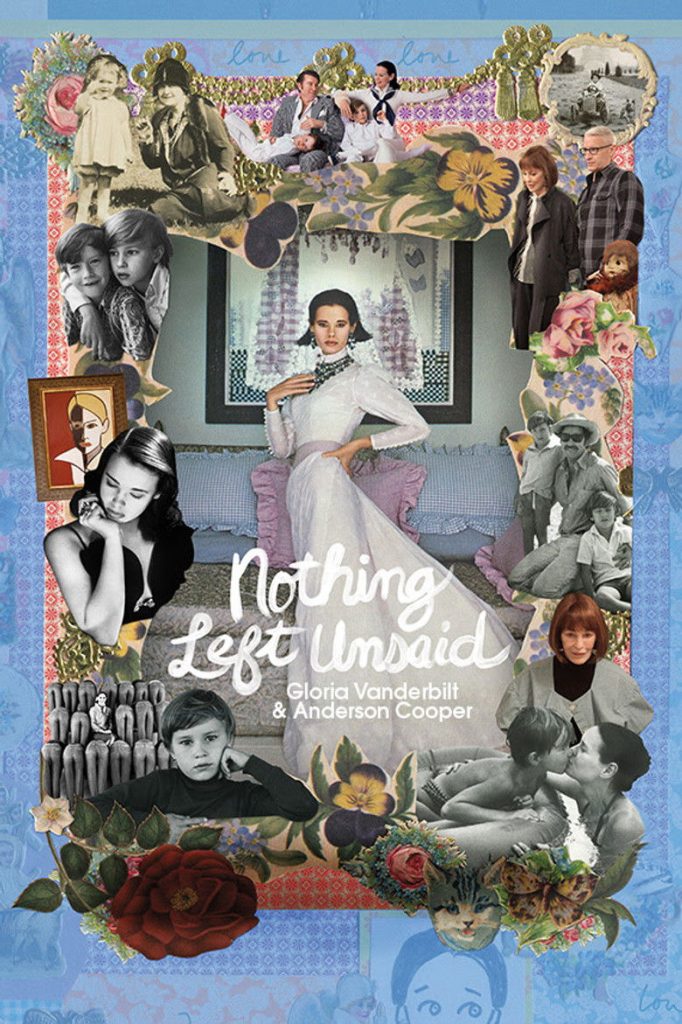
This documentary features intimate conversations between Gloria Vanderbilt and her son Anderson Cooper, exploring her life as a wealthy socialite, artist, and entrepreneur over nine decades. It covers her privileged upbringing, multiple marriages, career pursuits, personal tragedies including the loss of her husband and son, and her resilience through public scrutiny.
Parent Guide
A thoughtful documentary about family legacy, privilege, and resilience that's most appropriate for mature middle schoolers and teenagers due to its emotional depth and complex themes.
Content breakdown
No physical violence or peril depicted. The documentary discusses tragic events (deaths in the family) but shows no violent imagery.
Discussion of death and grief, including the suicide of Vanderbilt's husband and the death of her son. These topics are handled with sensitivity but may be emotionally challenging for younger viewers.
No offensive language noted. Conversations are respectful and articulate throughout.
No sexual content or nudity. The documentary discusses Vanderbilt's multiple marriages in a factual manner without explicit details.
No depiction or discussion of substance use.
High emotional content as Vanderbilt discusses personal tragedies, family conflicts, and her life journey. The mother-son conversations are intimate and sometimes emotionally charged.
Parent tips
This documentary deals with mature themes including death, grief, and family dysfunction. While there's no explicit content, the emotional weight and complex adult relationships make it more suitable for older children and teens. Parents should be prepared to discuss topics like loss, privilege, and media attention.
Parent chat guide
Parent follow-up questions
—
- What did you learn about families from watching this?
- How do you think Anderson felt talking to his mom about her life?
- How do you think growing up wealthy affected Gloria's life?
- What does 'resilience' mean after watching her story?
- How do families remember people who have died?
- How does this documentary explore the relationship between privilege and personal struggle?
- What role does media attention play in shaping public perception of private lives?
- How do different generations within families understand each other's experiences?
🎭 Story Kernel
The film's core is not a celebrity biography but a profound exploration of inherited grief. It reveals how Gloria Vanderbilt and Anderson Cooper, despite their vastly different public lives, are both fundamentally shaped by the same inherited wound: the suicide of a father. Gloria lost her father when she was an infant, and Anderson lost his father to heart disease and his brother to suicide. The documentary posits that their shared compulsion to publicly narrate their lives—Gloria through her art and memoirs, Anderson through journalism—is a lifelong attempt to control and make sense of this foundational, unhealable loss. Their conversation is less an interview and more a mutual exhumation.
🎬 Visual Aesthetics
The visual language is intimate and archival, dominated by tight close-ups that feel confessional. The color palette shifts with eras: the Vanderbilt segments are in crisp, high-contrast black and white, evoking old Hollywood and newspaper glamour, while the contemporary interviews are in warm, saturated tones, suggesting a present-day vulnerability. The most powerful visual motif is the intercutting of Gloria's abstract, often turbulent paintings with family photographs and newsreels. This directly visualizes her internal processing of public trauma into art, making her canvases feel like emotional X-rays of the historical footage we're shown.
🔍 Details & Easter Eggs
💡 Behind the Scenes
The documentary was directed by Liz Garbus, known for her intimate portraits of complex figures. It was shot primarily in Gloria Vanderbilt's iconic Manhattan apartment, filled with her own artwork, making the setting a direct extension of her psyche. Notably, the project originated from a series of conversations Anderson Cooper had with his mother for a book; the documentary crew filmed the final interviews, capturing the raw, unfiltered dynamic that a written transcript could not. The extensive archival footage includes rare home movies from the Vanderbilt family, some not widely seen before this film.
Where to watch
Choose region:
- HBO Max
- HBO Max Amazon Channel
- Amazon Video
- Apple TV Store
- Google Play Movies
- YouTube
- Fandango At Home
Trailer
Trailer playback is unavailable in your region.