
Nothing to Hide (2018)
Story overview
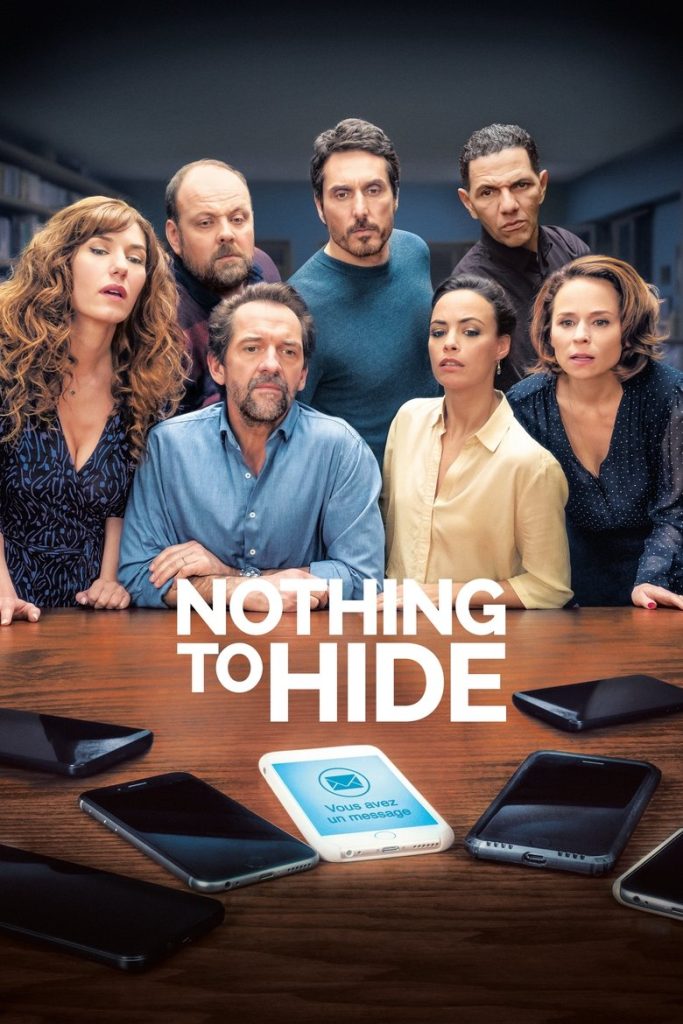
Nothing to Hide (2018) is a French-language drama-comedy directed by Fred Cavayé. During a dinner party, a group of old friends decides to play a risky game: they agree to share every private message, call, and notification that appears on their phones in real-time. What starts as a lighthearted attempt to spice up the evening quickly spirals into chaos as secrets are exposed, relationships are tested, and the characters confront the consequences of their hidden lives. The film explores themes of privacy, trust, and the impact of technology on modern relationships, blending humor with dramatic tension as the characters' vulnerabilities are laid bare.
Parent Guide
This film is best for mature audiences due to its exploration of adult relationships and ethical conflicts. It contains moderate emotional intensity, strong language, and references to sexual content, making it unsuitable for young children. Parents should preview it to assess suitability for their teens.
Content breakdown
No physical violence is depicted. There are tense verbal arguments and emotional confrontations that create a sense of peril as relationships unravel, but no scenes of harm or danger.
The film can be psychologically disturbing as it shows characters experiencing betrayal, humiliation, and emotional distress. Scenes of secrets being exposed may be unsettling for sensitive viewers, but there are no horror elements or graphic imagery.
Includes strong profanity and crude language in French (with subtitles), such as swear words and insults, used during heated arguments. The language reflects the characters' emotional states and conflicts.
Contains references to sexual situations, infidelity, and romantic relationships. There are suggestive dialogues and implications of sexual activity, but no explicit nudity or graphic sexual scenes are shown.
Characters are shown drinking wine and other alcoholic beverages during the dinner party, typical of social settings. There is no depiction of excessive drinking, drunkenness, or drug use.
High emotional intensity due to themes of trust, betrayal, and personal secrets. Scenes involve heated arguments, emotional breakdowns, and tense moments that may be overwhelming for younger or sensitive viewers.
Parent tips
This film is rated TV-MA, indicating it is intended for mature audiences. It deals with adult themes such as infidelity, betrayal, and emotional conflict, which may be confusing or distressing for younger viewers. The content includes strong language, references to sexual situations, and intense emotional scenes. Parents should consider the maturity level of their children before viewing, as the plot revolves around secrets and lies that could prompt discussions about honesty and digital privacy. It is best suited for older teens and adults who can contextualize the social dynamics and moral dilemmas presented.
Parent chat guide
Parent follow-up questions
—
- How would you feel if someone shared your secrets?
- What does it mean to be a good friend?
- Why do you think the friends agreed to play the game?
- How can technology help or hurt friendships?
- What are some ways to keep private things private?
- What moral dilemmas did the characters face?
- How does the film critique modern social norms around privacy?
- In what ways did the game reveal deeper issues in the friendships?
- How might the story differ if it were set in today's social media landscape?
🎭 Story Kernel
The film explores how technology has become an extension of our identities, questioning whether true intimacy can exist when every private thought is potentially public. It's not just about secrets being revealed; it's about the performative nature of modern relationships. The characters are driven by a desperate need for validation and connection, yet they're trapped by the very devices meant to facilitate it. As their messages are read aloud, we witness how digital communication has replaced genuine emotional exchange, creating personas that often contradict their real selves. The tension builds not from what they hide, but from what they've already willingly exposed online.
🎬 Visual Aesthetics
The cinematography cleverly mirrors smartphone interfaces—tight close-ups during message revelations create a claustrophobic, screen-like frame around characters' faces. The warm, dim lighting of the dinner setting contrasts sharply with the cold blue glow of phone screens, visually representing the conflict between human warmth and digital coldness. Camera movements are deliberately restrained during conversations but become more dynamic when focusing on reactions to messages, emphasizing how technology disrupts natural social flow. The color palette shifts subtly as secrets emerge—starting with rich, inviting tones that gradually desaturate as relationships unravel.
🔍 Details & Easter Eggs
💡 Behind the Scenes
The entire film was shot chronologically over just 12 days to maintain natural emotional progression among the cast. Director Fred Cavayé insisted actors use their actual smartphones during filming, with real (though temporary) social media accounts created for authenticity. The dinner table was a custom-built rotating platform allowing seamless 360-degree shots without cutting. Most dialogue was improvised within scene parameters, with actors only receiving their character's secret messages moments before filming to ensure genuine reactions. The apartment location was chosen specifically for its acoustic properties to enhance the intimate, uncomfortable atmosphere.
Where to watch
Choose region:
- Netflix
- Netflix Standard with Ads
Trailer
Trailer playback is unavailable in your region.