
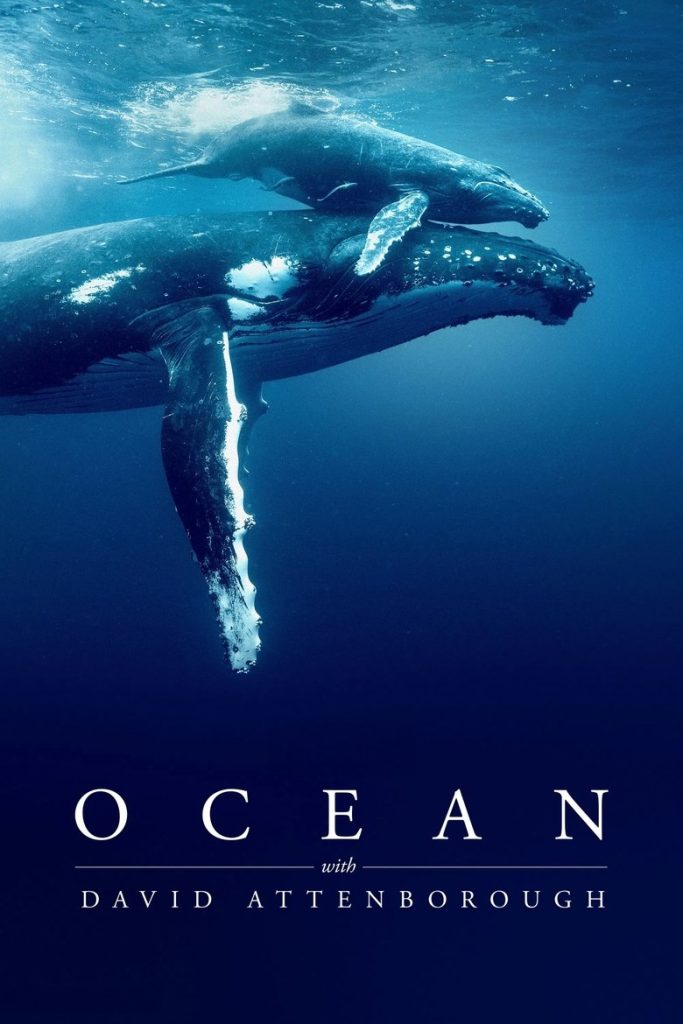
Ocean with David Attenborough (2025)
Story overview
This 2025 documentary narrated by David Attenborough explores the vital role oceans play in Earth's ecosystems. Through stunning visuals of coral reefs, kelp forests, and open waters, it explains how healthy oceans contribute to planetary stability and biodiversity, making it both educational and visually captivating.
Parent Guide
Educational documentary about ocean ecosystems with no concerning content. Suitable for all ages with parental guidance for very young children who might need help understanding concepts.
Content breakdown
Natural predator-prey interactions shown (e.g., fish eating smaller organisms), but no graphic violence. Some scenes might show animals in peril from environmental threats like pollution or coral bleaching.
Some scenes might show environmental degradation (coral bleaching, pollution) that could concern sensitive children. No jump scares or intentionally frightening content.
No offensive language. Scientific and educational terminology used throughout.
No sexual content. Natural animal behaviors shown without explicit mating scenes.
No substance use depicted.
Some scenes about environmental threats might evoke concern or sadness. Overall tone is educational and hopeful about conservation.
Parent tips
This documentary is suitable for most ages due to its educational nature and lack of concerning content. Consider watching together to discuss environmental themes. Younger children might need help understanding some scientific concepts, but the visuals will engage them.
Parent chat guide
Parent follow-up questions
- What was your favorite animal in the ocean?
- What colors did you see in the coral reef?
- Can you make a fish face?
- Why do you think coral reefs are important?
- How do fish breathe underwater?
- What would happen if oceans became polluted?
- How do oceans help regulate Earth's climate?
- What human activities threaten ocean health?
- What surprised you most about ocean ecosystems?
- How does ocean biodiversity contribute to medical research?
- What policy changes could better protect oceans?
- How does this documentary connect to broader environmental issues?
🎭 Story Kernel
The film transcends the traditional nature documentary by framing the ocean as Earth’s primary life-support system rather than a mere backdrop for wildlife. It explores the "blue heart" of the planet, articulating a narrative where the high seas act as a global regulator of climate and oxygen. Attenborough’s narration is less about cataloging species and more about illustrating the profound interconnectedness of marine ecosystems. The film argues that the ocean's health is the ultimate barometer for human survival, moving from the sun-drenched surface to the crushing pressures of the abyss to show how every layer of the sea contributes to the stability of our world. It is a cinematic plea for a paradigm shift in conservation, emphasizing that the high seas are a finite, vulnerable sanctuary.
🎬 Visual Aesthetics
Shot specifically for the IMAX format, the cinematography utilizes a "macro-to-micro" lens strategy that makes the alien familiar and the familiar monumental. The film excels in its use of natural light, capturing the "cathedral effect" of sunbeams piercing the upper layers of the water, which contrasts sharply with the velvety, high-contrast blacks of the deep sea. Symbolically, the vast expanses of blue represent both the infinite resilience of nature and its terrifying fragility. The use of high-frame-rate cameras allows for a hyper-realist depiction of movement, turning the chaotic hunt of predators into a choreographed ballet. This visual precision forces the audience to confront the scale of the environment, making the global stakes feel intimate and immediate through unparalleled clarity and depth.
🔍 Details & Easter Eggs
💡 Behind the Scenes
Ocean is a high-profile collaboration between Silverback Films and the World Wildlife Fund (WWF), directed by Colin Butfield and Toby Nowlan. The duo previously spearheaded the Our Planet series, and this film represents a culmination of their efforts to bring environmental urgency to the big screen. David Attenborough, who was 98 during the film's release cycle, recorded the narration with a focus on the latest climate data, ensuring the film serves as a contemporary scientific record. The production involved years of global filming, utilizing specialized submersibles to reach depths rarely seen by human eyes.
Where to watch
Choose region:
- Disney Plus
- Hulu
- YouTube TV
Trailer
Trailer playback is unavailable in your region.