
Oceans (2010)
Story overview
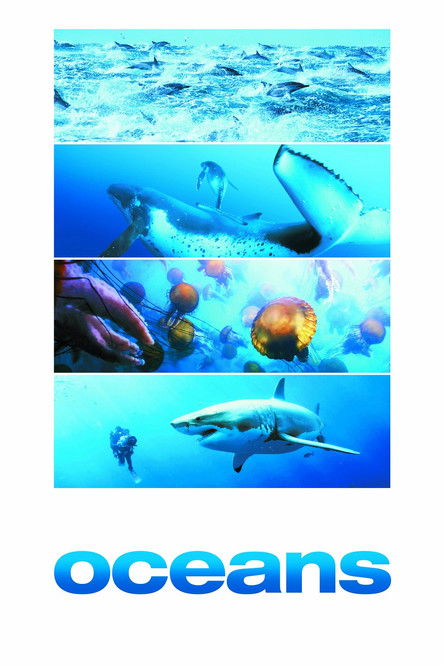
Oceans is a 2010 documentary that explores the vast and diverse marine ecosystems around the world. Through stunning underwater cinematography, it showcases various sea creatures in their natural habitats, from tiny plankton to majestic whales. The film offers a family-friendly look at ocean life without narration, allowing the visuals and natural sounds to tell the story.
Parent Guide
Family-friendly documentary suitable for all ages with educational value about marine life.
Content breakdown
Natural predator-prey interactions shown briefly without graphic detail.
No frightening or disturbing content present.
No dialogue or language concerns.
No sexual content or nudity.
No substance use depicted.
Some scenes of ocean life may evoke wonder or concern for marine environments.
Parent tips
This G-rated documentary is appropriate for all ages, featuring no concerning content. Younger children might find some scenes of predator-prey interactions mildly intense, but these are presented naturally without graphic violence. The film's educational value makes it a great choice for family viewing, especially for children interested in marine biology or nature.
Parent chat guide
Parent follow-up questions
- What was your favorite ocean animal?
- What colors did you see in the ocean?
- How do fish swim in the water?
- What sounds did you hear from the ocean?
- Would you like to visit the ocean someday?
- How are different ocean animals adapted to their environments?
- What did you notice about how sea creatures work together?
- Why is it important to protect ocean habitats?
- What surprised you most about ocean life?
- How do you think climate change might affect the oceans?
- What ecosystem relationships did you observe between different marine species?
- How does the film illustrate the biodiversity of ocean environments?
- What conservation messages did you take from the documentary?
- How do human activities impact the marine ecosystems shown?
- What questions do you have about ocean science after watching?
- How does the film's cinematography enhance our understanding of marine ecosystems?
- What ethical considerations arise from human interaction with ocean environments?
- How does the documentary approach the concept of biodiversity without narration?
- What connections can you make between ocean health and global environmental issues?
- How might marine conservation efforts differ across various regions shown?
🎭 Story Kernel
At its core, 'Ocean's Eleven' explores the seductive fantasy of the perfect crime executed by flawed but brilliant individuals. The film isn't about whether they'll succeed—the opening montage of Danny Ocean's release establishes his inevitable return to Vegas—but about the elegant *how*. The driving force isn't greed, but a complex cocktail of redemption (Danny reclaiming Tess), intellectual vanity (proving they can outsmart a fortress), and the addictive thrill of the game itself. The characters are motivated by the desire to belong to an exclusive club of competence, where every member's unique skill is a puzzle piece in a beautiful, impossible design. The real heist is pulling off the impossible while making it look effortless.
🎬 Visual Aesthetics
The film's visual language is the epitome of cool, controlled confidence. Director Steven Soderbergh (also the cinematographer under the pseudonym Peter Andrews) employs a slick, saturated color palette—deep blues, velvety blacks, and the warm glow of casino gold—that makes Vegas itself a character. The camera moves with the relaxed precision of the crew, using smooth tracking shots and strategic close-ups during planning sequences to make complex logistics feel intimate and clear. The editing is rhythmic, cutting between the crew's preparations and Terry Benedict's sterile, monitored world to heighten the tension of the cat-and-mouse game. The style is deliberately unflashy during the heist itself, making the impossible seem like a series of logical, quiet steps.
🔍 Details & Easter Eggs
💡 Behind the Scenes
The film's iconic ensemble cast had remarkable chemistry partly because many were friends off-screen. George Clooney and Brad Pitt's playful rivalry was genuine, with Clooney reportedly pranking Pitt by replacing his sunscreen with glue. The heist scenes at the Bellagio were filmed with unprecedented access during actual operating hours, requiring meticulous coordination to avoid disrupting guests. Matt Damon's character, Linus, was originally written as older, but his youthful 'rookie' energy added a crucial dynamic. Director Steven Soderbergh shot the film himself on high-definition digital video, a relatively new technology at the time, to achieve its distinctive, crisp look and faster, more flexible shooting schedule.
Where to watch
Choose region:
- Disney Plus
- Amazon Video
- Apple TV
- Google Play Movies
- YouTube
- Fandango At Home
Trailer
Trailer playback is unavailable in your region.