
Official Secrets (2019)
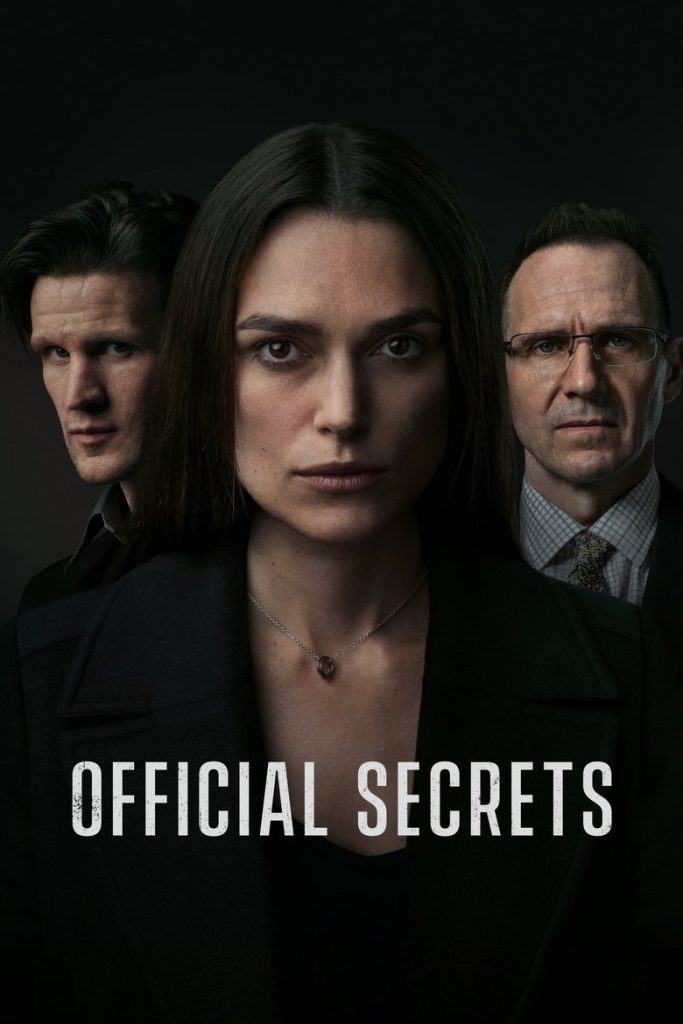
Story overview
Official Secrets is a 2019 thriller based on true events, blending history and drama. The film follows a British intelligence translator who faces a moral dilemma when she discovers government secrets about the Iraq War. It explores themes of whistleblowing, ethics, and political pressure in a tense narrative. The story highlights personal courage and the consequences of challenging authority.
Parent Guide
A tense political thriller with mature themes suitable for older teens and adults.
Content breakdown
Includes tense situations and implied threats, but no graphic violence.
Themes of government surveillance and personal risk may be unsettling.
Some strong language consistent with the R rating.
No sexual content or nudity present.
No substance use depicted.
High-stakes ethical dilemmas create emotional tension.
Parent tips
This film is rated R, primarily for its mature themes and language, making it unsuitable for younger children. It deals with complex political and ethical issues that may be difficult for pre-teens to fully grasp. Parents should consider their child's maturity and ability to handle discussions about government transparency, war, and moral conflicts before viewing.
Parent chat guide
Parent follow-up questions
- What did you think about the people in the movie?
- Was there anything that made you feel worried?
- What colors or sounds did you notice most?
- Why do you think the main character made her choice?
- How did the movie show people working together or disagreeing?
- What does 'doing the right thing' mean to you?
- What are the pros and cons of whistleblowing as shown in the film?
- How does the movie depict the role of media in society?
- What ethical dilemmas did the characters face, and how would you handle them?
- How does the film explore the tension between personal ethics and institutional loyalty?
- What historical context is important to understand the movie's events?
- How might the story differ if set in today's political climate?
🎭 Story Kernel
At its core, 'Official Secrets' is a chilling dissection of institutional gaslighting. The film isn't just about Katharine Gun leaking a memo; it's about the psychological warfare waged against truth-tellers. The driving force isn't heroism but a profound, isolating clarity—Gun sees the legal and moral fraud of the Iraq War build-up and cannot unsee it. The movie masterfully shows how systems protect themselves: not with dramatic villainy, but with bureaucratic inertia, careerist cowardice, and the weaponization of legal technicalities. Every character, from journalists to lawyers, is motivated by a calculus of risk versus conscience, revealing how truth must navigate a maze of compromised loyalties.
🎬 Visual Aesthetics
The cinematography employs a stark, documentary-like realism, using handheld cameras and muted, bureaucratic color palettes—lots of grays, beiges, and fluorescent office lighting—to mirror the bleakness of institutional power. Visual tension comes from tight close-ups on Keira Knightley's face, capturing every micro-expression of anxiety and resolve, contrasted with wide shots that dwarf her within oppressive government architecture. There's no stylized action; the 'thrills' are in the quiet dread of a ringing phone or an unmarked car outside a home. The visual language is one of surveillance and paranoia, making the audience feel the weight of being watched.
🔍 Details & Easter Eggs
💡 Behind the Scenes
Keira Knightley reportedly spent time with the real Katharine Gun to understand her demeanor and motivations. The film uses authentic locations, including areas around London that mirror the actual settings of the 2003 events. Director Gavin Hood, who has a background in both acting and law, focused heavily on legal accuracy, consulting with the actual lawyers involved to recreate the tense courtroom and procedural details faithfully. The memo at the center of the plot is a real document, and the film incorporates actual news footage from the time to ground the drama in historical reality.
Where to watch
Choose region:
- Netflix
- AMC Plus Apple TV Channel
- AMC+ Amazon Channel
- AMC+
- Philo
- The Roku Channel
- Amazon Video
- Apple TV
- Google Play Movies
- YouTube
- Fandango At Home
Trailer
Trailer playback is unavailable in your region.