
Okja (2017)
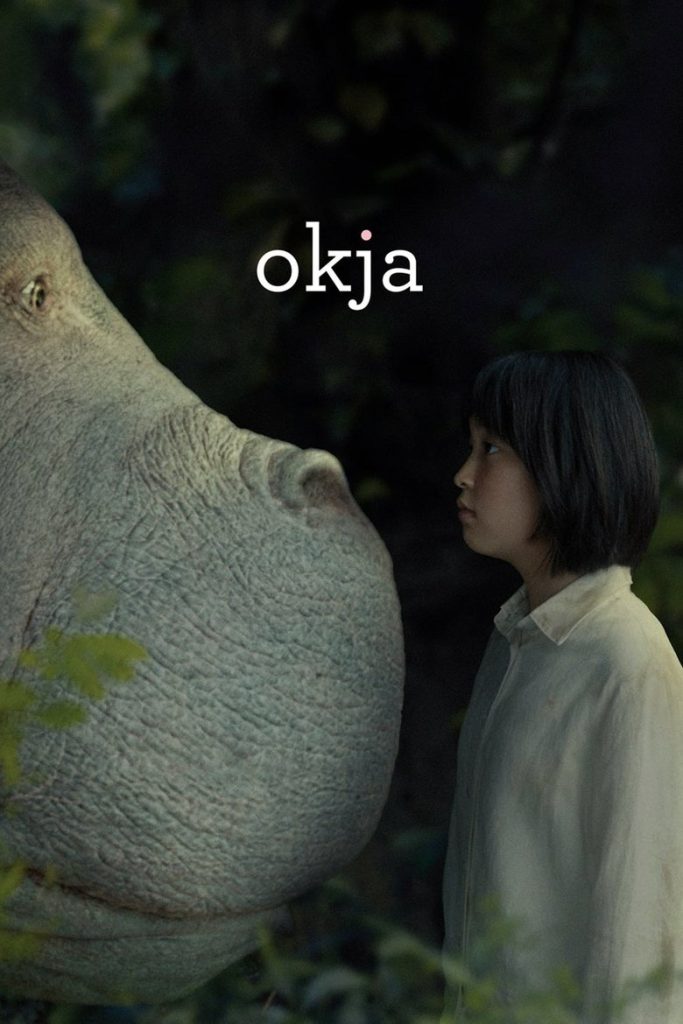
Story overview
Okja is a 2017 adventure-drama about a young girl named Mija who raises a genetically engineered super-pig named Okja in the mountains of South Korea. When a powerful corporation takes Okja to New York for a promotional campaign, Mija embarks on a daring rescue mission to save her beloved companion. The film explores themes of friendship, corporate ethics, and animal welfare through a blend of heartfelt storytelling and science fiction elements.
Parent Guide
A thought-provoking film about friendship and ethics with some intense sequences. Best for mature children who can handle emotional themes.
Content breakdown
Scenes of animals in distress and peril, corporate capture sequences, and tense rescue attempts.
Emotionally intense scenes involving animal separation and corporate exploitation themes.
Some strong language consistent with TV-MA rating.
No sexual content or nudity.
No substance use depicted.
Strong emotional themes of friendship, loss, and ethical dilemmas.
Parent tips
Okja deals with mature themes including corporate exploitation and animal cruelty that may be emotionally challenging for younger viewers. The TV-MA rating reflects intense sequences and some strong language. Parents should be prepared to discuss the ethical questions raised by the film, particularly regarding factory farming and environmental responsibility.
While the central friendship between Mija and Okja is heartwarming, the film contains scenes of peril and distress that could upset sensitive children. The portrayal of corporate greed and its consequences provides opportunities for conversations about consumer choices and activism.
Parent chat guide
Help children process any distressing scenes by emphasizing the positive resolution and the importance of friendship. For older viewers, you might discuss real-world parallels to corporate practices and environmental issues, encouraging critical thinking about media messages.
Parent follow-up questions
- What did you like best about Okja the super-pig?
- How did Mija show she was a good friend to Okja?
- What was your favorite part of their adventure?
- How did Mija feel when she couldn't find Okja?
- What makes someone a good friend to animals?
- Why was it important for Mija to rescue Okja?
- What are some ways people can show they care about animals?
- How did Mija show bravery during her journey?
- What does it mean to be responsible for a pet or animal?
- How did the different characters feel about Okja?
- What ethical questions does the film raise about how we treat animals?
- How does the movie show the difference between individual compassion and corporate interests?
- What strategies did Mija use to overcome obstacles in her rescue mission?
- How might the story be different if told from Okja's perspective?
- What real-world issues does this film make you think about?
- How does the film critique modern corporate practices and consumer culture?
- What commentary does the movie offer about genetic engineering and food production?
- How effective are the film's methods of blending adventure storytelling with social commentary?
- What parallels can you draw between the film's themes and current environmental movements?
- How does the film balance emotional storytelling with its ethical arguments?
🎭 Story Kernel
At its core, 'Okja' explores the commodification of life under late capitalism, using the titular super-pig as a mirror for how corporate interests manipulate nature, ethics, and even activism for profit. The narrative isn't driven by a simple 'save the animals' mission, but by the collision between genuine emotional bonds (Mija and Okja) and systemic exploitation (Mirando Corporation's greenwashing). Characters are propelled by conflicting motivations: Mija's pure love, Lucy Mirando's desperate need for corporate redemption, and the ALF activists' morally compromised tactics. The film suggests that in a world where even rebellion can be co-opted, the most radical act might be the simple, stubborn refusal to participate in the transactional logic of the market.
🎬 Visual Aesthetics
Bong Joon-ho masterfully employs a visual dichotomy to underscore the film's thematic conflict. The lush, verdant mountains of South Korea, shot with a warm, naturalistic palette, represent Okja's true home and Mija's authentic world. This starkly contrasts with the cold, sterile, and artificially lit environments of the Mirando Corporation and the slaughterhouse, dominated by blues, grays, and harsh fluorescents. The camera work shifts accordingly: handheld and intimate in the forest, creating a sense of organic connection, versus static, wide, and surveillant in corporate spaces, emphasizing alienation and control. The chaotic, almost slapstick action of the Seoul chase sequence visually embodies the messy collision of these two worlds.
🔍 Details & Easter Eggs
💡 Behind the Scenes
The super-pig Okja was brought to life through a combination of animatronics and CGI. A life-sized, partially mechanical puppet was built for scenes requiring physical interaction with the child actor Ahn Seo-hyun (Mija), which was crucial for eliciting genuine emotional reactions. Tilda Swinton famously plays dual roles as the twin CEOs, Nancy and Lucy Mirando, a decision made during filming to heighten the theme of corporate duplicity. Much of the Korean mountain footage was shot in Gangwon Province, chosen for its untouched, fairy-tale-like quality to visually establish Okja's true home as a paradise contrasted against urban and industrial landscapes.
Where to watch
Choose region:
- Netflix
- Netflix Standard with Ads
Trailer
Trailer playback is unavailable in your region.