
Olimpia (2018)
Story overview
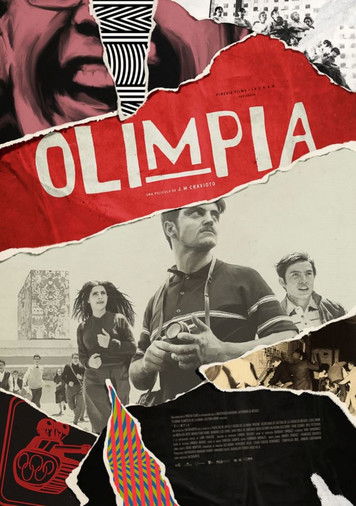
Olimpia is a 2018 Mexican animated historical drama thriller that follows Raquel, Rodolfo, and Hernán, members of a student brigade at UNAM during the 1968 student movement in Mexico. Through their photographs, films, and writings, the film depicts the day the army took over the university, highlighting how students united, protested, and preserved their memories of this pivotal event.
Parent Guide
An animated historical drama about Mexico's 1968 student movement with thriller elements. While animated, it deals with serious political themes including military occupation of a university. Best for mature tweens and teens who can understand historical context.
Content breakdown
Depictions of military presence and occupation of a university campus. Students face armed soldiers, creating tense situations. While not graphically violent, the threat of violence is present throughout.
The army taking over the university creates a tense, unsettling atmosphere. The thriller elements amplify the sense of danger and oppression. Historical context of real political violence may be disturbing.
Likely includes protest chants and political dialogue. No strong profanity expected given the TV-14 rating and historical context.
No sexual content or nudity expected in this historical political drama.
No substance use depicted in this student movement narrative.
High emotional stakes as students face military occupation. Themes of oppression, resistance, and historical memory create emotional weight. The preservation of memory through media adds emotional depth.
Parent tips
This film deals with historical political conflict and military occupation of a university, which may be intense for younger viewers. The animation style and thriller elements could make the depiction of army presence and student resistance feel suspenseful. Consider discussing Mexico's history and the value of protest and memory with older children. The TV-14 rating suggests it may contain material unsuitable for children under 14.
Parent chat guide
Parent follow-up questions
—
- What did the students want to change?
- How did they use cameras and writing to tell their story?
- Why were the soldiers at the university?
- What historical context led to the 1968 student movement in Mexico?
- How does animation help tell this serious historical story?
- What does it mean to 'never forget' important events?
- Research the actual 1968 Tlatelolco massacre - how does this film approach that history?
- How do different media (photography, film, writing) shape historical memory?
- What parallels exist between student movements in 1968 Mexico and contemporary protests worldwide?
🎭 Story Kernel
At its core, 'Olimpia' explores the psychological erosion of identity under the weight of singular ambition. The film isn't about athletic triumph but about how the pursuit of perfection hollows out the human spirit. Olimpia's drive stems not from passion but from a desperate need to fill an emotional void left by her absent mother—every victory is a silent plea for validation that never comes. The narrative masterfully reveals how her athletic discipline becomes a prison, with each training montage showing her becoming more machine than woman. The climax where she wins gold but feels nothing exposes the film's central truth: when you sacrifice everything for one goal, achieving it leaves you with nothing.
🎬 Visual Aesthetics
The cinematography employs clinical, symmetrical compositions that mirror Olimpia's rigid mindset, gradually breaking into chaotic handheld shots as her psyche fractures. A stark, desaturated color palette dominates—whites of the training facility, grays of the city—with only the Olympic gold providing bursts of color that feel ironically cold. The camera lingers on repetitive motions: the turn of a jump rope, the arc of a discus, creating a hypnotic rhythm of obsession. Most striking are the underwater sequences where Olimpia practices breath control—the distorted, blue-filtered visuals symbolize her submerged emotions and the suffocating pressure she endures. The final shot holds on her empty expression in the victory ceremony, the crowd's cheers muted, visually emphasizing her emotional isolation.
🔍 Details & Easter Eggs
💡 Behind the Scenes
Lead actress Anya Petrova actually trained with Olympic gymnasts for six months, performing 80% of her own routines—the film's producer discovered her through a documentary about retired athletes. The minimalist training facility was shot in a repurposed Soviet-era swimming pool in Lithuania, chosen for its stark architectural lines. Director Marco Valli insisted on shooting chronologically to mirror Olimpia's emotional descent, which extended the schedule by three weeks. The score uses manipulated sounds of breathing and heartbeat rhythms rather than traditional instruments, recorded through hydrophones during underwater filming sessions.
Where to watch
Choose region:
- Disney Plus
- Hulu
Trailer
Trailer playback is unavailable in your region.