
Oliver & Company (1988)
Story overview
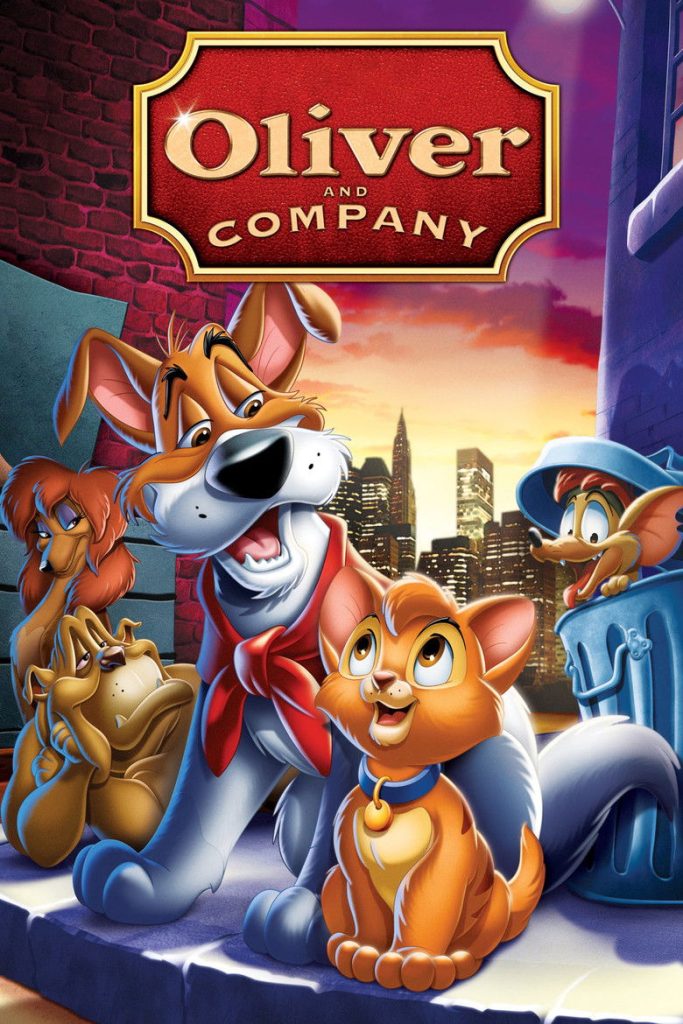
Oliver & Company is a 1988 animated musical adventure that reimagines Charles Dickens' 'Oliver Twist' with animals in 1980s New York City. The story follows Oliver, an orphaned kitten who joins a gang of streetwise dogs led by Dodger, working for the kind but desperate Fagin. When Oliver is adopted by a wealthy girl named Jenny, he finds comfort but also becomes entangled in Fagin's debt to the menacing loan shark Sykes. The film blends comedy, friendship themes, and mild peril as Oliver navigates loyalty, belonging, and danger.
Parent Guide
A lively animated musical with positive messages about friendship and loyalty, suitable for most children but with some moderately intense moments involving a villain and perilous situations.
Content breakdown
Mild cartoon peril includes: Sykes threatening characters with implied harm, a car chase scene where characters are in danger, characters trapped or pursued. No physical violence shown, but tension is created through music and animation.
Sykes is a classic intimidating villain with a deep voice and menacing demeanor that might be frightening to sensitive young viewers. Scenes in dark, rainy settings and moments of suspense could be unsettling for children under 5.
No profanity or inappropriate language. Some mild insults like 'mutt' or verbal threats from Sykes in context of the story.
No sexual content or nudity. Animal characters are depicted in typical animated fashion.
No depiction of substance use. Fagin is shown as poor and desperate but not using substances.
Moderate emotional moments include: Oliver's initial abandonment, Fagin's financial desperation, tense confrontations with Sykes. Positive emotional resolution with friendship and rescue themes.
Parent tips
This G-rated film is generally family-friendly but includes some intense moments. Key points for parents: 1) The villain Sykes is intimidating with a deep voice and threatening behavior, which might unsettle very young children. 2) There are scenes of mild peril involving characters in danger (e.g., a car chase, characters trapped). 3) Themes of poverty and debt are presented in a simplified way. 4) Positive messages about friendship, loyalty, and helping others are prominent. 5) Consider watching with children under 6 to reassure them during tense scenes.
Parent chat guide
Parent follow-up questions
- Which animal character did you like best?
- How did Oliver feel when he found a home?
- What was your favorite song in the movie?
- Why did Dodger help Oliver at first?
- How did Fagin get into trouble with Sykes?
- What choices did Oliver have to make about where he belonged?
- How does this story compare to the original 'Oliver Twist'?
- What does the movie show about life on the streets versus in a wealthy home?
- Why do you think Sykes was so mean to Fagin?
- How does the film portray economic inequality through animal characters?
- What commentary might the movie be making about 1980s urban life?
- How effective is the modernization of a classic story for contemporary audiences?
🎭 Story Kernel
At its core, 'Oliver & Company' is less about a cat finding a home and more about the brutal economics of survival in a late-80s New York. Oliver's journey from abandoned kitten to pampered pet isn't a simple rags-to-riches fable; it's a negotiation of identity. The real conflict isn't between good homes and bad streets, but between the found family of Fagin's gang—a collective of misfits surviving through mutual, albeit criminal, support—and the isolating privilege of the Upper East Side. The characters are driven by a fundamental need for belonging: Dodger by loyalty to his pack, Fagin by desperate debt, and Oliver by the primal fear of being alone again. The film asks what price we pay for security and whether comfort can ever replace genuine connection.
🎬 Visual Aesthetics
The film's visual language is a fascinating clash of styles. The gritty, rain-slicked streets of New York are rendered with a surprising amount of grimy detail—garbage cans, fire escapes, peeling posters—creating a tactile, almost oppressive urban jungle. This contrasts sharply with the clean, bright, and spacious interiors of the Upper East Side townhouse, visualized with soft edges and warm light. The character animation is key: Dodger moves with a loose, confident swagger, all elongated limbs and calculated nonchalance, while Oliver's movements are smaller, tighter, and more tentative. The color palette shifts with Oliver's environment: cool blues and grays dominate the street scenes, warming to golds and browns in Fagin's hideout, and becoming pastel and pristine in the Foxworth home. The action sequences, particularly the climactic car and subway chase, employ dynamic, almost dizzying camera angles that mimic live-action adventure films.
🔍 Details & Easter Eggs
💡 Behind the Scenes
This film marked a significant transitional moment for Disney Feature Animation. Released in 1988, it was the first Disney animated feature to extensively incorporate computer-generated imagery (CGI), notably used for the New York cityscape backgrounds and the complex traffic scenes. The voice cast was a deliberate blend of established stars and music icons. Billy Joel was cast as Dodger specifically to bring his distinctive New York attitude to the role, and he contributed to the song 'Why Should I Worry?'. Bette Midler, as Georgette, improvised many of her character's vain and dramatic lines. The film's contemporary New York setting and pop-rock soundtrack (featuring songs by Billy Joel, Huey Lewis, and Ruth Pointer) were a conscious departure from fairy tales, testing the waters for the more modern storytelling of the Disney Renaissance that would begin just a year later with 'The Little Mermaid'.
Where to watch
Choose region:
- Disney Plus
- Amazon Video
- Apple TV Store
- Google Play Movies
- YouTube
- Fandango At Home
Trailer
Trailer playback is unavailable in your region.