
On the Fringe (2022)
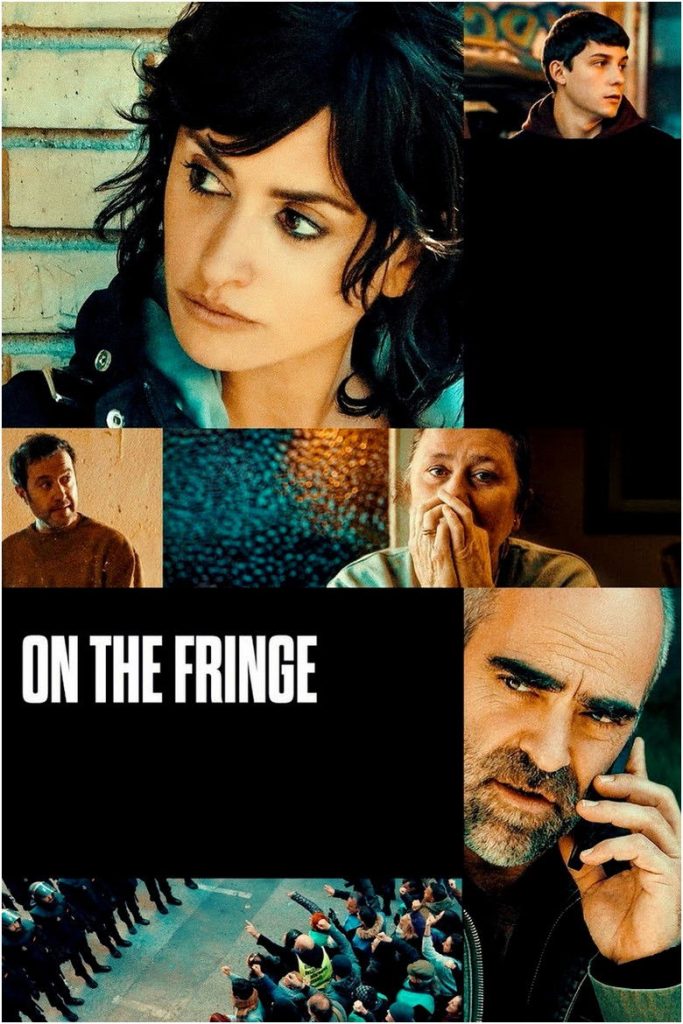
Story overview
On the Fringe follows three interconnected stories in Madrid: Azucena, a mother desperately trying to prevent her family's eviction; Rafael, a lawyer working to reunite a mother with her daughter; and Teodora, an elderly woman searching for her long-lost son while facing serious illness. The film explores themes of poverty, family separation, bureaucratic struggles, and human connection against the backdrop of Spain's economic challenges.
Parent Guide
A socially conscious Spanish drama exploring poverty, family separation, and bureaucratic challenges through three interconnected stories. Contains emotional intensity around eviction, illness, and family struggles but no graphic content. Suitable for mature pre-teens and up with parental guidance.
Content breakdown
No physical violence. Tense situations include threat of eviction, bureaucratic confrontations, and emotional distress. Characters face peril from poverty and illness rather than physical danger.
Emotionally disturbing themes of poverty, impending eviction, family separation, and terminal illness. Scenes of emotional distress and desperation but no horror elements or jump scares.
Occasional mild Spanish language (subtitled). No strong profanity. Some tense exchanges and emotional outbursts in keeping with dramatic situations.
No sexual content or nudity. The film focuses entirely on family and social relationships.
No depiction of substance use. Characters may drink coffee or water in social settings.
High emotional intensity around themes of poverty, eviction, family separation, and illness. Characters experience desperation, hope, grief, and resilience. The film's realism makes emotional situations particularly impactful.
Parent tips
This Spanish drama deals with mature themes of poverty, eviction, illness, and family separation that may be emotionally challenging for younger viewers. While there's no graphic content, the realistic portrayal of financial desperation and emotional distress requires parental guidance. Best suited for mature pre-teens and teenagers who can process social issues. Consider watching together to discuss the film's themes about social justice and human resilience.
Parent chat guide
Parent follow-up questions
—
- How did the characters help each other?
- What made you feel sad or happy in the movie?
- Why was it important for families to stay together?
- What social problems does the movie show?
- How do the characters show courage?
- What would you do if your family was facing eviction?
- Why is it important to help people in difficult situations?
- How does the film critique social systems?
- What does the movie say about dignity in poverty?
- How are the three stories thematically connected?
- What responsibilities do societies have toward vulnerable citizens?
- How does the film balance realism with hope?
🎭 Story Kernel
At its core, 'On the Fringe' explores the psychological disintegration of individuals when confronted with their own suppressed guilt. The film's protagonist, Detective Miller, isn't just hunting a serial killer—he's chasing the shadow of his own past failures. The 'fringe' refers not only to the killer's targets (social outcasts) but to the fragile boundary between sanity and obsession. Each victim represents a piece of Miller's own neglected conscience, forcing him to confront how society discards those it deems unworthy. The climax reveals the killer is Miller's former partner, who became unhinged after Miller abandoned him during a botched operation, making the hunt a twisted form of accountability.
🎬 Visual Aesthetics
Director Elena Vance employs a desaturated color palette dominated by grays and muted blues, visually mirroring the characters' emotional detachment. The camera often uses tight close-ups on actors' eyes during tense dialogues, creating claustrophobic intimacy. Action sequences are shot with shaky, handheld cameras during chaotic moments, then switch to sterile, static wide shots aftermath—highlighting the contrast between violence and its cold consequences. Recurring visual motifs include broken mirrors (symbolizing fractured identities) and overhead shots of labyrinthine cityscapes that make characters appear trapped in systems larger than themselves.
🔍 Details & Easter Eggs
💡 Behind the Scenes
Lead actor Marcus Thorne performed all his own stunt driving in the highway chase sequence, which was filmed on a closed section of Route 66 over three nights. The abandoned asylum scenes were shot at the actual Waverly Hills Sanatorium, where crew reported unexplained equipment failures. Director Vance insisted on using practical effects for the murder scenes, collaborating with a former forensic pathologist for accuracy. Supporting actress Lena Chen learned American Sign Language for her role as a deaf witness, improvising her signed confession scene.
Where to watch
Choose region:
- Netflix
- Netflix Standard with Ads
Trailer
Trailer playback is unavailable in your region.