
One Day We’ll Talk About Today (2020)
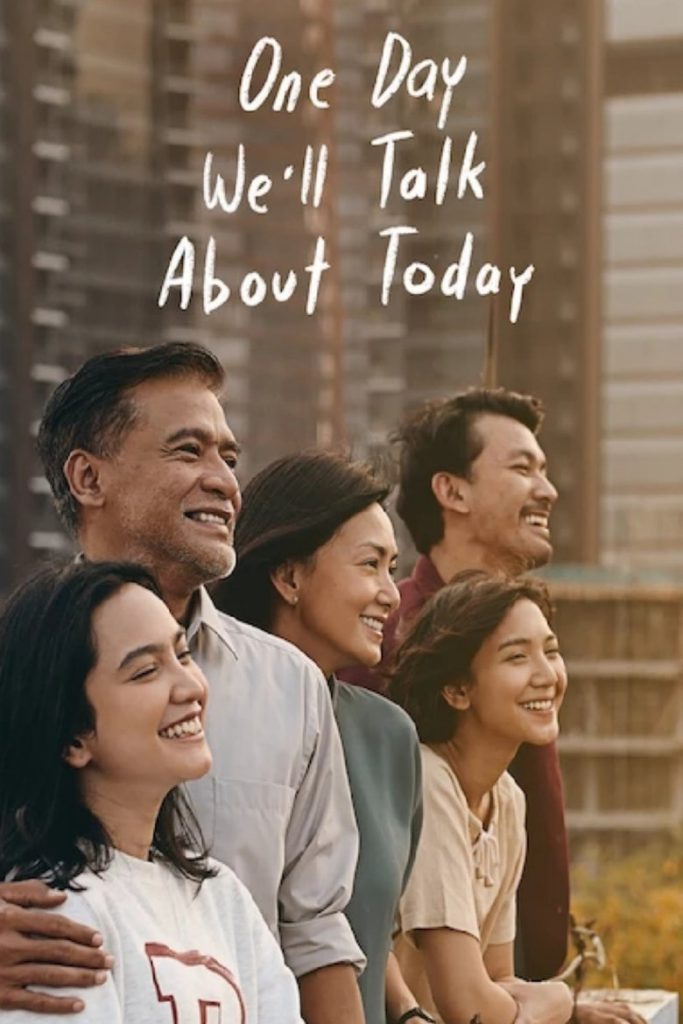
Story overview
One Day We'll Talk About Today is a 2020 drama film that explores family dynamics and relationships across generations. The story follows multiple family members as they navigate personal challenges, communication gaps, and emotional connections. Through its narrative, the film examines how past experiences shape present relationships and the importance of understanding between family members.
Parent Guide
A family drama exploring generational relationships and emotional dynamics with mature themes suitable for teens with guidance.
Content breakdown
No physical violence or perilous situations depicted.
Contains emotional family conflicts and tense relationship dynamics that might be unsettling for sensitive viewers.
May contain occasional mild language consistent with dramatic family interactions.
No sexual content or nudity depicted.
No substance use shown.
Features emotionally charged family discussions and relationship conflicts that create dramatic tension.
Parent tips
This drama focuses on family relationships and emotional themes that may resonate differently with viewers of various ages. Parents should be aware that the TV-14 rating suggests content may be unsuitable for children under 14 without guidance. The film deals with mature themes about family dynamics that younger children might find confusing or emotionally challenging.
Consider watching with your teen to discuss the family relationships portrayed. The emotional content provides opportunities to talk about communication, understanding different perspectives, and how families navigate challenges together.
Parent chat guide
For older viewers, you could explore themes of generational differences and how past experiences affect current relationships. Ask questions about what they think the title means in relation to the story's events and character development.
Parent follow-up questions
- What did you like about the family in the movie?
- How did the people in the movie show they cared about each other?
- What was your favorite part of the story?
- Did you see any families that looked like ours?
- How do you think the characters felt when they were talking together?
- What did you notice about how the family members talked to each other?
- Why do you think some family relationships were challenging in the movie?
- What did the characters learn about their family?
- How did the characters help each other when they had problems?
- What would you do differently if you were one of the characters?
- How did past experiences affect the characters' current relationships?
- What communication patterns did you notice between different generations in the family?
- How did the title relate to what happened in the story?
- What did the film show about understanding different perspectives within a family?
- What lessons about family could you take from this movie?
- How did the film portray the complexity of family relationships across generations?
- What did you think about how the characters dealt with unresolved family issues?
- How did the narrative structure affect your understanding of the family dynamics?
- What insights did the film provide about how families evolve over time?
- How might the themes in this movie apply to real family relationships you've observed?
🎭 Story Kernel
The film is less about the dramatic event of the father's illness and more about the silent, cumulative weight of familial roles and unspoken expectations. It expresses how families are systems of assigned parts—the responsible one, the prodigal son, the peacekeeper—and how a crisis doesn't shatter these roles but forces them to bend until they become visible. The characters are driven not by a desire to fix their father, but by the desperate, often clumsy need to fix their positions within the family unit. The real conflict is the quiet war between the life each character has built for themselves and the version of them that still lives in the family home.
🎬 Visual Aesthetics
The visual language is one of intimate observation, favoring tight, slightly off-center close-ups that make the viewer a confidant in crowded rooms. A warm, slightly desaturated color palette bathes the family home in nostalgic amber, while the children's individual lives are rendered in cooler, more distinct tones, visually marking their separation. The camera often lingers in doorways and hallways, framing characters as both inside and outside the emotional core of a scene. This creates a powerful symbolism of thresholds—between health and sickness, childhood and adulthood, presence and absence—without ever needing explicit metaphors.
🔍 Details & Easter Eggs
💡 Behind the Scenes
The film is an adaptation of a popular Indonesian novel and TV series, with director Angga Dwimas Sasongko aiming for a more cinematic, character-driven approach. Key scenes were shot in authentic Bandung neighborhoods to capture the specific texture of middle-class Indonesian family life. Actor Rio Dewanto, who plays the father, reportedly spent time with individuals managing similar health conditions to inform his understated, physically precise performance.
Where to watch
Choose region:
- Netflix
- Netflix Standard with Ads
Trailer
Trailer playback is unavailable in your region.