One Flew Over the Cuckoo’s Nest (1975)
Story overview
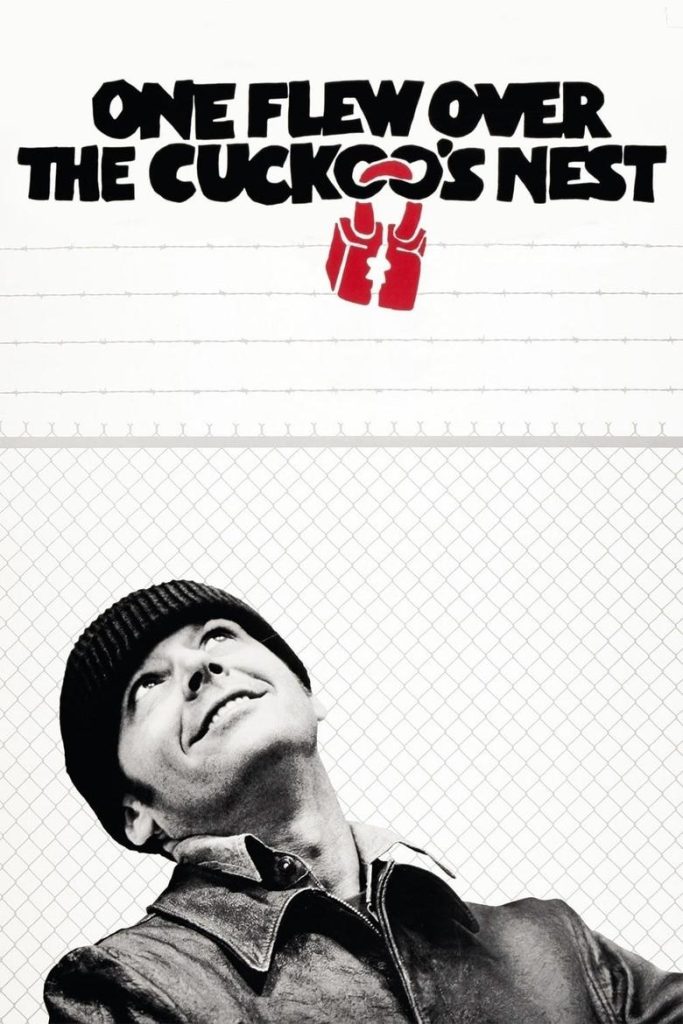
This classic drama follows a rebellious man who pretends to have mental health issues to avoid prison, only to find himself confined in a psychiatric hospital. He becomes a charismatic figure among the patients, challenging the oppressive authority of the head nurse who maintains strict control over the ward. The film explores themes of individuality, institutional power, and the human spirit's resilience against conformity.
Parent Guide
Mature drama exploring institutional power and individuality with intense themes.
Content breakdown
Includes physical confrontations, restraint scenes, and psychological tension between characters.
Contains intense psychological situations, depictions of psychiatric treatments, and oppressive institutional environments.
Includes some strong language and verbal conflicts between characters.
Contains some sexual references and situations, but no explicit nudity.
Includes depictions of medication administration and references to substance use.
High emotional stakes with themes of oppression, rebellion, and institutional control.
Parent tips
This R-rated film contains mature themes and content unsuitable for younger viewers. The story deals with mental health institutions, authority abuse, and challenging societal norms, which may be difficult for children to process. Parents should be aware that the film includes strong language, intense emotional situations, and scenes depicting psychiatric treatment methods that could be disturbing.
Parent chat guide
Parent follow-up questions
- How did the characters feel in the hospital?
- What makes a place feel safe or scary?
- Why do people follow rules?
- Why do you think the main character pretended to be sick?
- How did the nurse keep control over everyone?
- What does it mean to be a leader?
- What methods did the institution use to maintain order?
- How did different patients respond to authority?
- What does this film say about personal freedom?
- How does the film critique institutional power structures?
- What ethical questions does the treatment of patients raise?
- How does the film explore the balance between conformity and rebellion?
🎭 Story Kernel
At its core, 'One Flew Over the Cuckoo's Nest' is a devastating critique of institutional power and the crushing of individuality. The mental hospital becomes a microcosm of society, where Nurse Ratched represents oppressive authority maintaining order through psychological manipulation rather than physical force. McMurphy's rebellion isn't about proving sanity, but about reclaiming humanity—his tragedy lies in awakening others to their own imprisonment. The film explores how systems can pathologize normal human resistance, turning spirited nonconformity into a diagnosis. What drives the characters is the fundamental human need for autonomy versus the institution's need for control, with the ultimate horror being that the system can absorb and neutralize even the most vibrant rebellion.
🎬 Visual Aesthetics
Director Miloš Forman employs a documentary-like realism with handheld cameras and natural lighting that makes the institutional setting feel terrifyingly authentic. The color palette is deliberately muted—whites, grays, and pale greens—creating a sterile, lifeless environment that contrasts with McMurphy's vibrant personality. The camera often frames characters through windows, bars, or doorways, visually reinforcing their entrapment. Key sequences use close-ups to capture subtle facial expressions during group therapy sessions, where the real psychological warfare occurs. The fishing trip sequence bursts with color and freedom, making the return to the institution's grays even more devastating. The final shot of the escaped Chief running toward dawn uses natural light as liberation's visual metaphor.
🔍 Details & Easter Eggs
💡 Behind the Scenes
Jack Nicholson prepared by spending time at Oregon State Hospital where filming occurred, interacting with real patients—some appear as extras. Louise Fletcher studied actual psychiatric nurses but created Ratched's distinctive calm menace herself. The film was shot in sequence to help actors develop their character arcs naturally. Ken Kesey, author of the source novel, hated the adaptation so much he sued to have his name removed (he lost). The electroshock therapy scenes used real equipment from the era, with Nicholson's convulsions based on medical documentation. This was the first film in 41 years to win all five major Academy Awards.
Where to watch
Choose region:
- Amazon Video
- Apple TV
- Google Play Movies
- YouTube
- Fandango At Home
Trailer
Trailer playback is unavailable in your region.