
One of Us (2017)
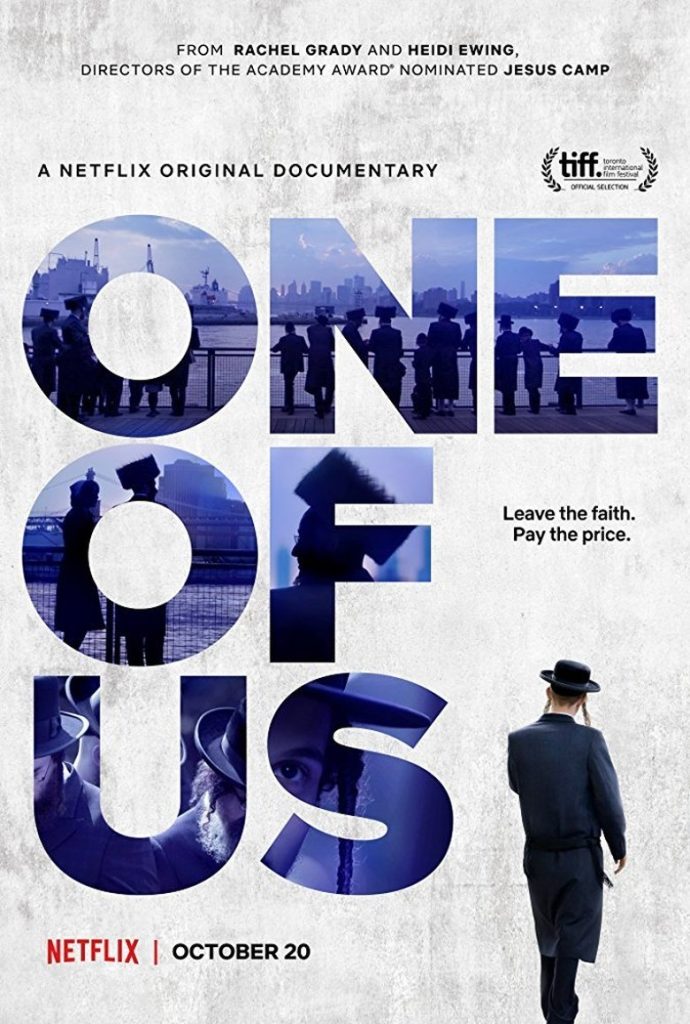
Story overview
This documentary provides an intimate look at the Hasidic Jewish community in New York, following three individuals who choose to leave their ultra-orthodox upbringing despite facing significant social and familial consequences. The film explores themes of religious freedom, personal identity, and the courage required to break from cultural traditions.
Parent Guide
A thought-provoking documentary about religious disaffiliation with mature themes but no explicit content. Suitable for teens who can handle discussions about challenging social dynamics.
Content breakdown
No physical violence shown, but discussions of emotional and psychological pressure, threats of retaliation, and the peril of being ostracized from one's community.
Emotionally disturbing content as individuals describe being shunned by their families and communities. Themes of isolation and loss of identity may be unsettling for sensitive viewers.
No offensive language noted in documentary context.
No sexual content or nudity.
No substance use depicted.
High emotional intensity as subjects discuss painful family separations, loss of community, and the trauma of religious disaffiliation. Interviews are emotionally raw and personal.
Parent tips
This documentary deals with mature themes of religious disaffiliation and social ostracism. While there's no graphic content, the emotional weight of people being shunned by their families and communities may be difficult for younger viewers. Best suited for mature children who can discuss complex social issues.
Parent chat guide
Parent follow-up questions
—
- What is a community?
- Why do people have different rules in their families?
- What does it mean to be 'shunned' by your community?
- Why might someone choose to leave their religion?
- How do traditions help or limit people?
- What are the psychological effects of religious disaffiliation?
- How do communities maintain control over members?
- What responsibilities do individuals have to their communities versus themselves?
- How does this documentary challenge stereotypes about religious communities?
🎭 Story Kernel
The film's core is not a traditional thriller about a doppelgänger, but a psychological autopsy of a mind shattered by guilt. The protagonist's 'double' isn't a separate entity but a manifestation of repressed trauma—the part of himself that committed an act so horrific his conscious mind cannot integrate it. His desperate attempts to eliminate this 'other' are, in reality, a futile war against his own memory and conscience. The driving force is the unbearable weight of a secret, showing how the psyche can splinter to protect itself from a truth too devastating to acknowledge, making the external chase a metaphor for internal disintegration.
🎬 Visual Aesthetics
The cinematography employs a cold, desaturated palette of grays and blues, visually mirroring the protagonist's emotional detachment and the bleakness of his reality. The camera often uses tight, claustrophobic close-ups on the actor's face during solitary moments, trapping the audience in his escalating paranoia. In contrast, wide shots of empty urban landscapes emphasize his profound isolation. A key visual motif is the use of reflective surfaces—windows, puddles, mirrors—which frequently fracture or distort his image, directly symbolizing his splintered identity long before the 'double' physically appears.
🔍 Details & Easter Eggs
💡 Behind the Scenes
The lead actor reportedly spent weeks in isolation to cultivate the sense of paranoia and detachment required for the dual role, refusing to socialize with the cast and crew off-set. The film was shot entirely on location in a rarely-filmed district of a European capital, utilizing its stark, modernist architecture to enhance the feeling of impersonal alienation. Notably, the scenes featuring the protagonist and his double were achieved through meticulous split-screen and body-double work rather than digital effects, adding to the unsettling, tangible realism of their interactions.
Where to watch
Choose region:
- Netflix
- Netflix Standard with Ads
Trailer
Trailer playback is unavailable in your region.