
One Piece “3D2Y”: Overcome Ace’s Death! Luffy’s Vow to his Friends (2014)
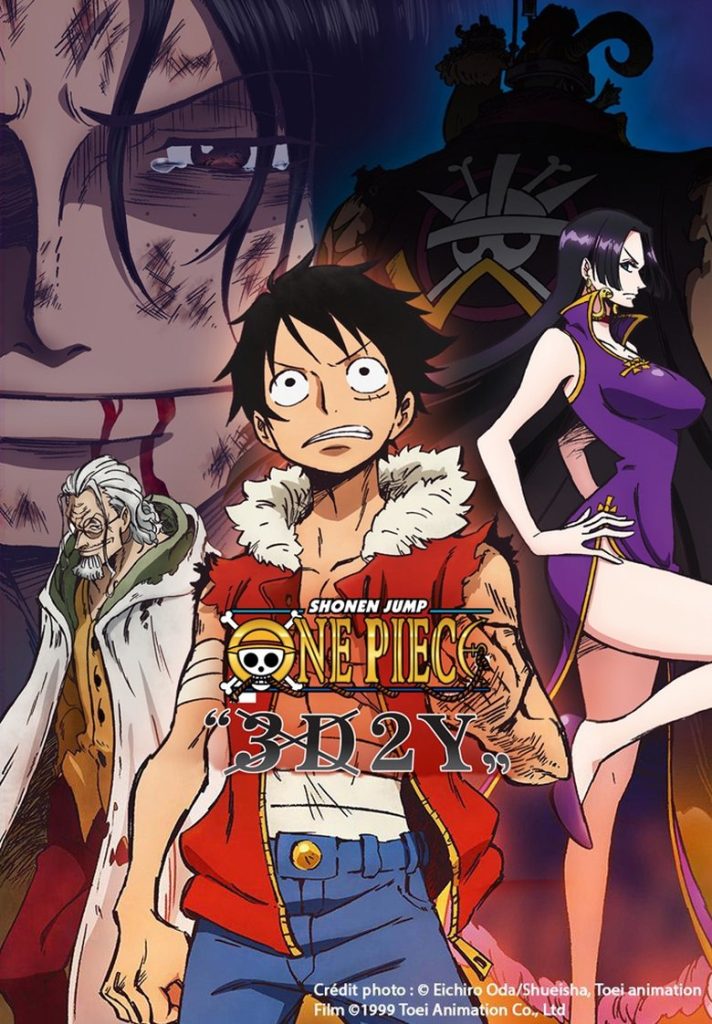
Story overview
This animated special follows Luffy during his two-year training period to become stronger for upcoming challenges. When two characters are kidnapped by an escaped pirate, Luffy and another character must rescue them. The story explores themes of friendship, determination, and overcoming loss while featuring action-packed sequences typical of the series. It serves as a bridge between major story arcs in the larger narrative.
Parent Guide
An animated adventure with moderate cartoon violence and themes of friendship and perseverance, best for elementary school ages and up.
Content breakdown
Stylized cartoon combat with special powers, characters in peril during rescue mission, no graphic injuries shown.
Kidnapping plot and references to past character death might be intense for sensitive viewers.
No concerning language noted in available information.
No sexual content or nudity indicated.
No substance use shown.
Themes of loss, determination, and friendship create emotional moments alongside action sequences.
Parent tips
This TV-PG animated special contains moderate cartoon violence with characters using special powers in combat situations. There are themes of kidnapping and peril that might be intense for younger viewers, along with emotional references to loss and death. The action is stylized and fantastical rather than realistic, but some scenes could be overwhelming for sensitive children.
Parents should know this is part of a larger series, so some character relationships and backstory might not be fully explained. The animation style is colorful and exaggerated, which helps balance the more serious themes. The overall message emphasizes friendship, perseverance, and personal growth through challenges.
Parent chat guide
After watching, focus conversations on the positive themes: How did characters show friendship? What does it mean to train and prepare for challenges? How do characters handle difficult situations? Connect these themes to real-life examples of perseverance and supporting friends. For older children, you might discuss how media portrays conflict resolution versus real-world approaches.
Parent follow-up questions
- Which character did you like best?
- What was your favorite colorful part?
- How did the friends help each other?
- Was there a part that made you feel happy?
- What would you do if your friend needed help?
- Why do you think training was important for the characters?
- How did the characters work as a team?
- What does it mean to be a good friend in the story?
- How did the characters solve problems without fighting?
- What would you do if you wanted to get better at something?
- How did the characters show determination?
- What different ways did characters use their abilities?
- How does the story show that preparation is important?
- What messages about friendship did you notice?
- How do animated stories handle serious themes differently than live-action?
- How does this story explore themes of loss and moving forward?
- What does the animation style add to how action is portrayed?
- How do characters balance personal goals with helping others?
- What storytelling techniques make animated action accessible to different ages?
- How might this special fit into larger themes of the series?
🎭 Story Kernel
The film's core is not about Luffy's power-up, but about the painful reconstruction of his worldview after Ace's death. It interrogates the very nature of the 'nakama' bond Luffy champions. His initial vow to get stronger alone is a trauma response—a rejection of the very connections that define him, born from the terror of losing someone else. The narrative thrust is his journey back from this isolation. Through confronting Byrnndi World, a villain who weaponizes stolen bonds, Luffy relearns that his strength is symbiotic; it's not for himself, but a promise to his crew that makes him unstoppable. The vow is ultimately not to train harder, but to never again let grief sever him from his friends.
🎬 Visual Aesthetics
The animation employs a stark visual dichotomy to mirror Luffy's internal state. Flashbacks to Marineford are desaturated, heavy with blues and grays, the camera shaky and chaotic, visually encoding trauma. In contrast, the present-day action on Rusukaina is vibrant, with the jungle's lush greens and warm earth tones. The fight choreography shifts noticeably. Pre-timeskip Luffy's movements are wild, improvisational. Post-training, his attacks, especially the new Red Hawk, are depicted with deliberate, almost ceremonial slowness and intense, concentrated color—a visual metaphor for focused will replacing raw emotion. The final clash uses sweeping, dynamic camerawork to emphasize the scale of his newfound, purpose-driven power.
🔍 Details & Easter Eggs
💡 Behind the Scenes
This special was produced to bridge the narrative gap between the Paramount War and the timeskip in the anime, premiering in August 2014. It was supervised by series creator Eiichiro Oda, who provided character designs for the new villains, Byrnndi World and World Pirates, ensuring canon consistency. The title '3D2Y' is a direct reference to the hidden message Luffy sends his crew via his tattoo, with the '3D' crossed out to read '2Y,' signaling the changed training duration. Voice actor Mayumi Tanaka reportedly discussed with directors how to layer Luffy's performance with a newfound gravitas beneath his usual exuberance, capturing his post-traumatic growth.
Where to watch
Choose region:
- Netflix
- Crunchyroll Amazon Channel
- Netflix Standard with Ads
- Apple TV
- Fandango At Home