
Only Yesterday (1991)
Story overview
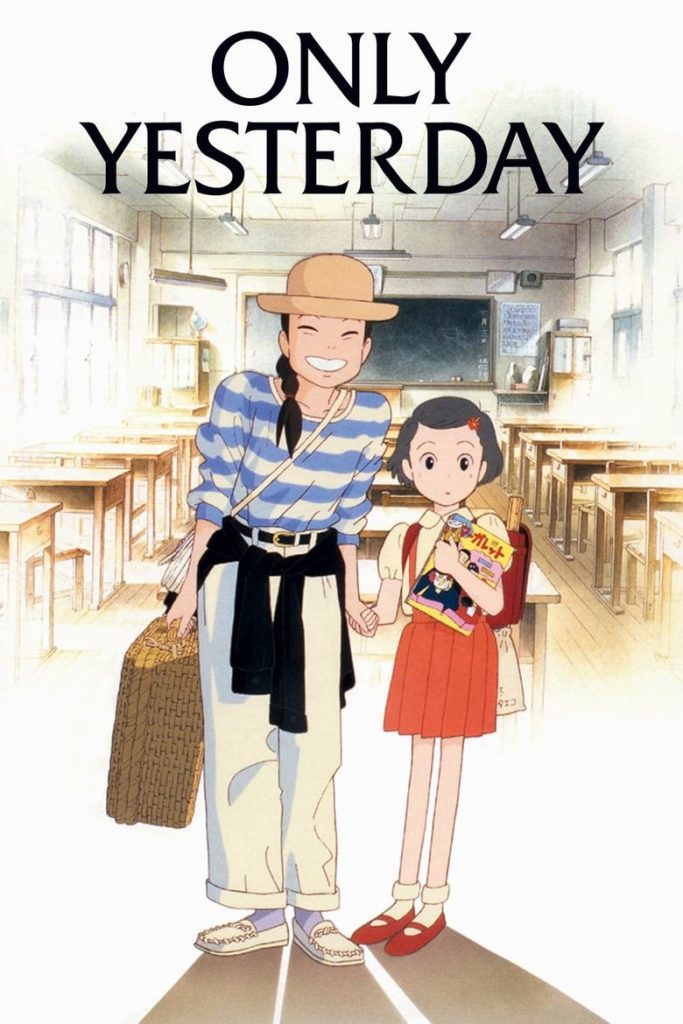
Only Yesterday is a reflective animated drama that follows a 27-year-old woman named Taeko as she takes a vacation to the countryside. Through gentle flashbacks to her childhood, the film explores her memories, emotions, and questions about whether her adult life aligns with her youthful dreams. The story thoughtfully examines themes of self-discovery, nostalgia, and the transition from childhood to adulthood, all presented through beautiful animation and quiet storytelling.
Parent Guide
A gentle, reflective animated drama about memory and self-discovery that's most appropriate for older children and teens due to its mature themes and contemplative pace.
Content breakdown
No violence, peril, or threatening situations are present in the film.
Nothing scary or disturbing occurs; the tone is consistently gentle and reflective.
No offensive language or inappropriate dialogue is present.
No sexual content, nudity, or romantic situations beyond mild, age-appropriate crushes in childhood flashbacks.
No depiction of alcohol, drugs, or substance use.
Some emotional scenes involving nostalgia, self-reflection, and life contemplation that may resonate differently depending on the viewer's age and experiences.
Parent tips
This is a thoughtful, character-driven film that moves at a deliberate pace, focusing on emotional reflection rather than action or comedy. Younger children may find it slow, as it lacks the fast-paced excitement of many animated films. The movie deals with mature themes like self-identity, life choices, and nostalgia that will resonate more with older children and teens who are beginning to contemplate their own futures.
Parents should be aware that while the film is rated PG and contains no objectionable content, its contemplative nature and focus on adult themes might not hold the attention of very young viewers. The 119-minute runtime is substantial for a quiet drama, so consider your child's attention span and interest in character-driven stories.
Parent chat guide
For younger viewers, focus on the simpler aspects like Taeko's school memories and family interactions. With older children and teens, you can explore deeper questions about life choices, nostalgia, and how our past shapes who we become. The film provides excellent opportunities to discuss how people navigate the transition from childhood to adulthood.
Parent follow-up questions
- What was your favorite part of Taeko's school days?
- How did Taeko feel when she remembered being little?
- What things from when you were younger do you remember?
- What do you think Taeko liked about the countryside?
- How do you think Taeko felt visiting her family?
- What childhood memories do you think are important to Taeko?
- Why do you think Taeko is thinking about her past so much?
- How are Taeko's school experiences similar or different from yours?
- What does it mean to 'grow up' according to the movie?
- What do you think Taeko learned about herself on her trip?
- How does looking back at childhood help Taeko understand her present life?
- What do you think the film is saying about staying true to childhood dreams?
- How does the movie show the difference between childhood and adult perspectives?
- What choices has Taeko made that she's reflecting on?
- How do memories shape who we become as people?
- What does the film suggest about the relationship between past and present identity?
- How does Taeko's journey reflect common experiences of young adulthood?
- What commentary does the film offer on societal expectations versus personal fulfillment?
- How does the structure of switching between timelines enhance the themes?
- What does the ending suggest about integrating childhood dreams with adult reality?
🎭 Story Kernel
The film's core theme is the reconciliation of past and present selves. It's not merely a nostalgic trip, but an exploration of how childhood traumas, joys, and unanswered questions shape adult identity and decisions. Taeko's journey to the countryside is a physical manifestation of her internal quest to integrate her 10-year-old self with her 27-year-old reality. The driving force isn't plot, but emotional archaeology—digging through layers of memory to understand why she feels disconnected in Tokyo. The movie suggests that adulthood isn't about leaving childhood behind, but carrying it forward consciously, especially the parts we've tried to forget.
🎬 Visual Aesthetics
The visual language masterfully distinguishes memory from present reality. Scenes from 1966 are rendered in soft, pastel watercolors with simpler character designs, creating a hazy, emotionally charged filter. The present-day 1982 sequences use more detailed, realistic animation with sharper lines and a richer, earth-toned palette reflecting the tangible countryside. This isn't just an aesthetic choice—it visually argues that memories are felt impressions, not高清 recordings. The camera often lingers on Taeko's contemplative face or on quiet rural landscapes, forcing the viewer into her pace of introspection.
🔍 Details & Easter Eggs
💡 Behind the Scenes
This was Isao Takahata's first Studio Ghibli film not based on a fantasy premise, marking a significant stylistic departure. The production team conducted extensive research trips to Yamagata Prefecture to accurately depict the rural landscapes and safflower harvest. Voice actress Miki Imai, who played adult Taeko, was primarily known as a popular singer at the time, making this a notable acting role. The film was completed in 1991 but wasn't released in North America until 2016, creating a 25-year gap that ironically mirrored Taeko's own journey between her childhood and adulthood.
Where to watch
Choose region:
- HBO Max
- HBO Max Amazon Channel
- Amazon Video
- Apple TV
- Google Play Movies
- YouTube
- Fandango At Home
Trailer
Trailer playback is unavailable in your region.