
Oslo (2021)
Story overview
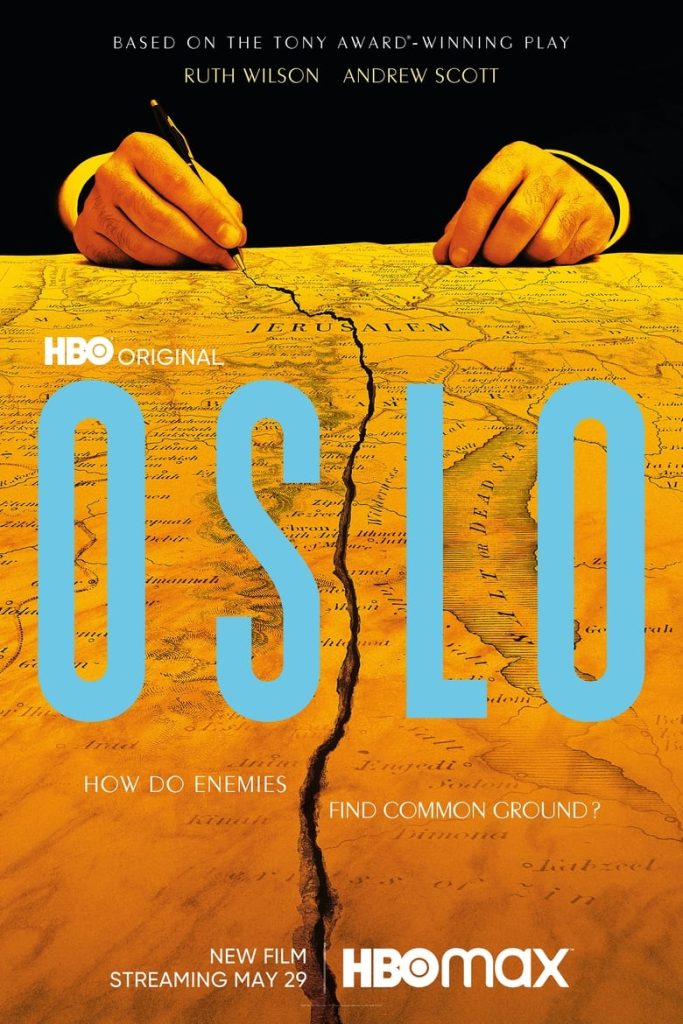
This 2021 TV movie dramatizes the true story of secret negotiations in the early 1990s that led to the Oslo Peace Accords between Israel and the Palestine Liberation Organization. It focuses on the behind-the-scenes efforts of Norwegian diplomats, Israeli academics, and Palestinian officials who built unlikely personal connections to achieve a historic diplomatic breakthrough.
Parent Guide
A historically significant drama about diplomatic negotiations with mature themes suitable for teens. Contains tense discussions about war and peace, occasional strong language, and complex political content requiring background knowledge.
Content breakdown
No physical violence shown. Tense discussions about historical violence, war casualties, and security threats. References to terrorism and military conflict in dialogue only.
Emotionally intense negotiations with raised voices and confrontational dialogue. Discussions of war, death, and political oppression may be disturbing to sensitive viewers.
Occasional strong language including 'hell,' 'damn,' and 'bastard.' Some politically charged insults and heated exchanges.
No sexual content or nudity. Brief affectionate moments between married couples.
Social drinking in diplomatic settings (wine at dinners). No smoking, drug use, or intoxication depicted.
High-stakes diplomatic tension throughout. Characters express frustration, anger, hope, and disappointment about historical conflicts. Emotional breakthroughs in negotiations.
Parent tips
This film is best suited for mature teens due to its complex political themes and occasional intense dialogue. It contains no graphic violence, sexual content, or substance use, but deals with weighty historical conflicts and includes some strong language. Parents should be prepared to discuss the ongoing Israeli-Palestinian conflict and the challenges of peacemaking.
Parent chat guide
Parent follow-up questions
—
—
- What does 'negotiation' mean?
- Why were these meetings secret?
- What is a peace agreement?
- What historical context is needed to understand these negotiations?
- How did personal relationships influence political outcomes?
- What were the limitations of the Oslo Accords?
- How does this film portray the complexities of conflict resolution?
🎭 Story Kernel
At its core, 'Oslo' explores how human connection can temporarily bypass entrenched political ideologies. The film isn't about the Oslo Accords themselves, but about the fragile, personal relationships that made them possible. It shows how two Norwegian academics—Mona Juul and Terje Rød-Larsen—created a neutral space where Israeli and Palestinian representatives could shed their official titles and speak as individuals. The driving force isn't grand political vision, but simple human curiosity and the radical belief that the person across the table might be more than their faction's propaganda. The tragedy emerges when these personal breakthroughs must re-enter the brutal reality of public politics, where gestures of understanding become liabilities.
🎬 Visual Aesthetics
The film employs a deliberately restrained visual language that mirrors its diplomatic subject. Cinematographer focuses on intimate, claustrophobic interiors—wood-paneled rooms, modest Norwegian homes, and tight hotel corridors—creating a sense of insulated reality. The color palette is dominated by earthy tones and bureaucratic neutrals, making occasional moments of warmth (like shared meals or sunlight through windows) feel significant. Camera work favors close-ups during negotiations, capturing micro-expressions that reveal more than dialogue. There's a notable absence of grand establishing shots or action sequences; the 'drama' occurs in subtle glances and hesitant handshakes, emphasizing that the real battlefields are conference tables.
🔍 Details & Easter Eggs
💡 Behind the Scenes
The film is based on J.T. Rogers' Tony-winning play, which itself drew from the real experiences of Norwegian diplomat Mona Juul and her sociologist husband Terje Rød-Larsen. Ruth Wilson and Andrew Scott performed their roles on stage before transitioning to screen. Much was filmed in Prague, standing in for 1990s Oslo, due to tax incentives and period architecture preservation. Director Bartlett Sher deliberately cast actors who could convey complex political positions through subtle performance rather than rhetoric, with many participating in workshops with actual diplomats to understand negotiation psychology.
Where to watch
Choose region:
- HBO Max
- HBO Max Amazon Channel
- Amazon Video
- Apple TV Store
- Google Play Movies
- YouTube
- Fandango At Home
Trailer
Trailer playback is unavailable in your region.