
Over the Hedge (2006)
Story overview
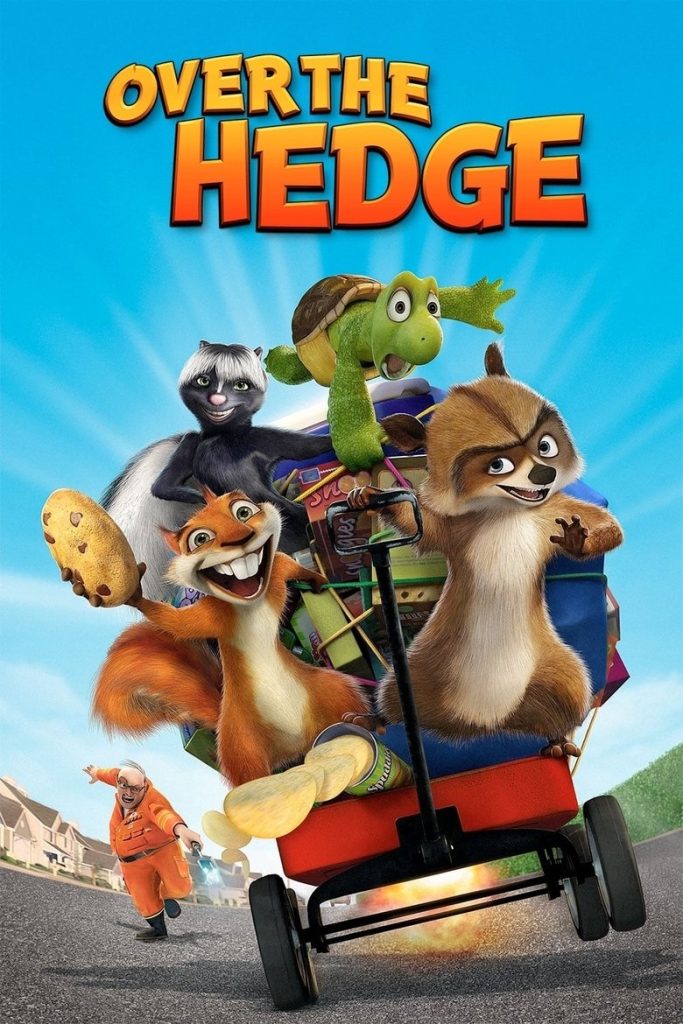
Over the Hedge is a 2006 animated family comedy about RJ, a clever raccoon who manipulates a group of forest animals to help him gather food from a suburban neighborhood to repay a debt to a bear. The film explores themes of community, trust, and the impact of human development on wildlife, with humor and heart.
Parent Guide
A lighthearted animated comedy with positive messages about family and community, suitable for most children with some mild cartoon action.
Content breakdown
Cartoon-style violence: animals in peril from traps, nets, and a pursuing bear; slapstick chases and falls; no injuries shown. A bear threatens other animals but is more comical than terrifying.
Some tense moments when animals are chased or trapped; the bear, Vincent, might be slightly intimidating for very young viewers but is portrayed humorously. No truly frightening imagery.
No profanity or offensive language. Mild insults like 'stupid' or 'jerk' in a cartoon context.
No sexual content or nudity. Some mild flirtation between animal characters is portrayed humorously and innocently.
No depiction of alcohol, drugs, or smoking. The animals consume human junk food humorously, but not as substance abuse.
Mild emotional moments when characters feel betrayed or scared, but overall tone is upbeat and comedic. Positive resolution reinforces themes of friendship and family.
Parent tips
This movie is generally family-friendly with mild cartoon violence and slapstick humor. Watch for scenes with animal traps, a menacing bear, and some tense chases. Good for discussions about honesty, teamwork, and environmental awareness.
Parent chat guide
Parent follow-up questions
- Which animal was your favorite?
- Was it funny when the animals ate the human food?
- How did the animals work together?
- Why did RJ lie to the animals at first?
- What did the animals learn about the suburban neighborhood?
- How was the bear, Vincent, a threat?
- How does the film show the conflict between nature and suburban development?
- What does RJ learn about responsibility and community?
- Discuss the humor - was it more slapstick or clever?
- Analyze the film's environmental message about human encroachment on wildlife.
- How does RJ's character arc reflect themes of redemption?
- Discuss the satire of suburban consumer culture in the film.
🎭 Story Kernel
The film's core theme is the commodification of nature and community in suburban America. It's not just about animals stealing food—it's about survival being redefined by consumer culture. RJ the raccoon drives the plot with his debt to Vincent the bear, representing capitalist pressure and the need to 'pay up' in a system that values accumulation over sustainability. The hedge itself becomes a literal and metaphorical barrier between 'wild' nature and manicured suburbia, questioning what 'civilization' truly offers. The animals' journey mirrors immigrant or marginalized communities adapting to a dominant culture, initially for survival but ultimately finding strength in unity against exploitation.
🎬 Visual Aesthetics
The animation employs a sharp contrast between two visual worlds: the lush, organic textures of the forest and the sterile, geometric perfection of suburbia. Camera angles often mimic wildlife documentary styles in natural scenes, shifting to wide, symmetrical shots of manicured lawns that feel surveilled and artificial. Color palettes are key—earthy browns and greens in the forest versus the blinding whites, blues, and pinks of human spaces. The action sequences, particularly the heists, use dynamic, fast-paced choreography reminiscent of caper films, emphasizing the animals' agility against human clumsiness. Symbolism appears in details like the perfectly aligned trash cans representing human order versus nature's chaos.
🔍 Details & Easter Eggs
💡 Behind the Scenes
The film is based on the comic strip of the same name by Michael Fry and T. Lewis, which debuted in 1995. Bruce Willis, who voices RJ, reportedly ad-libbed several lines, adding to the character's slick, improvisational feel. Animation was done by DreamWorks Animation, with directors Tim Johnson and Karey Kirkpatrick emphasizing realistic animal movements—animators studied wildlife footage extensively. The voice cast includes notable actors like Garry Shandling as Verne and Wanda Sykes as Stella, with Sykes bringing her signature sharp humor to the sarcastic skunk. Production involved over 300 animators and took approximately four years from concept to release in 2006.
Where to watch
Choose region:
- Netflix
- Netflix Standard with Ads
- Amazon Video
- Apple TV Store
- Google Play Movies
- YouTube
- Fandango At Home
Trailer
Trailer playback is unavailable in your region.