
Paper & Glue (2021)
Story overview
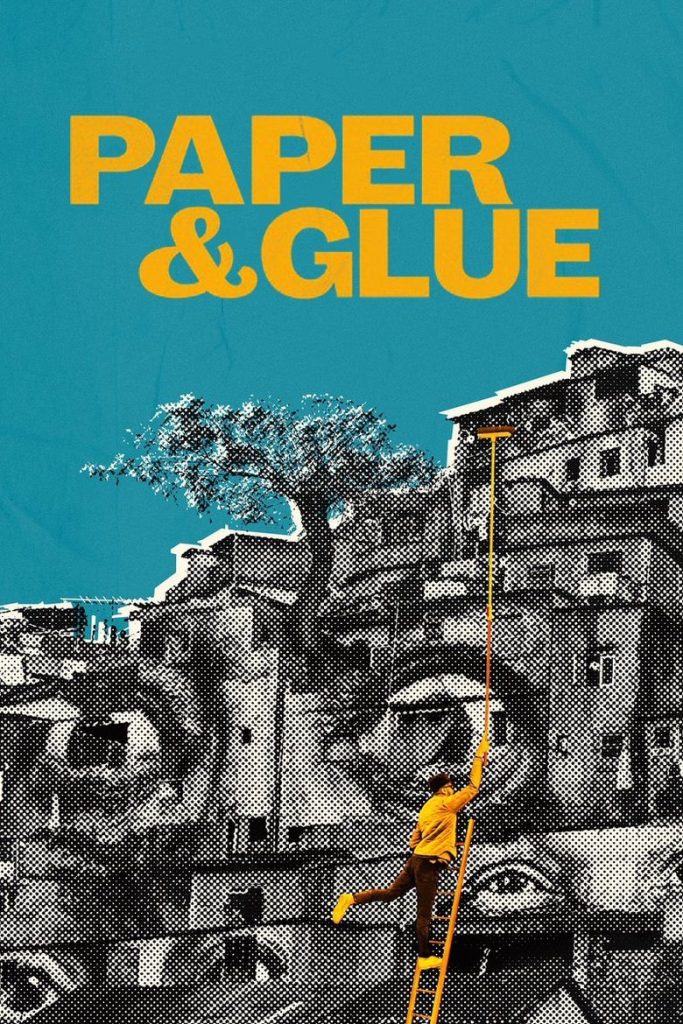
Paper & Glue is a 2021 documentary that follows French artist JR as he creates large-scale public art installations around the world, focusing on giving a voice to everyday people and communities. The film showcases his collaborative projects in locations like a French housing project, a California prison, and a Texas border town, using photography and paste-ups to highlight social issues and human stories.
Parent Guide
Educational documentary about art and social engagement with minimal concerning content. Best for children mature enough to discuss social issues.
Content breakdown
No violence depicted. Some scenes in prison settings might suggest danger but show no actual harm.
Mildly disturbing themes related to incarceration, immigration challenges, and social inequality, but presented artistically without graphic imagery.
No offensive language noted in the documentary's description.
No sexual content or nudity.
No depiction of substance use.
Emotional moments when communities share personal stories, but overall tone is hopeful and uplifting.
Parent tips
This documentary is suitable for most children ages 8 and up, with parental guidance recommended for younger viewers due to mature themes. The film deals with social issues like incarceration, immigration, and inequality, but presents them through an artistic lens. There's no graphic content, but some scenes in prisons or with marginalized communities might require explanation. The film promotes empathy, creativity, and social awareness.
Parent chat guide
Parent follow-up questions
- What colors did you see in the art?
- How do you think the people felt when they saw their pictures?
- What would you draw to make people happy?
- Why do you think JR makes art with people instead of alone?
- What does 'giving voice' mean to you?
- How can art help communities?
- What social issues did the documentary address?
- How does scale affect the impact of art?
- What responsibilities do artists have when working with communities?
- How does JR's work challenge traditional art institutions?
- What ethical considerations arise in participatory art?
- How can art create social change without being exploitative?
🎭 Story Kernel
At its core, 'Paper & Glue' explores how creativity becomes a radical act of resistance against dehumanization. The film isn't just about art in prisons—it's about how artistic expression restores identity where systems work to erase it. Director JR's large-scale photographic projects serve as mirrors that force both subjects and viewers to confront humanity in places society has labeled inhuman. The driving force isn't redemption narratives but rather the simple, profound act of seeing and being seen. When incarcerated individuals collaborate on these installations, they're not just making art—they're reclaiming agency, creating temporary zones of freedom within concrete walls, and challenging the very definition of rehabilitation.
🎬 Visual Aesthetics
The film's visual language masterfully contrasts scale and intimacy. Sweeping drone shots of massive prison complexes emphasize institutional power, while extreme close-ups on faces during portrait sessions create profound intimacy. The black-and-white photography of JR's installations isn't just aesthetic—it strips away social markers of race, class, and criminal status, forcing us to see human beings rather than categories. Handheld camera work inside prisons feels urgent and immediate, while time-lapse sequences of installations growing on walls mirror the gradual process of human connection. The most powerful visual motif is the transformation of cold institutional spaces through warm, textured human faces—literally papering over concrete with humanity.
🔍 Details & Easter Eggs
💡 Behind the Scenes
Director JR filmed 'Paper & Glue' over five years across multiple countries, often working with minimal crews to maintain intimacy. The project inside California's maximum-security prison required eight months of negotiations and strict protocols—all installation materials had to be non-toxic and security-screened. Most participants had never engaged in artistic expression before, and several continued creating art after the project. The documentary's title comes from JR's description of his medium's simplicity against complex human stories. Notably, some installations remained intact for years, becoming unexpected parts of prison landscapes until naturally deteriorating—a poignant metaphor for the project's temporary but transformative nature.
Where to watch
Choose region:
- Peacock Premium
- YouTube TV
- Peacock Premium Plus
Trailer
Trailer playback is unavailable in your region.