
Paperman (2012)
Story overview
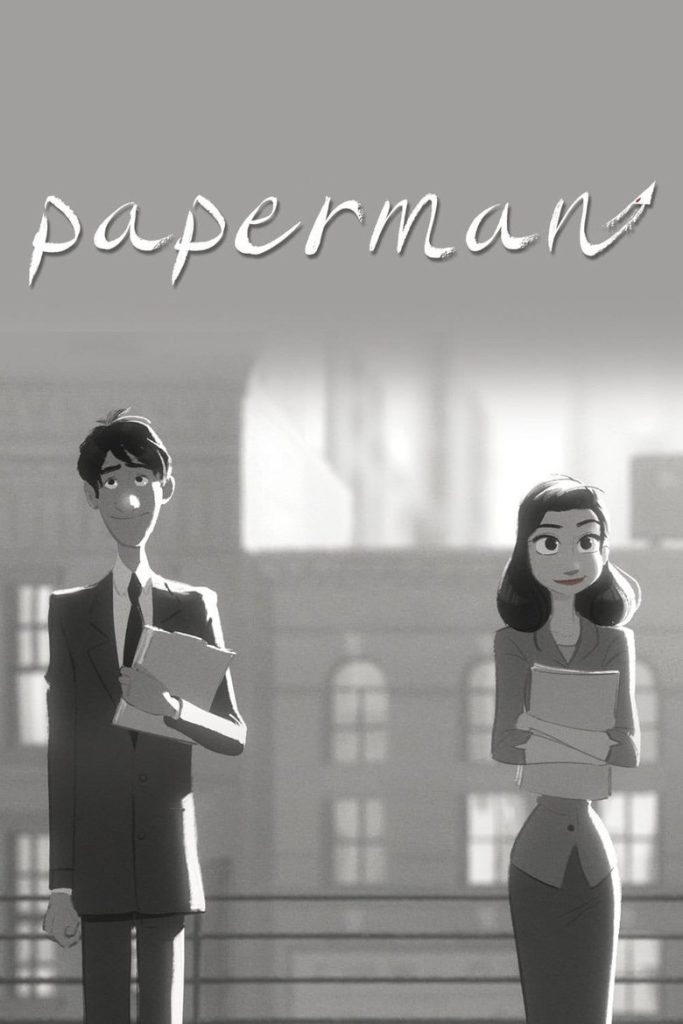
Paperman is a charming animated short film set in a mid-century urban environment. It follows a lonely office worker who uses paper airplanes as a creative way to connect with a woman he briefly meets. The story explores themes of chance encounters, romantic longing, and finding unexpected connections in everyday life. With its wordless storytelling and nostalgic black-and-white animation, it conveys emotions through visual expression rather than dialogue.
Parent Guide
A gentle, wordless animated romance suitable for all ages with no concerning content.
Content breakdown
No violence, fighting, or dangerous situations.
Nothing frightening or disturbing; mild romantic tension only.
No spoken dialogue in the film.
No sexual content or nudity; only innocent romantic interest.
No depiction of alcohol, drugs, or smoking.
Mild romantic longing and hopeful anticipation; ends positively.
Parent tips
Paperman is a gentle, family-friendly film suitable for all ages with its G rating and brief 7-minute runtime. The story focuses on romantic themes presented in a sweet, innocent manner without any mature content. Parents should note that while there are no concerning elements, younger children might need help understanding the emotional nuances since the film has no spoken dialogue and relies on visual storytelling.
The film's artistic black-and-white style and period setting provide opportunities to discuss animation techniques and historical time periods with children. The romantic storyline is handled delicately, making it appropriate for introducing themes of friendship and connection to younger viewers.
Parent chat guide
After watching, discuss how the characters communicated without words and what feelings they might have been experiencing. You could also talk about creative ways people can connect with others, like the paper airplanes in the film. For older children, you might explore themes of taking chances and how small actions can lead to meaningful connections.
Parent follow-up questions
- What was your favorite part of the movie?
- How did the man feel when he saw the woman?
- What do you think paper airplanes can do?
- Did you like the music in the movie?
- What colors did you see in the film?
- Why do you think the man wanted to meet the woman again?
- How did the paper airplanes help the characters?
- What does it mean to be lonely or to want to make a friend?
- How did the animation show feelings without words?
- What would you do if you wanted to meet someone new?
- What does this film show about taking chances in life?
- How does the black-and-white animation affect the mood of the story?
- What might the film be saying about fate or coincidence?
- How do the characters show persistence without speaking?
- What creative ways do people connect in real life?
- How does this film portray romantic longing in a family-friendly way?
- What commentary might the film be making about modern connections versus simpler times?
- How effective is wordless storytelling for conveying complex emotions?
- What artistic choices in animation style support the film's themes?
- How does the film balance hope and realism in its portrayal of human connection?
🎭 Story Kernel
At its core, 'Paperman' explores the tension between destiny and human agency in modern urban life. The film suggests that while chance encounters may be orchestrated by fate, genuine connection requires active pursuit and vulnerability. The protagonist's transformation from passive commuter to determined romantic hero reveals how love can awaken agency in even the most routine existence. The paper airplanes become extensions of his will—tiny, fragile attempts to bridge the gap between what fate provides and what the heart demands. Ultimately, the film argues that meaningful relationships aren't found but forged through persistent, creative effort.
🎬 Visual Aesthetics
The film's visual language masterfully blends traditional hand-drawn animation with digital techniques, creating a textured, nostalgic aesthetic that feels both timeless and contemporary. The stark black-and-white palette isn't merely stylistic—it visually represents the binary nature of the protagonist's existence before the encounter (routine/meaningful, alone/connected). The selective use of red lipstick on Meg serves as the film's only color, functioning as both a visual anchor and symbolic representation of passion and individuality in a monochromatic world. The camera's frequent use of close-ups on paper airplanes transforms these simple objects into characters themselves, while the shifting depth of field mirrors the protagonist's fluctuating focus between obligation and desire.
🔍 Details & Easter Eggs
💡 Behind the Scenes
Directed by John Kahrs, 'Paperman' won the 2013 Academy Award for Best Animated Short Film. The groundbreaking animation technique, called Meander, combined hand-drawn character animation with computer-generated backgrounds, creating the unique textured look. The film was inspired by Kahrs' own experiences commuting in New York City. Interestingly, the entire seven-minute film contains no dialogue, relying entirely on visual storytelling and score—composer Christophe Beck created the music after seeing storyboards, not finished animation. The distinctive paper airplane sequences required custom physics simulations to achieve their organic, whimsical flight patterns.
Where to watch
Choose region:
- Disney Plus
- Google Play Movies
- YouTube
- Fandango At Home
Trailer
Trailer playback is unavailable in your region.