Parasite (2019)
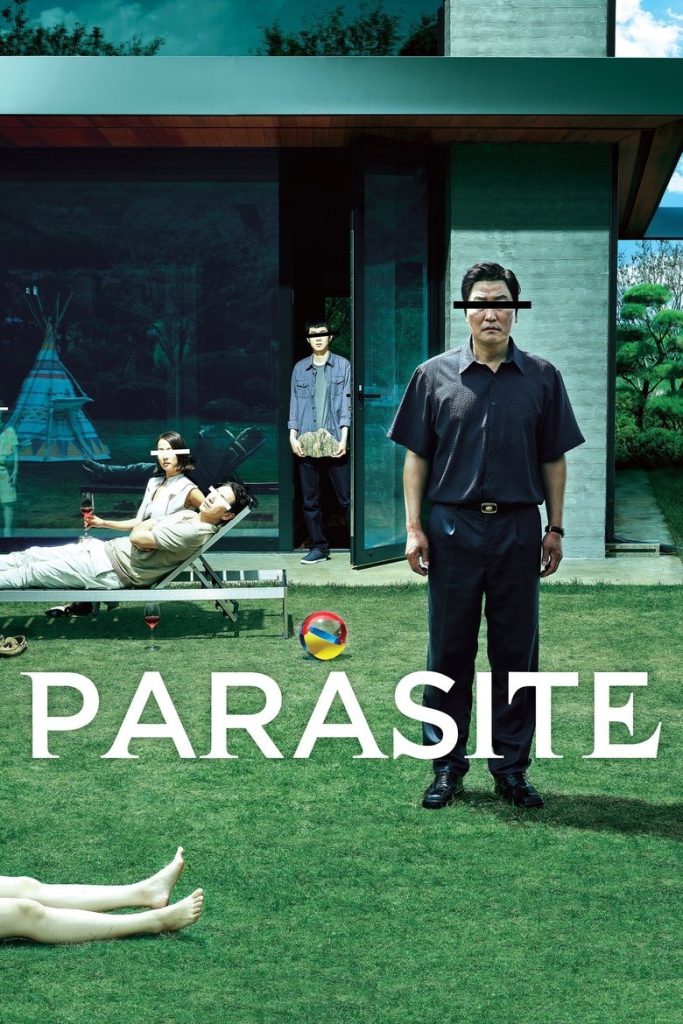
Story overview
Parasite is a South Korean film that explores class divisions through the story of a poor family who cunningly infiltrates the lives of a wealthy household. The movie blends dark comedy, suspense, and drama as it examines themes of inequality, deception, and survival. It builds tension gradually before culminating in unexpected and intense developments that challenge the characters' relationships and morals.
Parent Guide
A sophisticated dark comedy-thriller with intense violence and mature themes about class conflict, recommended for mature teens and adults only.
Content breakdown
Contains sudden, graphic violence including stabbings and assaults with bloodshed, plus intense peril scenes.
Features disturbing imagery, psychological tension, and shocking plot developments that may be unsettling.
Includes some strong language and profanity throughout the film.
Contains brief sexual references and suggestive situations without explicit nudity.
Shows social drinking in several scenes, but not central to the plot.
High emotional tension throughout, with themes of desperation, betrayal, and class resentment.
Parent tips
Parasite is rated R for strong violence, language, and some sexual content, making it unsuitable for younger viewers. The film contains intense scenes of peril, sudden violence, and disturbing moments that may be upsetting for sensitive audiences. Parents should be aware that the movie deals with mature themes like class conflict, desperation, and moral ambiguity in a way that requires emotional maturity to process.
Parent chat guide
Parent follow-up questions
- What colors did you see in the movie?
- Did you see any families in the story?
- What sounds did you hear?
- Was there anything that made you feel happy or sad?
- What was your favorite part to watch?
- How were the two families in the movie different from each other?
- What did you think about how the characters treated each other?
- Were there any parts that surprised you?
- What do you think the movie was trying to show about people?
- How did the music and sounds make you feel during the story?
- What does the movie show about how money can affect people's lives?
- Why do you think the characters made the choices they did?
- How did the film make you think about fairness and inequality?
- What moments created the most tension or suspense for you?
- How did the movie blend comedy with more serious moments?
- How does Parasite critique social class structures and economic inequality?
- What commentary does the film make about deception and survival in modern society?
- How did the director use visual storytelling to enhance the themes?
- What moral questions does the movie raise about ambition and desperation?
- How does the film's tone shift contribute to its overall message?
🎭 Story Kernel
Parasite is a scalpel-sharp dissection of class immobility, not just inequality. The Kim family's infiltration of the Park household isn't driven by malice, but by a desperate, almost biological imperative to survive in a system designed to keep them in the metaphorical basement. Their cunning is a survival skill honed by poverty. Conversely, the Parks' privilege is so complete it manifests as a naive, offensive innocence—they're not evil, just obliviously cruel. The film argues that in a ruthlessly capitalist hierarchy, empathy becomes a luxury good, and the real parasite is the economic structure that forces humans to feed on each other to ascend even a single step.
🎬 Visual Aesthetics
Bong Joon-ho employs a meticulous visual language of verticality and contamination. The camera physically descends into the Kims' semi-basement and ascends to the Parks' modernist hilltop home, mapping the social hierarchy. The color palette shifts from the muted, damp greys and greens of poverty to the sterile, sun-drenched whites and beiges of wealth. Key scenes use windows and frames to create literal barriers between classes. The infamous flood sequence is a masterclass in visual metaphor: the family's home isn't just flooded with sewage; it's flooded with the literal waste of the city above, a visceral image of how disaster flows downhill.
🔍 Details & Easter Eggs
💡 Behind the Scenes
The iconic semi-basement (banjiha) set was built on a soundstage with such precision that the production team could pump thousands of liters of water and mud for the flood scene. Song Kang-ho, who plays Kim Ki-taek, is a frequent collaborator with Bong Joon-ho, having starred in five of his films. The Parks' minimalist house is a real architectural masterpiece called the 'House of Yoon,' designed by architect Namgoong Hyeon-ja, and was a key location that visually cemented the film's class divide.
Where to watch
Choose region:
- Netflix
- Netflix Standard with Ads
- Amazon Video
- Apple TV
- Google Play Movies
- YouTube
- Fandango At Home
- FlixFling
- Spectrum On Demand
- Kanopy
Trailer
Trailer playback is unavailable in your region.