
Paris to Pittsburgh (2018)
Story overview
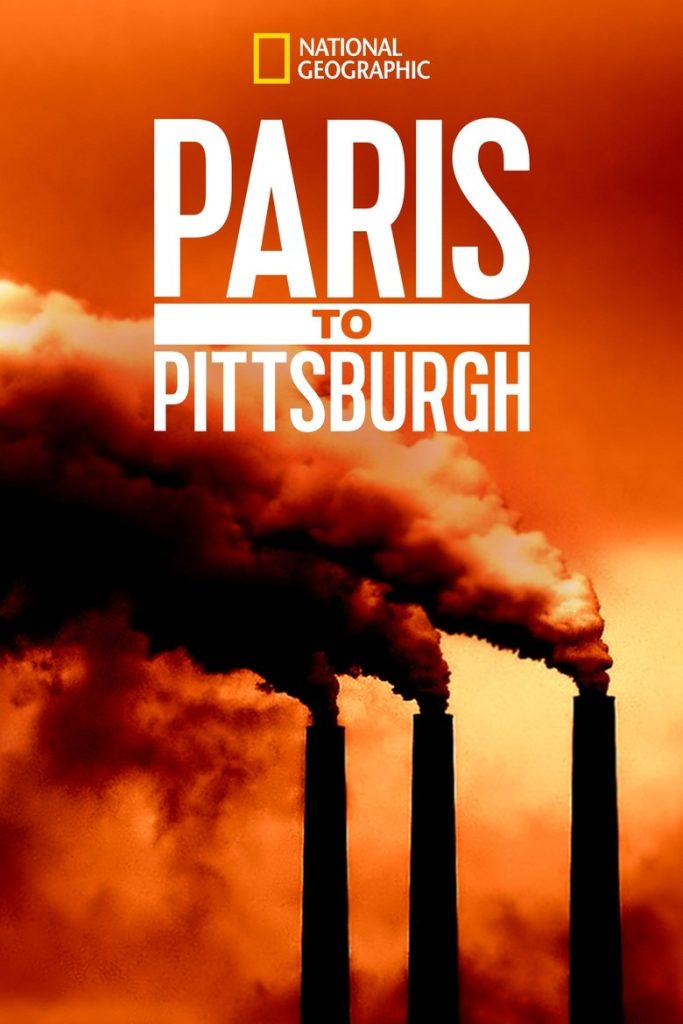
Paris to Pittsburgh is a 2018 documentary that explores how communities across the United States are responding to climate change, particularly after the U.S. withdrawal from the Paris Climate Agreement. The film highlights grassroots efforts and innovative solutions from ordinary citizens, scientists, and local leaders who are taking action to protect their environments and futures.
Parent Guide
Educational documentary about climate change and community responses. Suitable for children interested in science or environmental topics, with parental guidance for younger viewers due to complex themes.
Content breakdown
No violence or physical peril depicted. The film discusses environmental threats but shows no dangerous situations.
Mildly disturbing when discussing climate impacts like extreme weather or pollution, but presented factually without graphic imagery.
No offensive language expected in this documentary.
No sexual content or nudity.
No substance use depicted.
Mild emotional intensity when discussing environmental challenges, but overall tone is hopeful and solution-focused.
Parent tips
This documentary focuses on climate change activism and community resilience. It may introduce children to environmental issues and civic engagement. Consider discussing the film's themes of responsibility, science, and collective action afterward.
Parent chat guide
Parent follow-up questions
- What colors did you see in nature?
- Did you see any animals or plants?
- What are some ways people in the movie helped their towns?
- Why is clean air and water important?
- How do you think climate change affects different communities?
- What scientific solutions did the film show?
- What role does government policy play in environmental issues?
- How can individuals and communities balance economic and environmental needs?
🎭 Story Kernel
The film's core theme is the democratization of climate action, moving beyond abstract global agreements to tangible local solutions. It expresses that while international accords like Paris are crucial frameworks, real resilience is built city by city, community by community. What drives the characters—mayors, activists, engineers, and ordinary citizens—isn't just survival instinct but a profound sense of agency and place-based pride. The movie argues that climate leadership has shifted from top-down diplomacy to bottom-up innovation, where Pittsburgh's steel-town grit becomes as geopolitically significant as Parisian conference rooms. It's ultimately about reclaiming narrative power from overwhelming despair to manageable, human-scale progress.
🎬 Visual Aesthetics
The cinematography employs a stark visual dichotomy between global and local scales. Sweeping aerial shots of smog-choked cities and melting glaciers establish the macro crisis, while intimate handheld footage grounds the story in community meetings, solar panel installations, and flood recovery efforts. The color palette subtly shifts from bleak grays and industrial browns in problem segments to warmer, hopeful tones of green energy projects and vibrant community gardens. Visual metaphors are direct but powerful: time-lapses of solar farms spreading across landscapes mirror organic growth, while contrasting footage of historic floods with newly built green infrastructure shows tangible progress. The camera often lingers on human faces mid-action, emphasizing determination over despair.
🔍 Details & Easter Eggs
💡 Behind the Scenes
Produced by Bloomberg Philanthropies and RadicalMedia, the documentary was strategically released in 2018 following the U.S. announcement to withdraw from the Paris Agreement, positioning it as a direct response. Much of the Pittsburgh footage was captured during actual city council meetings and community planning sessions rather than staged interviews, lending authentic urgency. The film features then-Pittsburgh Mayor Bill Peduto prominently, who became a vocal advocate for the 'Climate Mayors' network. Notably, it avoids celebrity narration, instead using voices of local activists and officials to maintain its grassroots credibility. The production team conducted over 200 interviews nationwide but focused on these two cities to create a compelling narrative arc from global promise to local implementation.
Where to watch
Choose region:
- Disney Plus
- Fandango At Home
Trailer
Trailer playback is unavailable in your region.