
Path of the Panther (2022)
Story overview
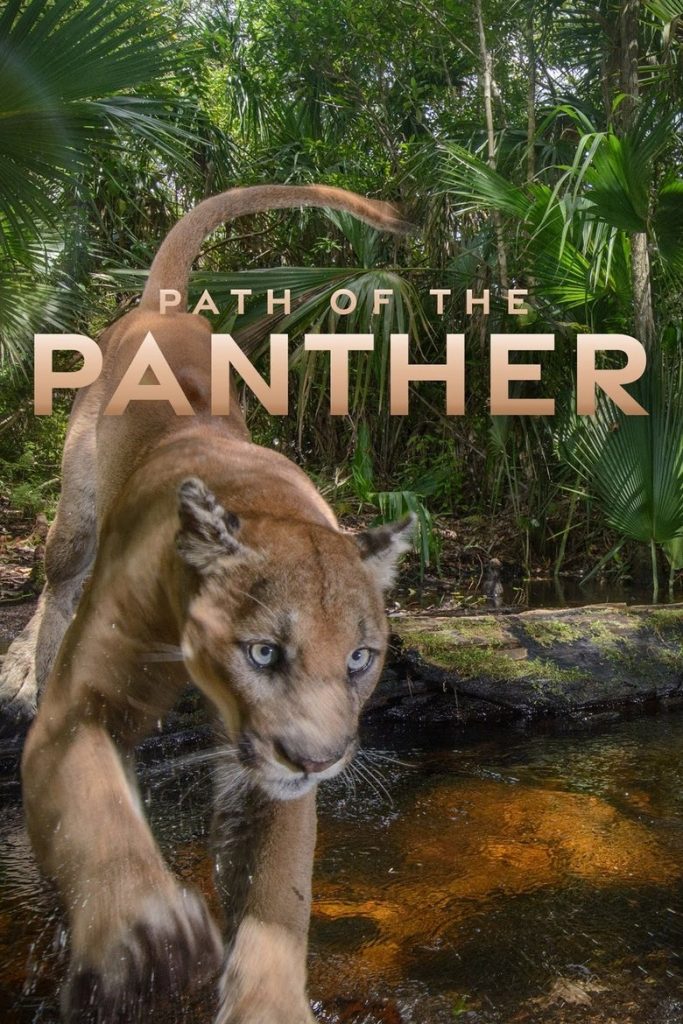
Path of the Panther is a 2022 documentary that follows National Geographic explorer Carlton Ward Jr. and his team as they work to protect the endangered Florida panther. Through stunning visuals of Florida's wilderness, the film highlights conservation efforts involving biologists, photographers, and local communities to prevent this iconic big cat from disappearing.
Parent Guide
Educational documentary about wildlife conservation with no concerning content. Suitable for most children with parental guidance for younger viewers who might find the pacing slow.
Content breakdown
No violence or peril depicted. The film focuses on conservation efforts and natural beauty.
Nothing scary or disturbing. Some scenes show panthers in their natural habitat but they're presented respectfully without tension.
No offensive language. All dialogue is educational and professional.
No sexual content or nudity.
No substance use depicted.
Mild emotional moments when discussing the panther's endangered status, but presented with hope and solutions rather than despair.
Parent tips
This documentary offers a positive educational experience about wildlife conservation with no concerning content. It's suitable for most children but may be slow-paced for very young viewers. Consider watching together to discuss environmental themes.
Parent chat guide
Parent follow-up questions
- What was your favorite animal in the movie?
- What colors did you see in the forest?
- How do you think we can help animals?
- Why do you think panthers are hard to find and film?
- What jobs did the people in the movie have?
- What makes Florida's environment special for animals?
- What challenges do conservationists face when trying to protect endangered species?
- How does photography help conservation efforts?
- What are some ways communities can balance development with wildlife protection?
- How does this documentary use storytelling to advocate for conservation?
- What ethical considerations arise when filming endangered wildlife?
- How might climate change affect Florida's panther population in the future?
🎭 Story Kernel
The film's true subject isn't just the Florida panther's struggle for survival, but the bureaucratic and ideological war over what constitutes 'wild' in modern America. It follows not just the panthers, but the scientists, ranchers, and politicians whose conflicting visions for Florida's future drive the narrative. The core tension lies in whether a species can be saved through human intervention—radio collars, wildlife corridors, breeding programs—or if this very management strips away the wild essence we're trying to preserve. It's ultimately about the paradox of trying to engineer wilderness back into existence.
🎬 Visual Aesthetics
The cinematography masterfully employs thermal imaging and night vision not just as scientific tools, but as visual metaphors—showing us a world invisible to human eyes, where panthers move as ghostly heat signatures through darkened landscapes. Daylight sequences use lush, saturated greens of the Everglades contrasted with the harsh grays of expanding suburbs. The camera often adopts a panther's low-to-ground perspective, making fences and roads feel like imposing barriers. Time-lapses of construction sites devouring habitat are intercut with intimate, shaky-cam footage of panthers moving through sawgrass, creating visceral tension between growth and loss.
🔍 Details & Easter Eggs
💡 Behind the Scenes
Director Eric Bendick spent over 300 days filming across Florida's most remote areas, often waiting weeks for just seconds of panther footage. Several key sequences used camera traps triggered by the animals themselves. The film's haunting score incorporates actual Florida field recordings—insects, water movement, bird calls—layered with traditional instrumentation. Notably, some ranchers featured initially opposed panther protections but changed their views during filming, with their evolving perspectives captured in real time.
Where to watch
Choose region:
- Disney Plus
Trailer
Trailer playback is unavailable in your region.