
Path to War (2003)
Story overview
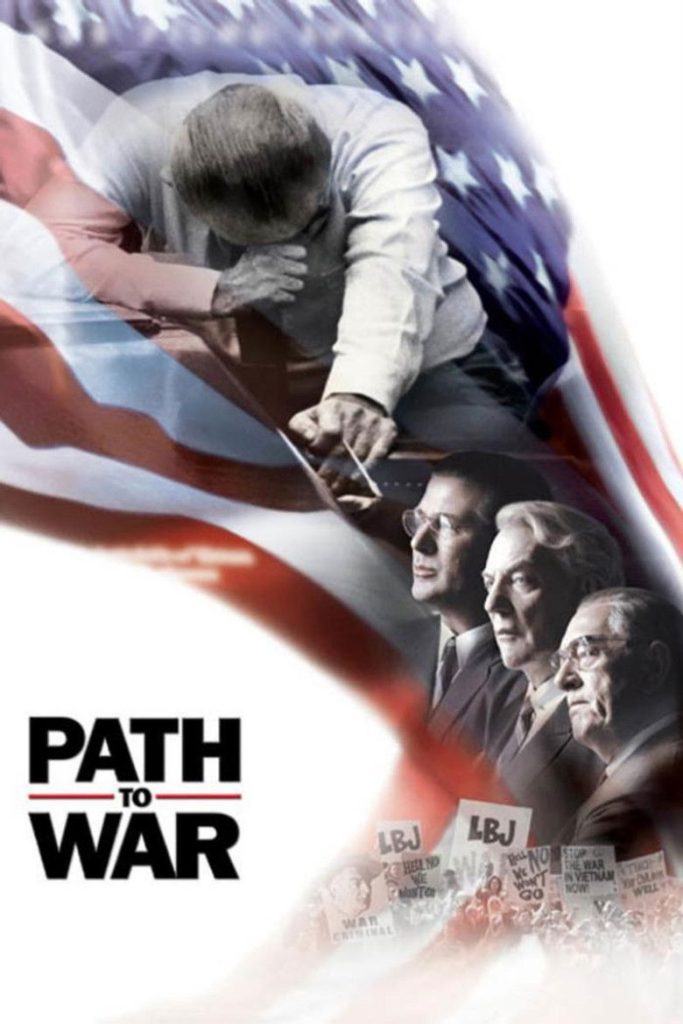
Path to War is a historical drama that provides an inside look at the decision-making process within President Lyndon B. Johnson's administration during the escalation of the Vietnam War. The film focuses on political debates, strategic discussions, and the personal conflicts among advisors as they grapple with the complexities of war. It portrays the tension between military objectives and political realities without depicting battlefield combat.
Parent Guide
A thoughtful historical drama focused on political decision-making rather than combat. Best suited for mature middle schoolers and older who can understand complex political discussions and historical context.
Content breakdown
No combat scenes or physical violence shown. Tense discussions about war casualties and military strategy. Some emotional intensity around life-and-death decisions.
Emotionally intense scenes depicting the psychological toll of war decisions. Discussions of casualties and military losses. Tense confrontations between characters with high stakes.
Occasional mild profanity consistent with dramatic political dialogue. No strong or frequent offensive language.
No sexual content or nudity. The film focuses exclusively on political and historical themes.
Social drinking in political settings (cocktails, wine with meals). Characters occasionally smoke cigarettes, reflecting the time period.
High emotional intensity throughout as characters grapple with life-and-death decisions. Portrays stress, guilt, and moral dilemmas of wartime leadership. Several emotionally charged confrontations.
Parent tips
This film is suitable for mature middle schoolers and high school students studying modern history. Younger children will likely find it slow-paced and difficult to follow due to complex political discussions. The film contains intense emotional scenes and discussions about war casualties that may be disturbing to sensitive viewers. Consider watching together to discuss historical context and decision-making processes.
Parent chat guide
Parent follow-up questions
—
—
- What do you think makes a good leader?
- Why do countries sometimes go to war?
- How do you think the characters felt when making hard choices?
- How does the film portray the ethical dilemmas of wartime leadership?
- What historical inaccuracies or biases might exist in this dramatization?
- How do the film's themes relate to modern international conflicts?
- What role should public opinion play in military decisions?
- How did personal relationships influence political decisions in the film?
🎭 Story Kernel
The film's core is a relentless, claustrophobic examination of bureaucratic and intellectual entrapment. It expresses the profound tragedy of intelligent, ostensibly moral men—primarily President Lyndon B. Johnson and his advisors—becoming prisoners of their own logic, pride, and political calculus. The driving force isn't villainy, but a corrosive combination of sunk-cost fallacy, fear of appearing weak, and the insulating echo chamber of the White House. Each character is propelled by the desperate need to justify past decisions, making escalation the only path forward they can psychologically afford, even as the human cost mounts horrifyingly off-screen. It's a portrait of a failure of imagination, where data replaces morality.
🎬 Visual Aesthetics
The visual language is one of oppressive, wood-paneled interiors and stark, high-contrast lighting, mirroring the characters' trapped mental states. Director John Frankenheimer, a veteran of political thrillers, uses a restless, probing camera that lingers on actors' faces during long, tense dialogue scenes, capturing every flicker of doubt and resolve. The color palette is dominated by the muted browns, grays, and deep blues of suits and war rooms, with the vibrant chaos of Vietnam largely relegated to grainy black-and-white television footage—a distant, mediated horror that the powerful observe but cannot truly feel, visually emphasizing their disconnect.
🔍 Details & Easter Eggs
💡 Behind the Scenes
Michael Gambon's performance as Lyndon B. Johnson is a masterclass in mimicry, capturing the President's larger-than-life physicality and volatile temperament. The film was shot primarily in and around Los Angeles, with the White House interiors recreated on soundstages. Notably, it was one of the final projects for director John Frankenheimer, whose experience with political paranoia in films like 'The Manchurian Candidate' informed its tense, procedural approach. Actor Alec Baldwin, who plays Robert McNamara, studied hours of archival footage to replicate McNamara's precise, almost robotic diction and posture.
Where to watch
Choose region:
- HBO Max
- HBO Max Amazon Channel
- Amazon Video
- Apple TV Store
- Google Play Movies
- YouTube
Trailer
Trailer playback is unavailable in your region.