
Penguin Bloom (2021)
Story overview
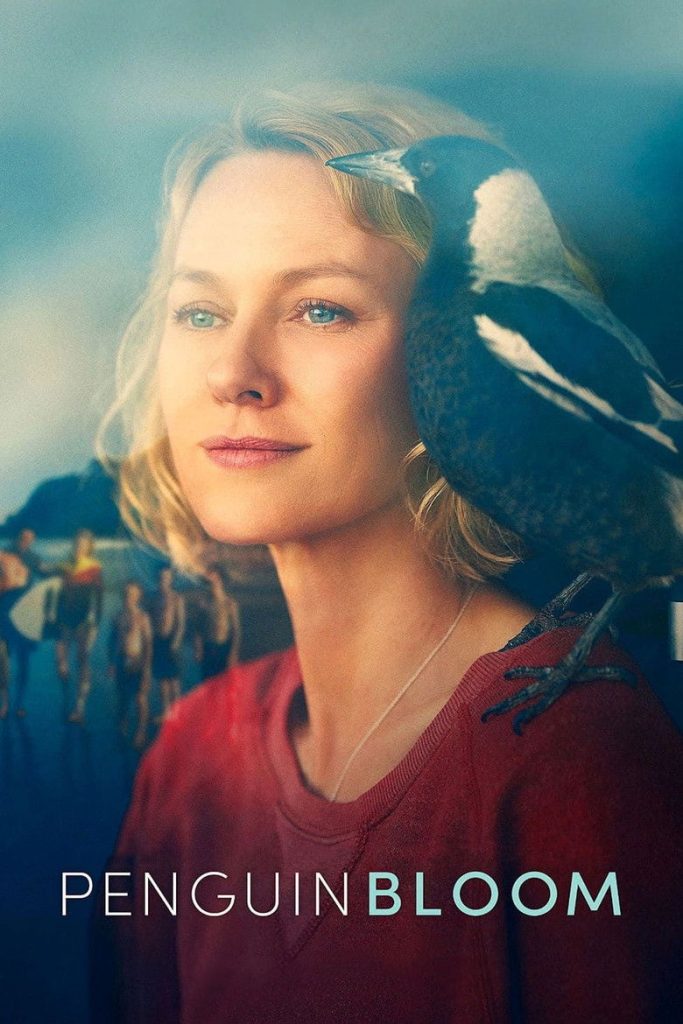
Penguin Bloom is a 2021 Australian-American drama based on a true story. It follows the Bloom family as they navigate life after a tragic accident leaves mother Sam paralyzed. When her sons find an injured baby magpie they name Penguin, the bird's rehabilitation parallels Sam's own journey toward healing, helping the family reconnect emotionally.
Parent Guide
A heartfelt family drama about overcoming adversity with some emotional intensity. Suitable for mature children who can handle themes of disability and recovery.
Content breakdown
Brief non-graphic discussion of the accident that caused paralysis. The bird is shown injured but recovers. No physical violence between characters.
Emotional scenes of grief and frustration. The mother's paralysis and adjustment might be unsettling for young viewers. Brief hospital scenes.
Occasional mild language like 'damn' or 'hell.' Nothing stronger than TV-14 level.
No sexual content or nudity. Some affectionate moments between married parents.
No substance use shown. Adults may drink wine in social settings.
Strong themes of loss, disability, and family stress balanced with uplifting moments of hope and connection. The mother's emotional journey is central.
Parent tips
This film deals with themes of trauma, disability, and family resilience. While uplifting overall, it contains emotional scenes of grief and adjustment. The bird's injury and recovery might be distressing for sensitive viewers. Best for children who can understand metaphorical storytelling about overcoming adversity.
Parent chat guide
Parent follow-up questions
- How did Penguin the bird help the family?
- What was your favorite part with the bird?
- How did the boys help their mom?
- Why was Sam sad at the beginning?
- How did caring for Penguin help the family?
- What does 'resilience' mean in this story?
- How does the film show disability realistically?
- What metaphors does the bird represent?
- How do different family members cope with trauma?
- How does the film handle the psychology of recovery?
- What does the story say about finding purpose after tragedy?
- How accurate is the portrayal of family dynamics under stress?
🎭 Story Kernel
At its core, 'Penguin Bloom' is less about physical recovery and more about the quiet reclamation of selfhood after trauma. Sam's paralysis becomes a metaphor for emotional stasis—she's not just unable to walk, but unable to mother, partner, or exist as her former self. The film's real conflict isn't Sam versus her body, but Sam versus the identity others project onto her: patient, victim, burden. Penguin the magpie becomes her mirror—another creature deemed broken and dependent, yet possessing an innate wildness Sam recognizes. Their bond isn't about healing through cuteness, but about witnessing another being's struggle for autonomy, which reignites Sam's own. The driving force is Sam's gradual shift from passive endurance to active choice, culminating not in walking, but in choosing to kayak—a decision that reclaims agency over her body's narrative.
🎬 Visual Aesthetics
The film employs a distinct visual dichotomy between confinement and freedom. Early scenes use tight, claustrophobic framing within the Bloom household, with Sam often shot through doorways or windows, visually imprisoned. The color palette is muted—washed-out blues and greys—mirroring Sam's depression. As her emotional state shifts, so does the cinematography. The Australian coastline is captured with expansive, sweeping shots, particularly during kayaking sequences, where the camera glides over water with fluid, liberating motion. Penguin's flight is shot with a handheld, intimate closeness, making her movements feel personal and fragile rather than majestic. Key symbolism lies in verticality: Sam's world is initially horizontal (beds, floors), but she and Penguin both seek the vertical—Penguin through flight, Sam through sitting upright, then kayaking. Water becomes a transformative visual motif, representing both the trauma's source (the Thailand fall) and eventual medium for reclaiming movement.
🔍 Details & Easter Eggs
💡 Behind the Scenes
The film is based on the true story of Sam Bloom, played by Naomi Watts, who spent time with the real Sam Bloom to accurately portray her physicality and emotional journey. The magpies playing Penguin were trained animals, with multiple birds used for different behaviors. Filming took place in the actual Bloom family home in Sydney and along the New South Wales coastline. Director Glendyn Ivin intentionally avoided sentimentality in bird scenes, focusing on Penguin as a wild animal rather than a pet. The kayaking sequences required Watts to perform in challenging water conditions, with the actress undertaking specific training to portray Sam's adapted paddling technique authentically.
Where to watch
Choose region:
- Netflix
- Netflix Standard with Ads
Trailer
Trailer playback is unavailable in your region.