
Peninsula (2020)
Story overview
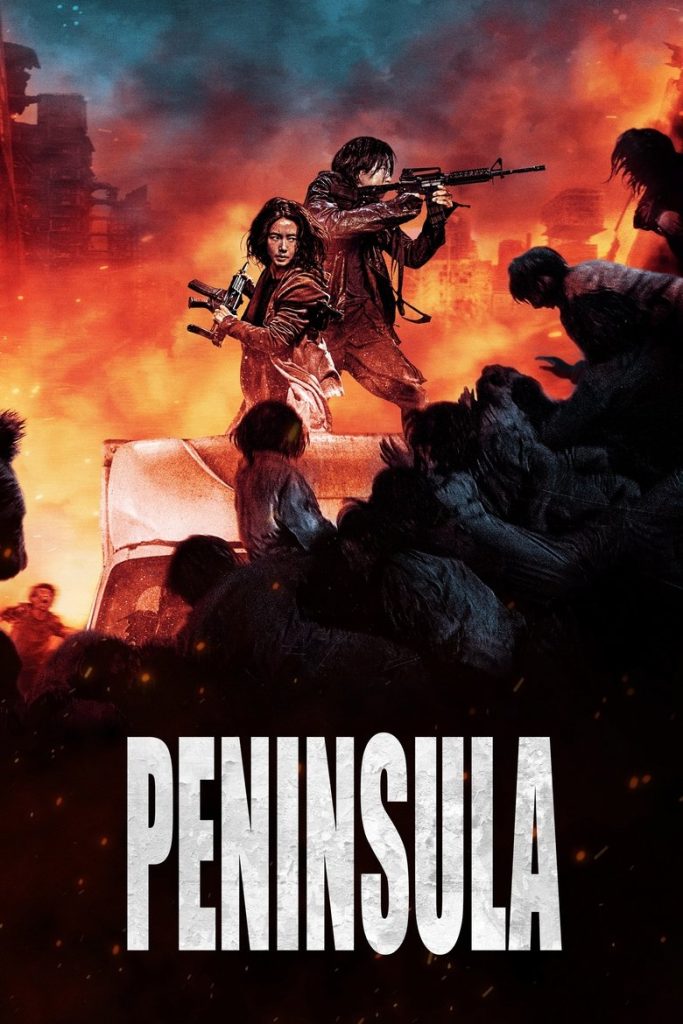
Peninsula is a 2020 South Korean horror-action film set four years after the zombie outbreak depicted in Train to Busan. A former soldier returns to the quarantined Korean Peninsula on a mission to retrieve a truck full of money, only to find the devastated land overrun by zombies and controlled by ruthless survivors. The film combines intense zombie action sequences with post-apocalyptic survival drama as characters battle both the undead and dangerous human factions in a desolate wasteland.
Parent Guide
Peninsula is an intense zombie horror film with graphic violence, frightening imagery, and mature themes. Contains extensive zombie attacks, human-on-human violence, and high-stakes survival scenarios. Recommended for mature audiences only.
Content breakdown
Extensive and graphic zombie violence including biting, mauling, dismemberment, and head trauma. Human characters engage in shootouts, vehicular combat, hand-to-hand fighting, and executions. Characters are frequently in life-threatening peril. Blood and gore are prominent throughout.
Intensely frightening zombie sequences with fast-moving, aggressive undead. Post-apocalyptic devastation and desperate human behavior create disturbing scenarios. Jump scares and tense survival situations. Graphic body horror and transformation scenes.
Some strong language in subtitles including occasional profanity. Emotional outbursts during intense situations. Language is not the primary concern compared to visual content.
No explicit sexual content. Characters may be shown in revealing survival clothing. Some suggestive situations in post-apocalyptic context but nothing graphic.
Characters may drink alcohol in survival situations. No prominent drug use. Some smoking shown in tense moments.
High emotional stakes with characters facing life-or-death decisions. Themes of loss, desperation, and survival morality. Intense suspense and anxiety throughout. Some emotional character moments amid the action.
Parent tips
This film contains intense zombie violence, frightening imagery, and high-stakes survival scenarios. Not suitable for young children. Recommended for mature teens who can handle horror elements. Contains scenes of characters in peril, graphic zombie attacks, and post-apocalyptic desperation. The film has a darker, more action-oriented tone than its predecessor Train to Busan.
Parent chat guide
Parent follow-up questions
—
—
- What would you do if you were in a zombie apocalypse?
- Why do you think some people become mean when they're scared?
- What makes the zombies scary in this movie?
- How does this film compare to other zombie movies you've seen?
- What ethical dilemmas do the characters face in their survival?
- How does the film use the post-apocalyptic setting to comment on society?
- What did you think about the balance between action and character development?
- How does the film handle themes of hope versus despair?
🎭 Story Kernel
Peninsula uses the zombie apocalypse as a backdrop to explore how humanity's worst impulses survive any catastrophe. The film's core theme isn't survival against monsters, but the moral decay that occurs when society collapses. Characters are driven not by fear of zombies, but by greed for the money-filled truck that represents escape and wealth. The real antagonists are other survivors who've formed brutal hierarchies, revealing that the peninsula's quarantine has created a microcosm of human exploitation. The film suggests that in extreme circumstances, people often become more monstrous than the actual monsters they're fleeing.
🎬 Visual Aesthetics
The visual language shifts dramatically from Train to Busan's claustrophobic interiors to expansive, desaturated cityscapes that emphasize isolation. Director Yeon Sang-ho employs sweeping drone shots of abandoned Incheon that create a haunting sense of scale, while nighttime sequences use stark lighting contrasts between safe zones and zombie territories. The car chase sequences feel like a Korean take on Mad Max, with practical effects giving weight to the vehicular mayhem. Color grading leans heavily into cool blues and grays, punctuated by bursts of fiery orange during action scenes, visually reinforcing the cold desperation of the survivors' world.
🔍 Details & Easter Eggs
💡 Behind the Scenes
Peninsula was shot primarily in Busan and Incheon, South Korea, with some scenes filmed in Chuncheon. The massive car chase sequence required months of preparation and used practical effects for most collisions. Actor Gang Dong-won performed many of his own driving stunts after extensive training. Director Yeon Sang-ho intentionally avoided making this a direct sequel to Train to Busan, creating new characters and expanding the universe. The film's international cast includes Korean-American actors, reflecting the story's cross-border escape narrative. Production was challenged by COVID-19 restrictions, ironically mirroring the film's quarantine themes.
Where to watch
Choose region:
- Netflix
- Philo
- Netflix Standard with Ads
- Amazon Video
- Apple TV Store
- Google Play Movies
- YouTube
- Fandango At Home
Trailer
Trailer playback is unavailable in your region.