
Perú: Tesoro Escondido (2017)
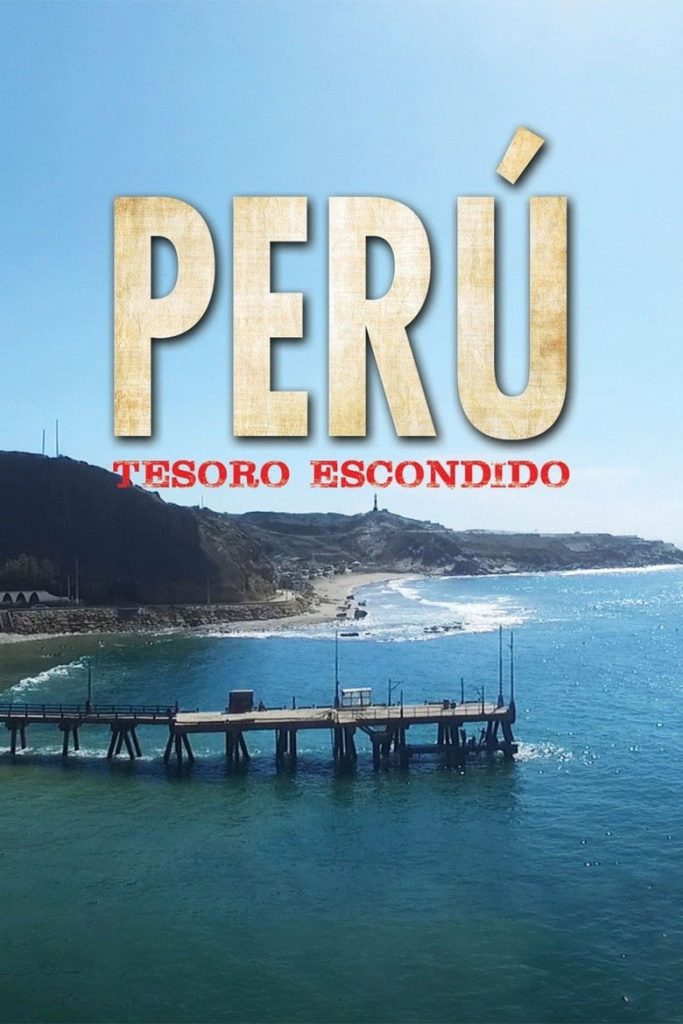
Story overview
This documentary explores Peru's rich cultural heritage spanning over 1,000 years and its diverse natural landscapes, offering an educational journey through the country's history, traditions, and environmental wonders.
Parent Guide
Educational documentary about Peru's culture and nature with no concerning content. Suitable for all ages as a learning experience.
Content breakdown
No violence, conflict, or peril depicted. Focus is entirely on cultural and natural exploration.
No scary or disturbing content. Scenes are visually appealing and educational.
No offensive language. Narration is in Spanish with possible subtitles, focusing on factual information.
No sexual content or nudity. Content is culturally respectful and appropriate.
No depiction of substance use. Documentary maintains educational focus.
Mild emotional engagement through appreciation of culture and nature. No intense emotional scenes.
Parent tips
This is an educational documentary suitable for most ages. Consider watching together to discuss Peru's culture and geography. The content is informative without concerning elements, making it ideal for family viewing.
Parent chat guide
Parent follow-up questions
- What animals did you see in Peru?
- What colors did you notice in the landscapes?
- Did you see any mountains or rivers?
- What traditional activities did people in Peru do?
- How is Peru's geography different from where we live?
- What did you learn about ancient Peruvian cultures?
- How has Peru's history influenced its modern culture?
- What natural resources make Peru unique?
- What challenges might Peru face preserving its traditions?
- How does this documentary portray cultural preservation?
- What economic or environmental factors affect Peru's development?
- How do indigenous traditions interact with modern society in Peru?
🎭 Story Kernel
The film transcends typical documentary structure by presenting Peru's natural and cultural heritage as a living, breathing entity with its own narrative arc. Rather than following human protagonists, the country itself becomes the central character—its mountains speak through geological formations, its rivers flow with historical memory, and its archaeological sites serve as physical manifestations of collective consciousness. The driving force isn't plot progression but rather the revelation of interconnectedness: how coastal deserts converse with Andean peaks, how pre-Columbian engineering anticipates modern ecological concerns, and how biodiversity patterns mirror cultural diversity. This approach creates a profound meditation on time, where millennia collapse into single panoramic shots, suggesting that understanding a place requires perceiving multiple temporal layers simultaneously.
🎬 Visual Aesthetics
The cinematography employs a mesmerizing language of scale and intimacy, constantly shifting between awe-inspiring drone vistas that reduce humans to specks and extreme close-ups where individual leaves or stone carvings fill the entire frame. A distinct color palette emerges organically from locations: the mineral blues of glacial lakes, the terracotta tones of desert valleys at golden hour, the vibrant greens of cloud forests that appear almost digitally saturated yet remain authentic. Camera movement mimics natural rhythms—slow pans across mountain ranges echo geological time, while rapid cuts between micro-ecosystems create a sensory mosaic. Particularly striking are the symmetrical compositions of archaeological sites, where geometric precision contrasts with organic landscape curves, visually representing humanity's dialogue with environment.
🔍 Details & Easter Eggs
💡 Behind the Scenes
Director Luis Ara shot the film over three years using specially modified cameras capable of capturing extreme altitude conditions without color distortion. Several archaeological sites required unprecedented permissions, including Machu Picchu at exclusive hours with minimal crew. The aerial sequences utilized custom drones with silent propulsion to avoid disturbing wildlife, particularly during condor flight footage. Local communities participated not just as subjects but as collaborators, with Quechua and Aymara consultants ensuring cultural representations maintained authentic perspectives rather than external interpretations.
Where to watch
Choose region:
- Netflix
- Netflix Standard with Ads