
Peter Pan (1953)
Story overview
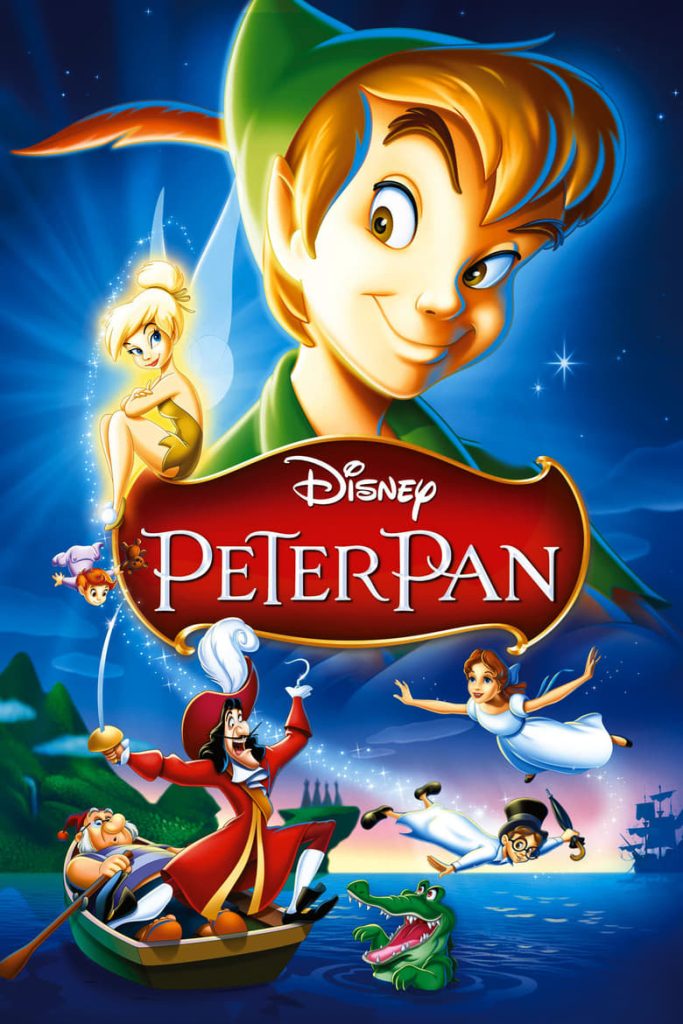
This classic animated film follows three children who are whisked away from their London home to the magical island of Neverland by Peter Pan, a boy who never grows up. In this fantastical world, they encounter fairies, mermaids, and pirates led by the villainous Captain Hook. The story explores themes of adventure, imagination, and the bittersweet transition from childhood to adulthood. The children must work together to outsmart the pirates and find their way back home.
Parent Guide
A classic animated adventure with some intense moments and outdated cultural depictions that may require parental guidance.
Content breakdown
Cartoonish sword fights, characters threatened with walking the plank, and general pirate antics. No graphic violence or lasting consequences.
Captain Hook and his pirates may be frightening to very young children. Some tense scenes of peril when characters are in danger.
No offensive language. Some pirate-style threats like 'I'll get you, Peter Pan!'
No sexual content. Characters are modestly dressed in typical Disney animation style.
No substance use depicted. Pirates are shown drinking what appears to be grog in one scene.
Mild emotional moments related to leaving home, facing fears, and the transition from childhood. Happy resolution.
Parent tips
This G-rated Disney classic is generally appropriate for most children, but some scenes may be intense for very young viewers. The pirate characters, especially Captain Hook, engage in cartoonish sword fights and threats that could be frightening to preschoolers. There are also moments of peril when characters are in danger, though all conflicts are resolved without serious consequences.
Parents should be aware that the film portrays some gender stereotypes typical of its time, with Wendy taking on a motherly role while the boys have adventures. The depiction of Native Americans uses outdated cultural representations that may require explanation. The overall message celebrates imagination and childhood while acknowledging that growing up is a natural part of life.
Parent chat guide
After the movie, talk about the difference between make-believe adventures and real life. Ask what parts they enjoyed most and what made them nervous. Use the story as a springboard to discuss imagination, bravery, and how we all grow up while keeping some childhood wonder.
Parent follow-up questions
- What was your favorite part of Neverland?
- How did you feel when the pirates appeared?
- What would you do if you could fly like Peter Pan?
- Who was your favorite character and why?
- What makes a good friend in the story?
- Why do you think Peter Pan doesn't want to grow up?
- How did the children work together to solve problems?
- What makes Captain Hook a villain?
- What would you do differently if you visited Neverland?
- How does the story show that growing up can be good?
- What does this story say about the importance of imagination?
- How are the children different at the end of their adventure?
- Why do you think stories about never growing up are so popular?
- What responsibilities come with growing up that the story shows?
- How does the film balance fun adventure with serious moments?
- What commentary does the film make about childhood versus adulthood?
- How does the portrayal of family relationships evolve through the story?
- What cultural elements in the film reflect the time it was made?
- How does the concept of 'never growing up' relate to real-life transitions?
- What makes this classic story continue to resonate with audiences?
🎭 Story Kernel
At its core, 'Peter Pan' is less about childhood wonder and more about the terror of maturation. Peter isn't a hero; he's a traumatized boy who witnessed his own aging shadow detach and flee, leading him to build a narcissistic kingdom where he's permanently the center. The real conflict isn't with Hook, but with Wendy's impending womanhood, which threatens Peter's entire constructed reality. The children aren't seeking adventure; they're negotiating their first contract with responsibility, with Neverland serving as the final bargaining chip before adulthood's non-negotiable terms.
🎬 Visual Aesthetics
The film's visuals create a stark dichotomy: London is all muted browns and structured vertical lines (windows, bedposts, nursery bars), while Neverland bursts with unnatural, saturated greens and chaotic, organic shapes. This isn't just fantasy; it's a psychological palette. Peter's flight isn't graceful—it's jagged and possessive, often framed from low angles to maintain his childish perspective. The crocodile's ticking is a visual gag with teeth; its clock isn't just Hook's fear, but a constant, intrusive reminder of time's passage, the one thing Neverland can't silence.
🔍 Details & Easter Eggs
💡 Behind the Scenes
The film's flying sequences were a technical marvel, using an intricate system of wires and counterweights that required actors to hold painfully rigid poses. Bobby Driscoll (Peter) and Kathryn Beaumont (Wendy) recorded their dialogue together in a single room to capture genuine interplay, a rarity at the time. The iconic 'You Can Fly' sequence was partly inspired by live-action reference footage of dancers leaping on a soundstage, which animators then traced and exaggerated to achieve that specific, weightless ballet.
Where to watch
Choose region:
- Disney Plus
- Amazon Video
- Apple TV
- Google Play Movies
- YouTube
- Fandango At Home
Trailer
Trailer playback is unavailable in your region.