
Piglet’s Big Movie (2003)
Story overview
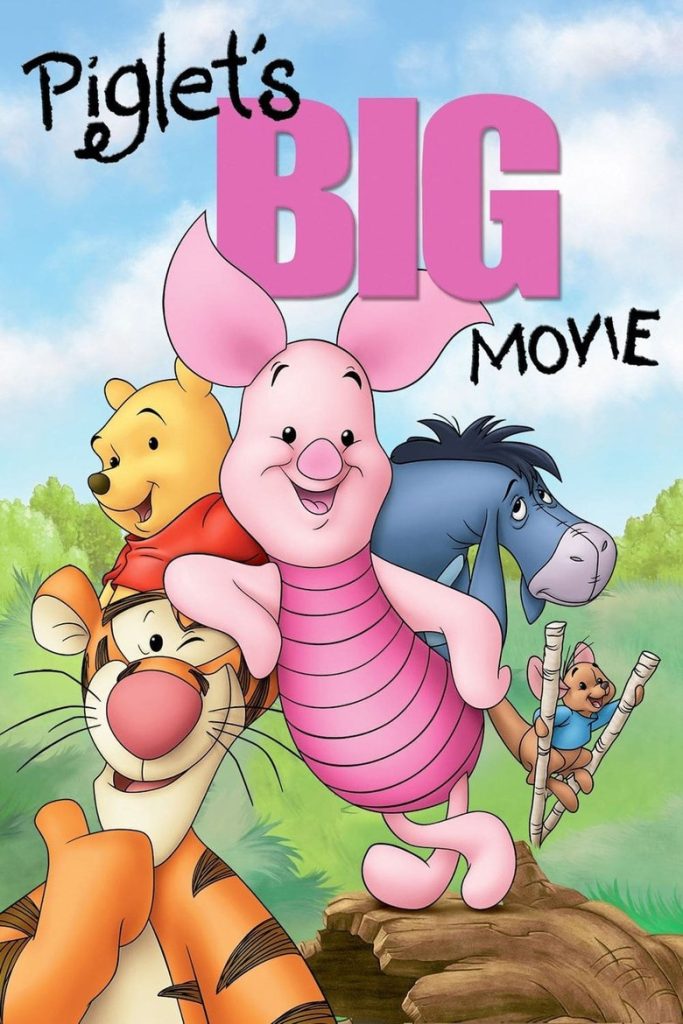
Piglet's Big Movie is a gentle animated adventure from the Hundred Acre Wood. When Piglet feels excluded from a honey harvest because he's considered too small, he disappears, prompting his friends to use his scrapbook as a guide to find him. Through this journey, they discover that Piglet's small size has never stopped him from being a big hero in many past situations. The film explores themes of friendship, self-worth, and recognizing everyone's unique contributions.
Parent Guide
A gentle, heartwarming animated film with positive messages about friendship, inclusion, and self-worth. Perfect for young children with no concerning content.
Content breakdown
Very mild peril when Piglet gets lost in the woods and during some weather-related scenes (wind, rain). All situations are resolved safely through friendship and cooperation. No physical violence or threats.
No scary or disturbing content. The tone remains consistently gentle and reassuring throughout. Even when Piglet is lost, the focus is on his friends' caring search rather than creating fear.
No inappropriate language. All dialogue is polite and age-appropriate. Characters speak kindly to one another even when disagreeing.
No sexual content or nudity. All characters are fully clothed cartoon animals.
No substance use. The only consumption shown is honey eating, which is portrayed as a natural food source.
Mild emotional moments when Piglet feels excluded and sad, but these are handled gently and resolved positively. The overall emotional tone is warm and uplifting.
Parent tips
This is a gentle, character-driven story perfect for young children. The emotional themes are handled delicately - Piglet's feelings of exclusion are relatable but not overwhelming. The 'danger' elements are mild (getting lost in the woods, minor weather concerns) and resolved through friendship and cooperation. There are no villains or intense conflicts. The pace is calm, with musical interludes that maintain a soothing atmosphere. Great for teaching children about empathy, inclusion, and appreciating everyone's strengths regardless of size.
Parent chat guide
Parent follow-up questions
- How did Piglet feel when his friends didn't let him help?
- What did Piglet's friends use to find him?
- Can you name all of Piglet's friends?
- What did they learn about Piglet from his scrapbook?
- Why do you think Piglet's friends didn't think he could help with the honey harvest?
- How did looking at Piglet's scrapbook change how his friends saw him?
- What does it mean to be a hero?
- Have you ever felt like you were too small to do something important?
- How does the film show that size doesn't determine someone's value?
- What does Piglet's scrapbook represent about how we remember our accomplishments?
- How do the characters demonstrate empathy throughout the story?
- Why is it important for friends to recognize each other's strengths?
- How does the film handle themes of self-worth and validation from others?
- What commentary does the movie make about how we often underestimate quiet or small individuals?
- How does the structure of using flashbacks through the scrapbook enhance the storytelling?
- In what ways does this children's film address universal human experiences of belonging and contribution?
🎭 Story Kernel
The film's core theme is the profound value of the overlooked and the quiet. It's not about Piglet becoming 'big' in a physical or heroic sense, but about his community realizing that his gentle, observant nature—his very 'smallness'—is their essential glue. The driving force is Piglet's quiet despair at feeling useless, which manifests in his disappearance. This forces Pooh, Tigger, and the others on a quest that becomes a process of remembrance. They don't find Piglet by looking for a 'lost thing,' but by retracing and appreciating the countless small, kind acts he performed that they had taken for granted. The movie argues that true worth isn't shouted, but woven quietly into the fabric of everyday care.
🎬 Visual Aesthetics
The film employs a dual visual language. The present-day narrative uses the clean, bright palette of classic Disney animation, but the memory sequences triggered by Piglet's scrapbook are rendered in a distinct, nostalgic style. These flashbacks often feature softer watercolor washes, sepia tones, and a slightly more impressionistic line quality, visually separating 'memory' from 'reality.' This technique brilliantly mirrors the plot's emotional core: the past is not just recalled, but *felt* differently. The camera in these sequences often adopts Piglet's low-angle perspective, emphasizing his small stature and how he views the world—and his friends—from below, reinforcing his feeling of being beneath notice.
🔍 Details & Easter Eggs
💡 Behind the Scenes
This was the third theatrical film based on Disney's 'Winnie the Pooh' franchise. Several songs were written by Carly Simon, marking her first work for an animated film; her daughter, Sally Taylor, also contributed vocals. The film incorporates numerous direct references and visual homages to the original A.A. Milne books and the classic Disney short films, aiming for nostalgic appeal. It was produced during a transitional period for Disney's animation department, relying more on traditional animation techniques before the studio's full pivot to CGI features.
Where to watch
Choose region:
- Disney Plus
- Amazon Video
- Apple TV Store
- Google Play Movies
- YouTube
- Fandango At Home
Trailer
Trailer playback is unavailable in your region.