
Planet of the Birds (2018)
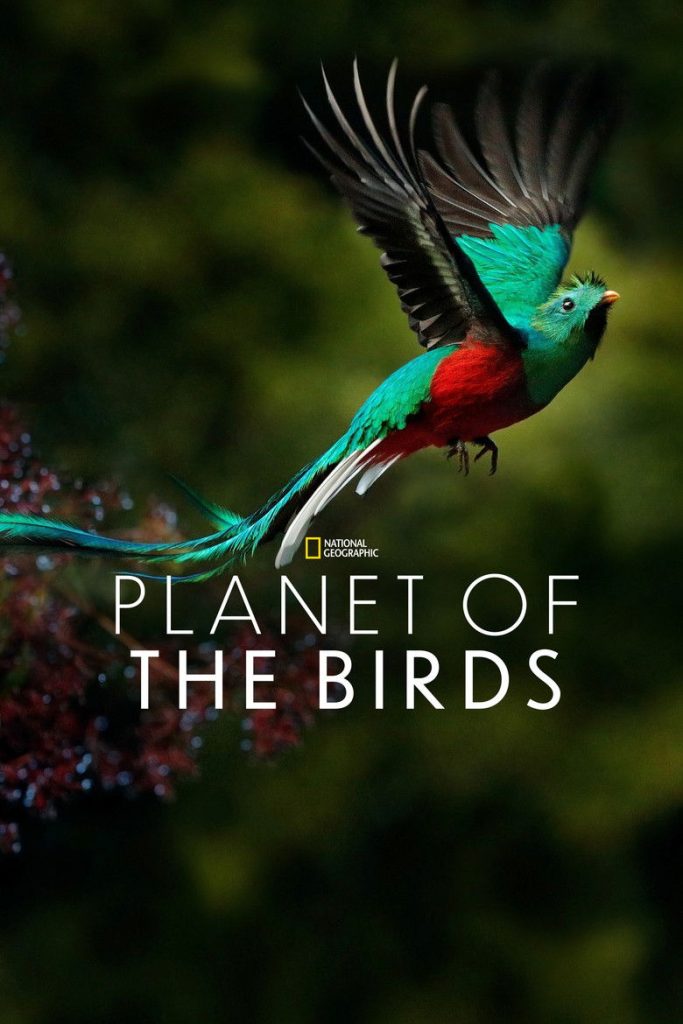
Story overview
Planet of the Birds is a 2018 documentary that explores the remarkable adaptability of birds across diverse global habitats, from the Arctic to remote islands. It examines how birds thrive through specialized physical features, feathers, movements, and songs, presenting them as resilient nomads of the sky in an educational global tour.
Parent Guide
Educational documentary about bird biology and adaptation with no concerning content. Suitable for all ages.
Content breakdown
No violence or peril depicted. Shows birds in natural habitats without predation scenes.
No scary or disturbing content. Peaceful nature footage throughout.
No inappropriate language. Educational narration only.
No sexual content or nudity. Shows birds in natural settings.
No substance use depicted.
Calm, educational tone throughout. No emotionally intense scenes.
Parent tips
This documentary is educational and family-friendly, focusing on bird biology and behavior without concerning content. It's suitable for all ages, but younger children might need help understanding some scientific concepts. Consider watching together to discuss bird adaptations and conservation.
Parent chat guide
Parent follow-up questions
- What colors did you see on the birds?
- Can you flap your arms like a bird?
- What sounds did the birds make?
- How do birds use their feathers to stay warm or cool?
- Why do some birds migrate long distances?
- What different bird homes did you see?
- How have birds evolved to survive in extreme environments?
- What role do bird songs play in communication and survival?
- How does bird anatomy help them fly efficiently?
- How might climate change affect bird migration patterns?
- What conservation efforts are most effective for protecting bird species?
- How do birds demonstrate evolutionary adaptation in real-time?
🎭 Story Kernel
The film's core is a critique of anthropocentrism disguised as an avian utopia. The protagonist's journey isn't about discovering a new world, but realizing humanity's absence is the planet's salvation. Characters are driven by the haunting question: what if intelligence evolved without the baggage of opposable thumbs and tool-making? The birds' society, built on collective memory and migratory patterns, exposes human individualism as a flaw, not a feature. The climax reveals the 'planet' is a post-human Earth, where avians inherited a world we rendered uninhabitable for ourselves—a quiet, devastating indictment of human exceptionalism.
🎬 Visual Aesthetics
The cinematography is dominated by low-angle and aerial shots, forcing the audience into a grounded, non-human perspective. A desaturated palette punctuated by bursts of iridescent feather colors creates a world that feels both alien and familiar. Slow-motion flight sequences aren't just spectacle; they're visual metaphors for freedom constrained by biological imperative. The most striking choice is the near-absence of human-made structures in wide shots—when ruins appear, they're overgrown and incidental, emphasizing nature's reclamation. Camera movements mimic avian motion: sudden pans for 'predator awareness,' smooth tracking for migratory sequences.
🔍 Details & Easter Eggs
💡 Behind the Scenes
The production team collaborated with ornithologists to design the birds' social structures, basing communication on real avian vocalizations and body language. Filming occurred in remote Icelandic locations chosen for their lack of visible human impact. Most flight sequences used custom drones with feather-like attachments rather than CGI, giving the aerial footage an organic, unstable quality. The lead 'bird' characters were performed by dancers trained in avian movement, with their motions later digitally mapped onto animated bodies—a painstaking process that took over eighteen months to perfect.
Where to watch
Choose region:
- Disney Plus