
Pocahontas (1995)
Story overview
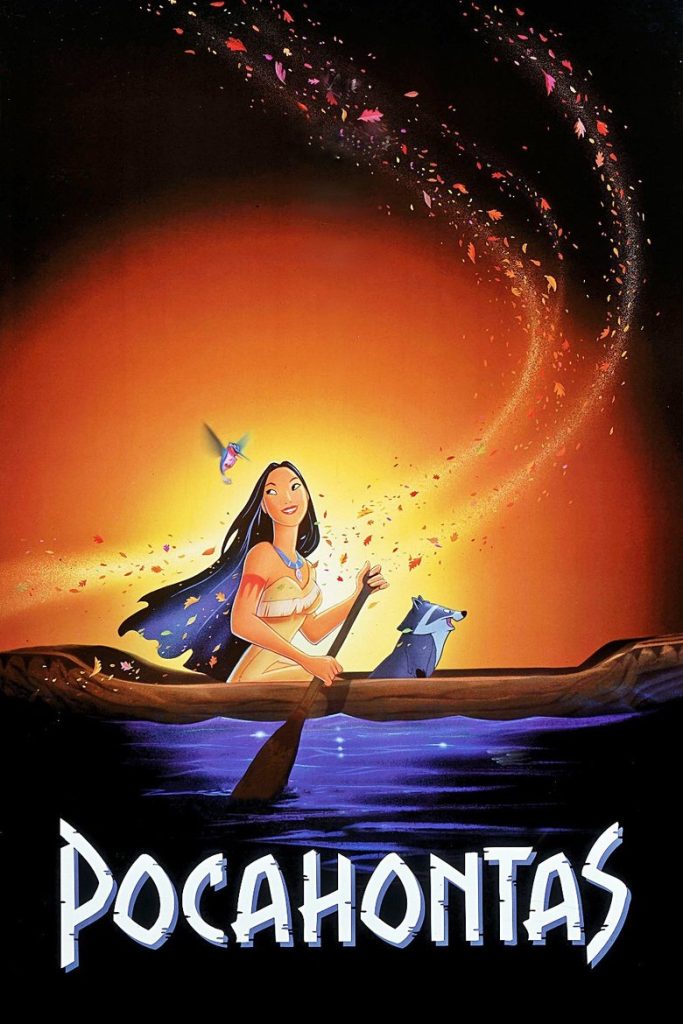
This animated musical adventure tells the story of Pocahontas, a young Native American woman who develops a relationship with English settler John Smith during the early colonization of Virginia. The film explores themes of cultural differences, environmental respect, and finding common ground between conflicting groups. Through its vibrant animation and memorable songs, it presents a fictionalized account of historical events with a focus on romance and understanding.
Parent Guide
A musical adventure with historical themes suitable for most children, though some intense moments and complex themes may require parental guidance.
Content breakdown
Some confrontations between groups, a character threatened with execution, and tense standoffs. No graphic violence shown.
Intense moments during conflicts and a potentially frightening scene where a character is in peril. Some characters express prejudiced views.
No offensive language present in the film.
Romantic themes but no sexual content. Characters are appropriately dressed throughout.
No depiction of substance use in the film.
Some emotional moments related to cultural conflict, potential violence, and romantic tension. Generally uplifting resolution.
Parent tips
Pocahontas offers opportunities to discuss historical context, cultural differences, and environmental themes with children. The film contains some intense moments including confrontations between settlers and Native Americans, and a scene where a character is threatened with execution. Parents should be aware that while rated G, the film deals with serious themes including colonization, prejudice, and potential violence.
The romantic relationship between Pocahontas and John Smith is central to the story, though portrayed in a family-appropriate manner. Some characters express prejudiced views that can serve as discussion points about tolerance and understanding different perspectives.
Parent chat guide
Focus conversations on the film's themes of respect for nature, cultural understanding, and peaceful resolution of conflicts. For younger children, you might emphasize the friendship aspects, while older children can explore the historical context more deeply.
Parent follow-up questions
- What was your favorite animal in the movie?
- How did Pocahontas and John Smith become friends?
- What colors did you like in the movie?
- How did the characters help each other?
- What made you happy or sad in the story?
- Why were the settlers and Native Americans worried about each other?
- What did Pocahontas teach John Smith about nature?
- How did the characters solve their problems?
- What does it mean to understand someone different from you?
- What was the most exciting part for you?
- How does the movie show different perspectives on land and resources?
- What historical elements did you notice in the story?
- How do the characters show courage in difficult situations?
- What messages does the film give about prejudice and understanding?
- How does music help tell the story?
- How does the film balance historical events with fictional storytelling?
- What cultural stereotypes or representations did you notice?
- How are themes of colonization and cultural conflict presented?
- What contemporary relevance do the film's themes about nature and understanding have?
- How does the romance serve the larger themes of the story?
🎭 Story Kernel
At its core, 'Pocahontas' is less about historical accuracy and more about the tension between two worldviews: one that sees nature as a resource to be exploited versus one that views it as a sacred, interconnected web of life. The driving force isn't just the romance between Pocahontas and John Smith, but Pocahontas's internal conflict between her duty to her people and her growing understanding of the newcomers' destructive mindset. The characters are propelled by competing desires: Governor Ratcliffe's greed for gold, Smith's initial colonial ambition tempered by curiosity, and Pocahontas's quest for spiritual truth. The film ultimately argues for empathy and coexistence, using the historical shell to explore timeless themes of environmentalism and cultural clash.
🎬 Visual Aesthetics
The film's visual language is defined by its flowing, painterly animation that mimics watercolor landscapes, creating a dreamlike, mystical atmosphere. Director's use of anthropomorphic nature—talking trees, wise grandmother willow, and expressive animal sidekicks—visually reinforces the theme of nature's sentience. The color palette sharply contrasts the vibrant, organic greens and blues of the Native American world with the dull, metallic grays and browns of the English settlers and their ships. Symbolism is heavy-handed but effective: the swirling wind represents Pocahontas's intuition and connection to the spirit world, while the compass Smith carries becomes a metaphor for lost direction in a new world. Action sequences, like the climactic confrontation, use dramatic angles and slow motion to heighten emotional stakes rather than pure spectacle.
🔍 Details & Easter Eggs
💡 Behind the Scenes
The voice of Pocahontas was provided by Irene Bedard, a Native American actress of Inuit and Cree descent, while Judy Kuhn performed the singing vocals—a common Disney practice at the time. The film's production was notably rushed to capitalize on the success of 'The Lion King,' leading to a condensed development cycle. Composer Alan Menken collaborated with lyricist Stephen Schwartz on the Oscar-winning song 'Colors of the Wind,' which became an anthem for environmental awareness. Interestingly, the filmmakers consulted with Native American advisors but faced criticism for prioritizing a romantic narrative over historical accuracy, particularly regarding Pocahontas's actual age and the violent realities of colonization.
Where to watch
Choose region:
- Disney Plus
- Amazon Video
- Apple TV
- Google Play Movies
- YouTube
- Fandango At Home
Trailer
Trailer playback is unavailable in your region.