Poison (2023)
Story overview
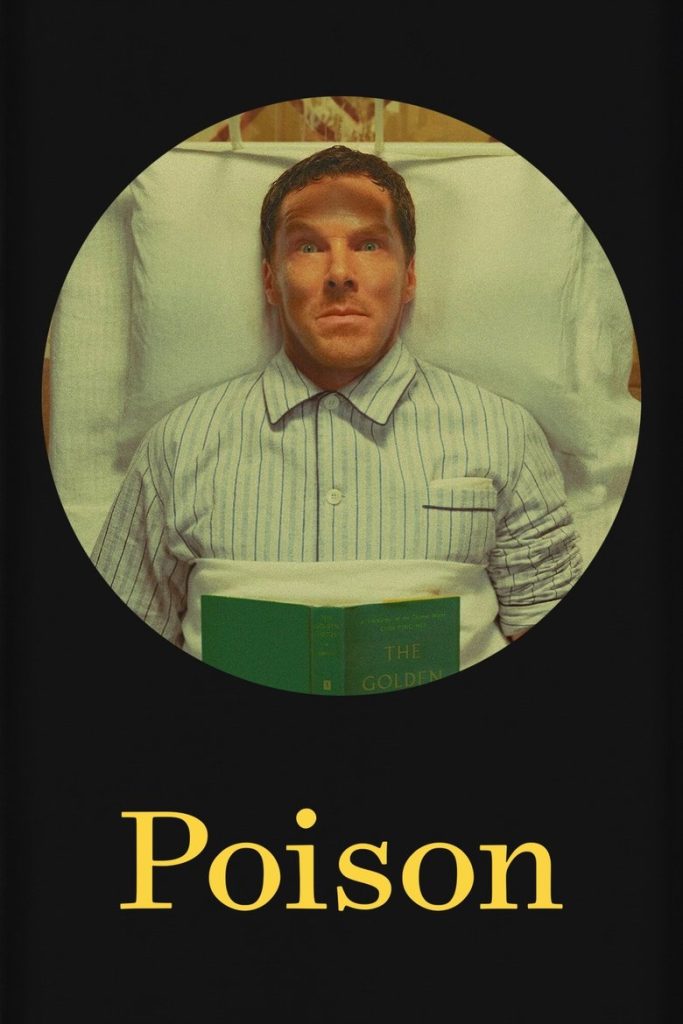
A comedic thriller about an Englishman in India who is bitten by a poisonous snake on his stomach. His associate and a doctor must quickly work together to save his life in this short, fast-paced adventure directed by Wes Anderson.
Parent Guide
A brief, stylized comedy-thriller suitable for most children ages 8 and up. The PG rating reflects mild peril that is handled with humor and artistic flair rather than realism.
Content breakdown
Central plot involves a snake bite with some tense moments as characters race to save the victim, but no blood or graphic injury is shown. The peril is presented in a comedic, exaggerated style.
The snake and bite situation might be briefly unsettling for very young or sensitive children, but the comedic tone and Wes Anderson's distinctive visual style keep it from being truly frightening.
No offensive language noted in the PG rating context.
No sexual content or nudity.
No depiction of substance use.
Some urgency and concern about the victim's survival, but balanced by humor and the knowledge that it's a short, stylized film rather than a realistic drama.
Parent tips
This 17-minute film is rated PG and features mild peril from a snake bite, but it's presented in a comedic, stylized way typical of Wes Anderson's work. The snake bite scene might be briefly tense but is not graphic. The film focuses on teamwork and quick thinking in an emergency. Best for children who can handle mild suspense without being frightened.
Parent chat guide
Parent follow-up questions
- What animal was in the movie?
- Did the man get better?
- Who helped the man?
- Why was it important for the characters to work together?
- What made the snake bite scene exciting but not too scary?
- How did the movie make a serious situation funny?
- How does Wes Anderson's directing style affect how we experience the story?
- What does this film say about cultural differences in emergency response?
- How did the short runtime impact the pacing of the story?
- Analyze how the film uses comedy to explore themes of mortality and crisis response.
- Discuss the colonial/post-colonial undertones in the British-Indian dynamic.
- How does the film's brevity serve as a commentary on modern attention spans versus traditional storytelling?
🎭 Story Kernel
Poison serves as a biting critique of colonial arrogance and the fragility of the male ego. While the surface narrative centers on the paralyzing fear of a venomous krait hidden beneath a bedsheet, the true poison is revealed in the aftermath of the rescue attempt. Harry Pope’s transition from a vulnerable, sweating victim to a vitriolic racist exposes the deep-seated superiority complexes of the British Raj. The film explores how fear strips away the veneer of civility, only to replace it with a more insidious form of toxicity. Dr. Ganderbai’s expertise and patience are met not with gratitude, but with a verbal assault that proves more harmful than any snakebite. Anderson highlights the absurdity of colonial hierarchies, suggesting that the perceived threat from nature is often a distraction from the inherent cruelty within human social structures.
🎬 Visual Aesthetics
Anderson employs his signature diorama-like precision, but here it feels uniquely suffocating. The set design emphasizes the horizontal plane of the bed, creating a stage-bound intensity that mirrors the protagonist's paralysis. The color palette is dominated by sickly yellows and muted earth tones, reflecting both the tropical heat of India and the bile-like temperament of Harry Pope. Cinematographer Robert Yeoman uses static shots and symmetrical framing to trap the characters within the frame, heightening the suspense. The use of stagehands to move props in real-time breaks the fourth wall, reminding the audience of the artifice of colonial order. This theatricality underscores the performative nature of Harry’s supposed distress and the rigid, scripted roles dictated by the era's racial dynamics, turning the bedroom into a pressurized chamber of psychological and social tension.
🔍 Details & Easter Eggs
💡 Behind the Scenes
Poison is the final installment in Wes Anderson’s 2023 quartet of Roald Dahl adaptations for Netflix, following The Wonderful Story of Henry Sugar, The Swan, and The Rat Catcher. This marks Anderson's second major foray into Dahl's work after the stop-motion Fantastic Mr. Fox. Unlike his previous feature films, these shorts feature actors playing multiple roles across the series and speaking Dahl's prose directly to the camera. The film was shot on 16mm film to achieve a specific grain and texture. Ben Kingsley, who plays Dr. Ganderbai, previously portrayed Mahatma Gandhi, adding a layer of historical irony to his character's mistreatment.
Where to watch
Choose region:
- Netflix
- Netflix Standard with Ads
Trailer
Trailer playback is unavailable in your region.