
Ponyo (2008)
Story overview
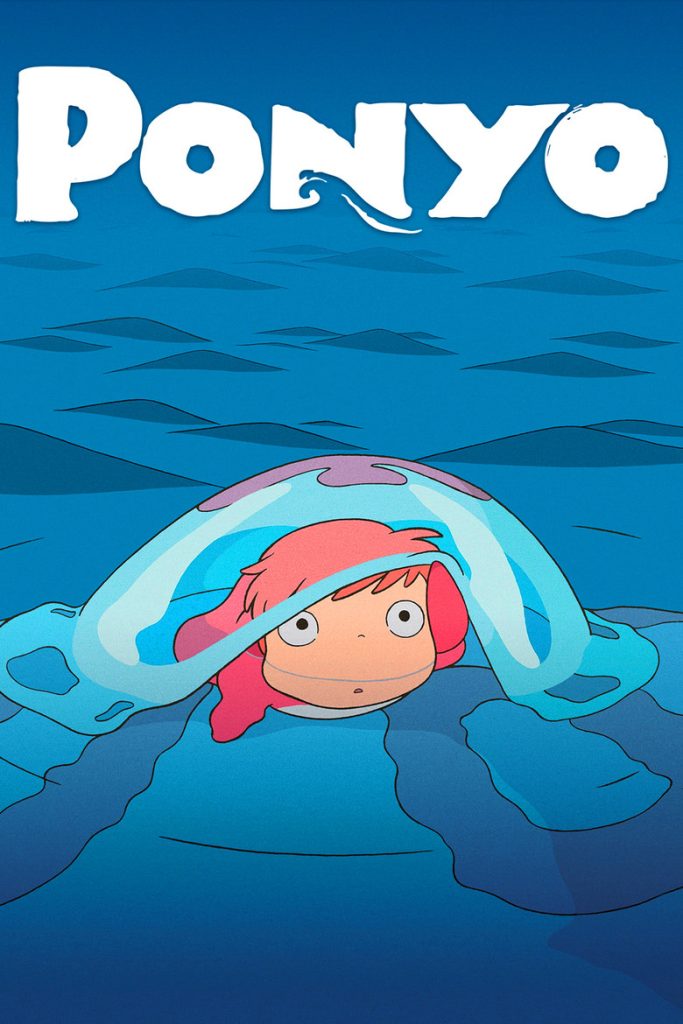
Ponyo is a magical tale about a young boy named Sosuke who rescues a goldfish with extraordinary powers. The fish, named Ponyo, dreams of becoming human and causes delightful chaos while trying to achieve her goal. Her father, a powerful sorcerer, attempts to bring her back to the sea, creating a gentle conflict between natural forces and personal desires. The story explores themes of friendship, transformation, and the balance between human and natural worlds.
Parent Guide
A gentle, imaginative fantasy with minimal content concerns, suitable for most children with parental guidance for younger viewers during mild peril scenes.
Content breakdown
Some fantasy peril involving turbulent ocean waves and characters in mild danger, all resolved positively without harm.
Brief scenes of magical transformation and ocean storms might startle very young children but are not graphic or prolonged.
No offensive or inappropriate language present.
No sexual content or nudity.
No substance use depicted.
Mild emotional moments related to separation and magical challenges, balanced with joyful scenes and positive resolutions.
Parent tips
Ponyo is a gentle, imaginative film suitable for most children, with its G rating indicating minimal content concerns. The movie features some fantasy peril scenes where ocean waves become turbulent and characters face mild challenges, but these moments are brief and resolved positively. Younger viewers might need reassurance during these sequences, while older children will appreciate the themes of environmental harmony and personal determination. The film's visual beauty and heartfelt storytelling make it an excellent family viewing experience.
Parent chat guide
Parent follow-up questions
- What was your favorite part about Ponyo?
- How did Sosuke help Ponyo?
- What colors did you see in the ocean?
- How did Ponyo feel when she wanted to be human?
- What sounds did you hear in the movie?
- Why do you think Ponyo wanted to become human?
- How did Sosuke show he was a good friend?
- What challenges did the characters face together?
- What did you learn about the ocean from this movie?
- How did the characters solve problems?
- What does the movie show about balancing human life with nature?
- How did Ponyo's transformation affect those around her?
- What responsibilities come with having special abilities?
- How did different characters view the same situations?
- What themes about family and independence did you notice?
- How does the film portray the relationship between humans and the natural world?
- What commentary might the movie be making about environmental responsibility?
- How do the characters' motivations drive the story's conflict?
- What does the film suggest about the consequences of pursuing personal desires?
- How is magic used as a metaphor in this story?
🎭 Story Kernel
At its core, 'Ponyo' explores the tension between natural instinct and human civilization through the lens of unconditional childhood love. The driving force isn't plot progression but emotional resonance—Ponyo's desperate desire to become human mirrors every child's yearning for connection, while Sosuke's immediate acceptance of her magical nature represents childhood's uncomplicated worldview. The adult characters—Lisa's pragmatic worry, Fujimoto's overprotective control, Gran Mamare's cosmic wisdom—all orbit around the children's pure bond, highlighting how adult anxieties often complicate simple truths. The film argues that true magic exists in the willingness to love something completely different from ourselves, whether that's a fish-girl or the chaotic ocean itself.
🎬 Visual Aesthetics
Miyazaki's watercolor aesthetic reaches its zenith here—every frame feels hand-painted with liquid energy. The ocean isn't just a setting but a character rendered in swirling, tactile brushstrokes that seem to breathe. Notice how Ponyo's transformation sequences use explosive, joyful animation that defies physics, while the tsunami scenes maintain a strange beauty despite their destructive power. The color palette shifts dramatically: Ponyo's vibrant red contrasts with the deep blues of her aquatic home, then harmonizes with Sosuke's world as she integrates. The camera often adopts a child's-eye view, making ordinary objects like ham bowls and candles feel monumental. This isn't realism but emotional realism—the world as experienced through wonder.
🔍 Details & Easter Eggs
💡 Behind the Scenes
Miyazaki drew over 170,000 hand-drawn frames for Ponyo's animation, refusing computer assistance to maintain the watercolor texture. The film's Japanese title 'Gake no Ue no Ponyo' literally means 'Ponyo on the Cliff,' referencing the real Tomonoura fishing village that inspired Sosuke's seaside town. Voice casting was unconventional—Ponyo was voiced by 8-year-old Yuria Nara, who recorded her lines while actually running around the studio to capture breathless excitement. The iconic ramen scene required animators to study real noodle physics for months. Composer Joe Hisaishi created the score before animation began, unusual for Japanese filmmaking, allowing the music to dictate the film's emotional rhythm rather than follow it.
Where to watch
Choose region:
- HBO Max
- HBO Max Amazon Channel
- Amazon Video
- Apple TV
- Google Play Movies
- YouTube
- Fandango At Home
- Plex
Trailer
Trailer playback is unavailable in your region.