
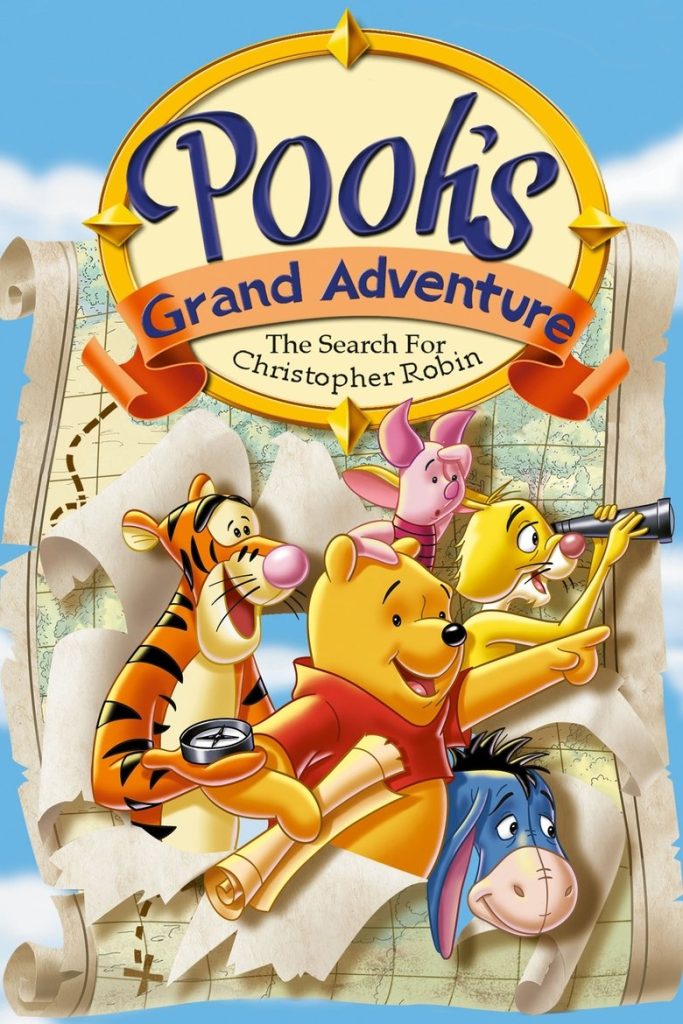
Pooh’s Grand Adventure: The Search for Christopher Robin (1997)
Story overview
In this animated family adventure, Winnie the Pooh and his friends embark on a quest when they misunderstand a note from Christopher Robin. Believing their human friend is in danger, the lovable characters journey through the Hundred Acre Wood facing various challenges together. The story explores themes of friendship, misunderstanding, and the importance of communication through gentle adventures suitable for young viewers.
Parent Guide
A gentle, age-appropriate adventure with positive messages about friendship and communication.
Content breakdown
Characters face natural obstacles like dark forests and rocky terrain, but no actual violence occurs.
Brief moments of mild tension when characters are lost or facing obstacles, resolved quickly.
No inappropriate language.
No sexual content or nudity.
No substance use.
Mild feelings of worry when characters are separated, with reassuring resolutions.
Parent tips
This gentle G-rated adventure is appropriate for all ages with no concerning content. The film features mild peril when characters face natural obstacles like dark forests or rocky terrain, but all situations resolve safely with friendship and cooperation. Parents can expect positive messages about loyalty, problem-solving, and the value of asking for help when confused.
Parent chat guide
Parent follow-up questions
- How did Pooh feel when he read the note?
- What was your favorite part of their adventure?
- How did the friends help each other?
- What would you do if you couldn't find your friend?
- What did you learn about being a good friend?
- Why do you think Pooh misunderstood the note?
- What challenges did the characters face together?
- How did different characters use their unique strengths?
- What does this story teach us about communication?
- Have you ever misunderstood something someone said?
- What does this adventure reveal about the characters' relationships?
- How might the story have been different if they asked for clarification first?
- What real-life situations might parallel the characters' misunderstandings?
- How does the film show growth in the characters?
- What positive friendship qualities are demonstrated?
- How does this children's story handle themes of separation anxiety?
- What commentary does the film make about independence versus dependence in friendships?
- How might different age groups interpret the 'rescue mission' differently?
- What does the adventure structure reveal about childhood imagination?
- How does this compare to other stories about misunderstanding intentions?
🎭 Story Kernel
At its core, 'Pooh's Grand Adventure' is a poignant allegory for separation anxiety and the transition from the safety of childhood to the unknown of growing up. The film cleverly subverts the typical Winnie the Pooh narrative by framing Christopher Robin's departure for school not as abandonment, but as a necessary step that the characters must emotionally comprehend. Each character's specific fear—Pooh's of being alone, Piglet's of everything, Tigger's of losing his bounce—drives the quest, transforming a literal search into a collective therapy session where they learn that courage isn't the absence of fear, but the decision to move forward despite it. The map and its ominous locations (Skull, Nightmare, etc.) externalize their internal anxieties, making the emotional landscape tangible.
🎬 Visual Aesthetics
The animation employs a distinct visual language to demarcate psychological states. The Hundred Acre Wood is rendered in soft, warm pastels and gentle lines, symbolizing safety and innocence. In stark contrast, the 'Great Unknown' is depicted with harsh, angular landscapes, a cooler, desaturated color palette, and dramatic shadows, visually manifesting the characters' fears. The camera work becomes more dynamic during perilous sequences, using low angles to make obstacles seem insurmountable and tight close-ups on the characters' faces to amplify their distress. Symbolism is direct yet effective: the literal pit of 'The Skull' represents the depth of their despair, while the final climb to 'Christopher Robin' is bathed in hopeful, golden light.
🔍 Details & Easter Eggs
💡 Behind the Scenes
This 1997 direct-to-video film is notable for being one of the few Winnie the Pooh stories not directly adapted from A.A. Milne's original works, making its darker, more adventure-oriented tone a creative departure. Voice actor Jim Cummings, who had already taken over for the late Sterling Holloway as Pooh, also voiced the narrator here, adding a layer of thematic continuity. The score, by composer Carl Johnson, incorporates leitmotifs for each character's fear, a compositional technique more common in epic films, which elevates the emotional weight of their personal struggles.
Where to watch
Choose region:
- Disney Plus
- Amazon Video
- Apple TV
- Google Play Movies
- YouTube
- Fandango At Home
Trailer
Trailer playback is unavailable in your region.