
Pooh’s Heffalump Movie (2005)
Story overview
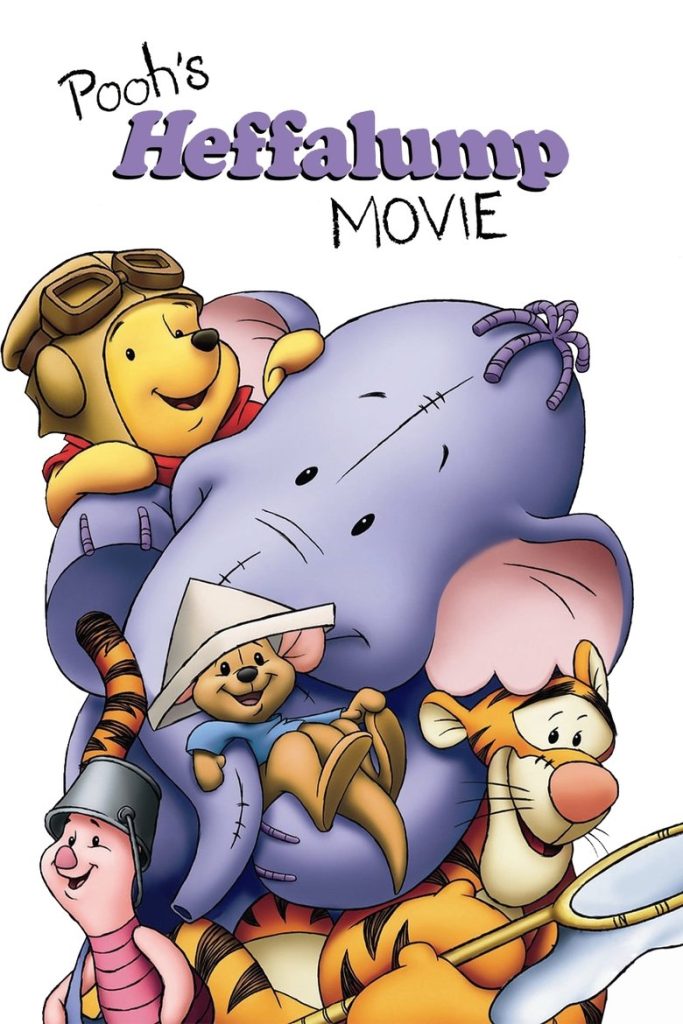
In this gentle animated adventure, Winnie the Pooh and his friends from the Hundred Acre Wood become curious about mysterious creatures called Heffalumps. They embark on a journey to discover what these elusive beings might be like, learning important lessons about friendship, curiosity, and understanding along the way. The story emphasizes how exploring the unknown can bring friends closer together and challenge their assumptions.
Parent Guide
A gentle, wholesome animated film with positive messages about friendship and curiosity, perfectly suitable for all ages.
Content breakdown
No violence or peril present; characters experience mild curiosity and apprehension but no danger.
Nothing scary or disturbing; the Heffalump concept might cause mild curiosity but not fear.
No inappropriate language; all dialogue is gentle and child-appropriate.
No sexual content or nudity; characters are animated animals in typical attire.
No substance use depicted or referenced.
Mild emotional moments related to curiosity and friendship, but nothing intense or upsetting.
Parent tips
This G-rated film is perfectly suitable for all ages with its gentle themes and familiar characters. The story focuses on curiosity, friendship, and overcoming unfounded fears through understanding. Parents can expect no concerning content—just wholesome messages about accepting differences and working together.
Parent chat guide
Parent follow-up questions
- What was your favorite part of the movie?
- How did the friends help each other?
- What did you learn about being curious?
- Which character made you smile the most?
- What would you do if you met a Heffalump?
- Why were the characters afraid of Heffalumps at first?
- How did their adventure change their friendship?
- What does this story teach us about judging things before we know them?
- Have you ever been curious about something like the characters were?
- What makes a good friend in this story?
- How does this story show the importance of open-mindedness?
- What real-life situations might be similar to the characters' journey of discovery?
- How do the characters demonstrate teamwork during their adventure?
- What messages about acceptance does this film convey?
- How might this story apply to meeting new people in your own life?
- What broader themes about prejudice or fear of the unknown does this story explore?
- How does the film use familiar characters to convey messages about growth and understanding?
- In what ways does this children's story still resonate with older audiences?
- What does the journey symbolize about personal development?
- How might this simple narrative reflect real-world situations of misunderstanding between groups?
🎭 Story Kernel
The film's core is a study of prejudice and xenophobia, presented through the lens of childhood innocence. The Hundred Acre Wood's residents, led by Rabbit, are driven by a deep-seated fear of the unknown 'Heffalump' based solely on hearsay and superstition. This fear manifests as a militaristic expedition, complete with makeshift traps and weapons, mirroring how societies often react to perceived outsiders. The true conflict isn't with the creature Lumpy, but with the characters' own preconceptions. Roo's youthful curiosity acts as the narrative's moral compass, demonstrating that understanding requires direct engagement, not inherited bias. The resolution hinges not on defeating a monster, but on the simple, transformative power of shared experience and a name—'Lumpy'—which personalizes the abstract threat.
🎬 Visual Aesthetics
The animation employs a soft, pastel color palette that belies the story's tense themes, creating visual irony. The Hundred Acre Wood is rendered in warm greens and browns, a familiar, safe space. In contrast, the Heffalump's initial introduction uses cooler blues and purples in shadowy, distorted visuals, visually coding 'otherness' as eerie and cold. The camera often adopts low-angle shots when the group is hunting, mimicking a child's perspective and amplifying the perceived scale of their 'mission.' Action is deliberately clumsy and non-threatening—traps fail comically, chases are slow—underscoring the absurdity of their fear. Symbolically, the final shared picnic bathed in golden sunlight visually marks the dissolution of barriers and the return to harmony.
🔍 Details & Easter Eggs
💡 Behind the Scenes
This 2005 film is notable for being the final Disney theatrical release to feature the original voice of Piglet, John Fiedler, who passed away before its release; his lines were compiled from archived recordings. It was also one of the last major projects for longtime Disney composer Joel McNeely, who scored many of their direct-to-video features. The production aimed for a simpler, more traditional animation style compared to the CGI trends of the era, consciously evoking the gentler aesthetics of earlier Pooh features. Voice actor Kath Soucie, who voiced Kanga, also provided the voice for Lumpy, creating a subtle vocal link between the compassionate mother and the misunderstood outsider.
Where to watch
Choose region:
- Disney Plus
- Amazon Video
- Google Play Movies
- YouTube
- Fandango At Home
- Apple TV
Trailer
Trailer playback is unavailable in your region.