
Power (2024)
Story overview
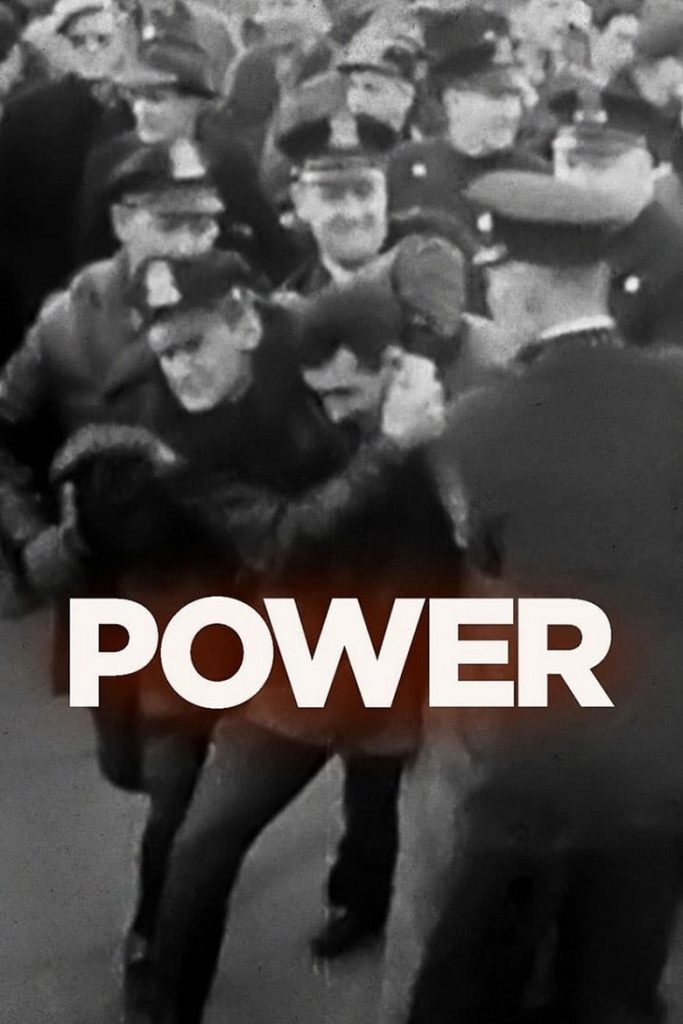
Power is a 2024 documentary directed by Yance Ford that examines the historical expansion and current state of policing in the United States. The film traces how law enforcement has grown in scope and scale over centuries, driven by the goal of maintaining social order, and argues that modern American policing is fundamentally defined by the concept of power. Through interviews, archival footage, and analysis, it explores the implications of this power on society.
Parent Guide
This documentary is rated R, likely for mature thematic content involving policing, violence, and social critique. It is an analytical film that may include discussions of historical and contemporary issues, making it most appropriate for older teens and adults who can engage with complex societal topics.
Content breakdown
The film may include discussions, descriptions, or archival footage of police violence, historical conflicts, or societal unrest related to law enforcement. This could involve verbal accounts or visual materials depicting tense or violent situations.
Themes of power, control, and systemic injustice may be disturbing, especially for younger viewers. The documentary might present critical or unsettling perspectives on policing that could provoke anxiety or discomfort about authority and social order.
As a documentary, strong language is less likely, but there may be occasional mild profanity or intense dialogue related to the subject matter. No explicit or frequent harsh language is expected based on typical documentary standards.
No sexual content or nudity is anticipated in this documentary, as it focuses on policing and social structures rather than personal or intimate themes.
Substance use is not a central theme of this film. It may be mentioned in passing in discussions of law enforcement or social issues, but no depiction or promotion of substance use is expected.
The film deals with weighty topics like power, justice, and societal control, which can evoke strong emotions such as anger, frustration, or concern. The analytical tone may temper this, but the subject matter itself is emotionally charged.
Parent tips
This documentary deals with mature themes about policing, power structures, and social control. It may include discussions of historical and contemporary violence, systemic issues, and critical perspectives on law enforcement. Due to its analytical nature and potential for intense subject matter, it is best suited for older teens and adults who can process complex social issues.
Parent chat guide
Parent follow-up questions
—
—
—
- What did you learn about the history of policing from this documentary?
- How does the film define 'power' in relation to law enforcement?
- What are some positive and negative aspects of policing discussed in the film?
- How might different communities view policing differently?
- What solutions or changes does the film suggest, if any?
🎭 Story Kernel
Power is less a documentary about specific crimes and more a sweeping, intellectual interrogation of the concept of police power itself. Director Yance Ford traces the historical trajectory of American policing from its origins in slave patrols and the suppression of labor movements to its current state of high-tech militarization. The film argues that the expansion of police authority is not an accidental byproduct of rising crime, but a deliberate political tool used to maintain social hierarchies and protect property over people. By interviewing historians and legal scholars, Ford exposes how the state has consistently granted law enforcement the right to use coercive force, often with minimal oversight. It challenges the viewer to reconsider the fundamental purpose of the institution, suggesting that the order being kept is one rooted in systemic exclusion and the containment of perceived threats to the status quo.
🎬 Visual Aesthetics
Visually, the film is a masterclass in archival curation and rhythmic editing. Ford eschews the sensationalism of body-cam footage in favor of a more contemplative, almost clinical aesthetic. The cinematography utilizes stark, well-lit interviews that contrast with grainy, historical newsreels, creating a visual bridge between the past and the present. There is a recurring motif of the panoptic gaze—the idea of being watched—which is reinforced through shots of surveillance technology and overhead drone views. The use of split-screen techniques allows the film to juxtapose historical atrocities with modern-day equivalents, visually asserting that the underlying power dynamics have remained unchanged. The pacing is deliberate, allowing the weight of the scholarly arguments to land, while the sound design subtly heightens the tension, making the abstract concept of state power feel visceral and omnipresent.
🔍 Details & Easter Eggs
💡 Behind the Scenes
Director Yance Ford, previously known for the deeply personal and Academy Award-nominated documentary Strong Island, shifts his focus here to a broader systemic critique. Power premiered at the 2024 Sundance Film Festival in the U.S. Documentary Competition section before being acquired by Netflix. The production involved extensive research into the police power doctrine, a legal concept that grants states the authority to regulate behavior and enforce order. The film features prominent intellectuals such as Nikhil Pal Singh and Julian Go, who provide the theoretical framework for Ford’s visual history of American law enforcement's evolution.
Where to watch
Choose region:
- Netflix
- Netflix Standard with Ads
Trailer
Trailer playback is unavailable in your region.