
Princess Mononoke (1997)
Story overview
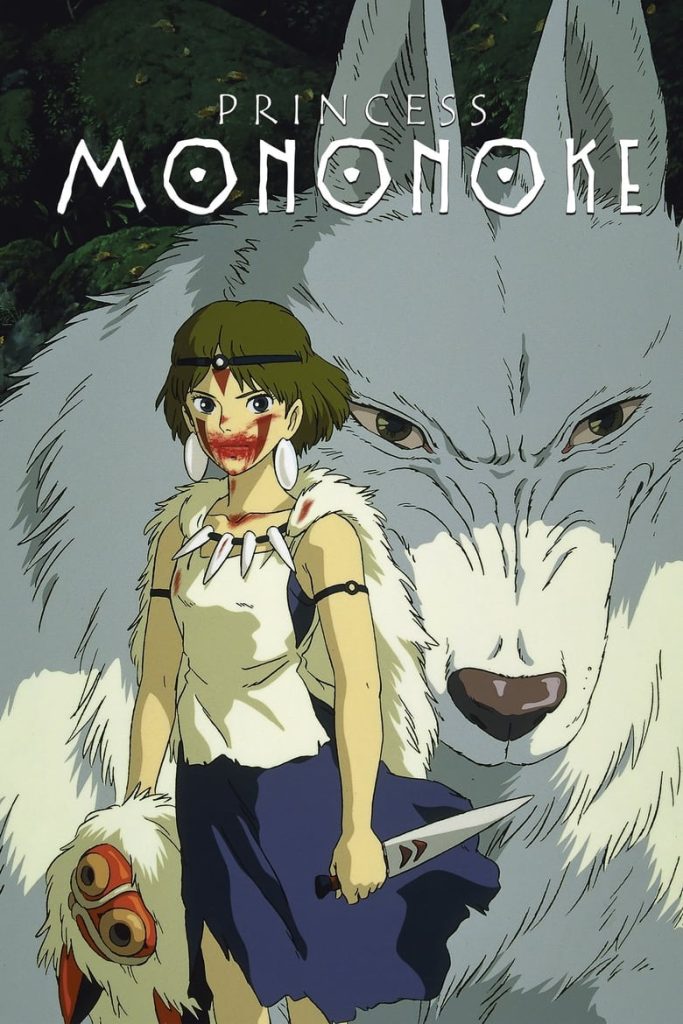
Princess Mononoke is a 1997 Japanese animated fantasy adventure film directed by Hayao Miyazaki. The story follows Ashitaka, a young prince cursed by a demonized boar god who must journey westward to find a cure. During his quest, he becomes entangled in a conflict between San, a human woman protecting the forest, and Lady Eboshi, who seeks to destroy it. The film explores themes of nature, industrialization, and finding balance between opposing forces.
Parent Guide
A visually stunning but intense fantasy film exploring environmental themes through violent conflict between humans and nature.
Content breakdown
Frequent fantasy violence including decapitation, dismemberment, bloody battles, arrows piercing bodies, and supernatural attacks. Characters are cursed, injured, and killed throughout.
Disturbing imagery includes demon-possessed animals, grotesque curses manifesting on bodies, and intense confrontations. The forest spirit transformations may be unsettling.
Occasional mild insults and expressions of anger, but no strong profanity.
No sexual content or nudity present.
No substance use depicted.
High-stakes conflicts, character deaths, and moral dilemmas create emotional tension, though balanced with hopeful themes.
Parent tips
Princess Mononoke contains intense fantasy violence and disturbing imagery that may be too much for younger children. The PG-13 rating reflects significant violent sequences including decapitation, dismemberment, and bloody battles between humans and supernatural creatures. While the film presents complex moral questions about environmentalism and progress, the graphic nature of some scenes requires parental consideration.
The film's 134-minute runtime and mature themes make it more suitable for older children and teens who can handle intense fantasy violence and complex storytelling. Parents should be aware that characters suffer curses, injuries, and death throughout the narrative, though the overall message promotes harmony between nature and humanity.
Parent chat guide
After watching, focus conversations on the film's themes rather than specific violent scenes. Ask what your child thought about the different perspectives in the conflict and how characters tried to find balance. Emphasize the film's message about respecting nature and seeking understanding between opposing groups.
Parent follow-up questions
- Did you like the animal characters in the movie?
- What was your favorite part of the forest?
- How did the characters help each other?
- What colors did you see in nature?
- Was there anything that made you feel scared?
- What did you think about the conflict between the forest and the humans?
- How did Ashitaka try to help both sides?
- What does it mean to be 'cursed' in the story?
- Why do you think the animals were angry?
- What would you do to help the forest?
- What different perspectives did you notice in the conflict?
- How does the film show the consequences of violence?
- What does the story suggest about balancing progress and nature?
- Why do you think some characters changed their minds?
- What lessons about conflict resolution did you notice?
- How does the film explore the complexity of environmental issues?
- What commentary does the story make about industrialization and tradition?
- How are different forms of leadership portrayed in the film?
- What does the ending suggest about finding balance in conflicts?
- How does the film handle moral ambiguity in its characters?
🎭 Story Kernel
At its core, 'Princess Mononoke' expresses the irreconcilable tension between preservation and progress, rejecting simplistic good-versus-evil dichotomies. The driving force isn't heroism but desperation: Lady Eboshi seeks to protect her marginalized community from feudal oppression by conquering nature, while San fights to preserve a world that already views humanity as a plague. Ashitaka becomes the film's moral compass precisely because he's infected by the hatred he seeks to eradicate, embodying the curse of taking sides in a conflict where both sides are tragically right. The film's real antagonist is the cycle of vengeance itself, visualized through the spreading corruption in Ashitaka's arm—a physical manifestation of the spiritual poison infecting all parties.
🎬 Visual Aesthetics
Miyazaki's visual language masterfully contrasts organic fluidity with industrial rigidity. The forest breathes with shimmering kodama spirits and the Night-Walker's gelatinous transformations, animated with a watercolor-like softness. Iron Town, in stark contrast, is all sharp angles, metallic grays, and mechanical repetition. The film's most powerful visual metaphor occurs during the Night-Walker's death: its liquid form dissolving into a wave of luminous life that simultaneously kills and regenerates the landscape, visually representing nature's indifference to human moral categories. Action sequences avoid glorification—the boar god's demonic rampage is horrifying, not exhilarating, with Miyazaki's camera emphasizing the collateral damage over heroic poses.
🔍 Details & Easter Eggs
💡 Behind the Scenes
The film marked a turning point in Japanese animation, being the highest-grossing domestic film in Japan until 'Spirited Away' surpassed it. Miyazaki came out of retirement to direct it after being horrified by deforestation he witnessed. The production used a revolutionary digital paint system over hand-drawn cells, creating unprecedented detail in scenes like the Night-Walker's fluid transformations. Voice actor Billy Crudup recorded Ashitaka's lines while suffering from laryngitis, resulting in the character's distinctive rasp that the director decided to keep. The iconic score by Joe Hisaishi was partially recorded with the Tokyo City Philharmonic Orchestra in complete darkness to achieve the desired atmospheric quality.
Where to watch
Choose region:
- HBO Max
- HBO Max Amazon Channel
- Amazon Video
- Apple TV
- Google Play Movies
- YouTube
- Fandango At Home
Trailer
Trailer playback is unavailable in your region.