
Private Network: Who Killed Manuel Buendía? (2021)
Story overview
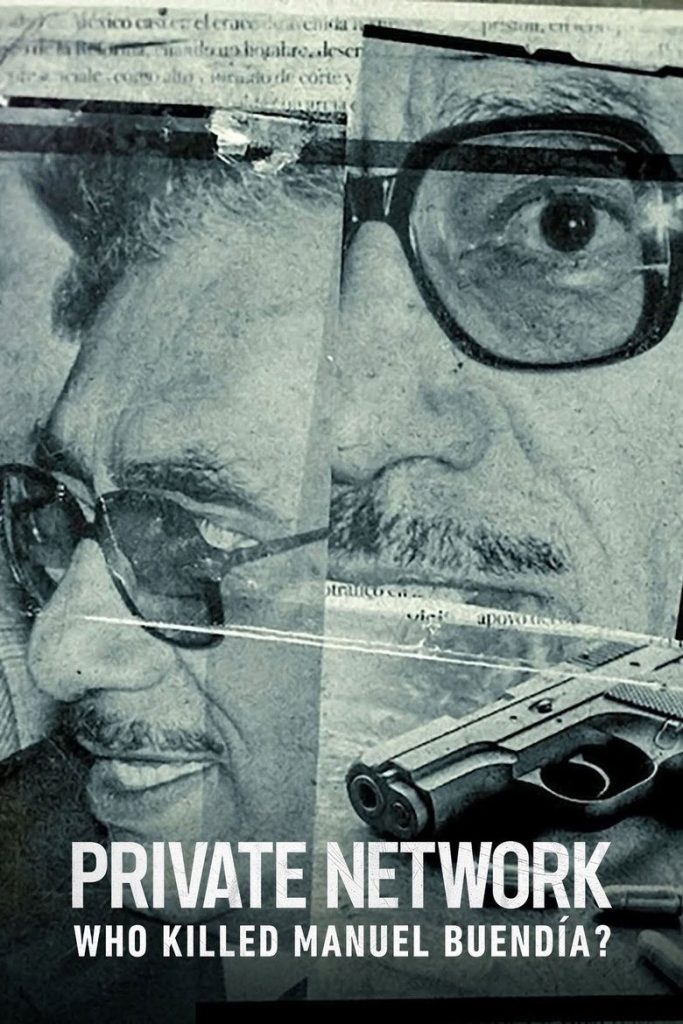
This documentary investigates the 1984 assassination of Mexican journalist Manuel Buendía, who was known for exposing government corruption and drug trafficking connections. The film explores the political context of Mexico during that era and examines various theories about who was responsible for his murder. It presents archival footage, interviews with experts, and analysis of historical events surrounding this unsolved case that impacted press freedom in Mexico.
Parent Guide
Documentary about a journalist's assassination with mature political themes
Content breakdown
Discusses assassination and murder without graphic visuals
Themes of political corruption and unsolved murder may be unsettling
No offensive language noted in documentary format
No sexual content or nudity
Mentions drug trafficking as part of investigation
Serious tone dealing with crime and political themes
Parent tips
This documentary deals with mature themes including political corruption, assassination, and drug trafficking. The TV-MA rating indicates it's intended for mature audiences due to its serious subject matter. Parents should preview the content to determine appropriateness for their children based on individual maturity levels.
While the documentary doesn't contain graphic violence, it discusses murder and criminal activities that may be disturbing to younger viewers. The film presents complex political concepts and historical context that may be challenging for children to fully understand without guidance.
Consider watching this with older teens to discuss themes of journalistic integrity, government accountability, and historical investigation. The documentary can serve as a starting point for conversations about press freedom and political history.
Parent chat guide
For older children, you might discuss the balance between national security and press freedom, or how different countries handle government transparency. The film raises questions about how we determine truth when official narratives conflict with investigative findings.
Consider asking what your child thinks about the role of journalists in society and why some stories are difficult to investigate. You can also discuss how media has changed since 1984 and whether similar investigations would face different challenges today.
Parent follow-up questions
- What do you think a journalist does?
- Why is it important to tell the truth?
- What makes someone a good helper in our community?
- What does it mean to investigate something?
- Why do you think people want to know what happened in the past?
- How can we find out if something is true or not?
- Why might a journalist need to be brave?
- What are some ways people try to find answers to difficult questions?
- How do you think technology has changed how we investigate things?
- What responsibilities do journalists have when reporting on powerful people?
- How do societies balance security concerns with the public's right to information?
- What makes historical investigations valuable even decades after events occur?
🎭 Story Kernel
The film is less a conventional whodunit and more a forensic examination of a system designed to obscure truth. It expresses the chilling reality that in certain contexts, the 'who' is less important than the 'how'—the mechanisms of impunity and the networks of power that render a murder unsolvable by design. The driving force isn't a character's quest for justice, but the narrative's relentless pursuit of exposing the architecture of the crime: the private networks of communication, influence, and violence that connect political power, intelligence agencies, and the media. The protagonist's investigation becomes a map of institutional complicity, where every answer reveals a deeper, more sinister layer of connection, questioning whether truth can ever be excavated from such deliberately contaminated ground.
🎬 Visual Aesthetics
The visual language is one of claustrophobic paranoia and archival unease. A muted, desaturated palette of bureaucratic greens and concrete grays dominates, reflecting the institutional setting of the crime. The camera often employs tight close-ups on documents, telephone receivers, and anxious faces, creating a sense of surveillance and trapped information. Long, static shots of empty corridors and government offices evoke a haunting absence and the silence of complicity. There's a deliberate lack of cinematic glamour; action is replaced by the tense, quiet drama of research—flipping through files, making phone calls, connecting dots on a chalkboard. The symbolism lies in the network itself, visualized through overlapping lines on maps and documents, making the abstract conspiracy tangibly oppressive.
🔍 Details & Easter Eggs
💡 Behind the Scenes
The film is a dramatization of the real 1984 murder of renowned Mexican columnist Manuel Buendía, a case that remains officially unresolved. Director Carlos Bolado conducted extensive research with journalists and investigators close to the real case. Key scenes were shot in locations meant to authentically replicate 1980s Mexico City government and media offices. The actor portraying the lead investigator immersed himself in the procedural methods of the era, studying the specific type of detective work that relied on paper trails and human sources in a pre-digital age, adding a layer of tactile realism to the investigative sequences.
Where to watch
Choose region:
- Netflix
- Netflix Standard with Ads